

 KB News Desk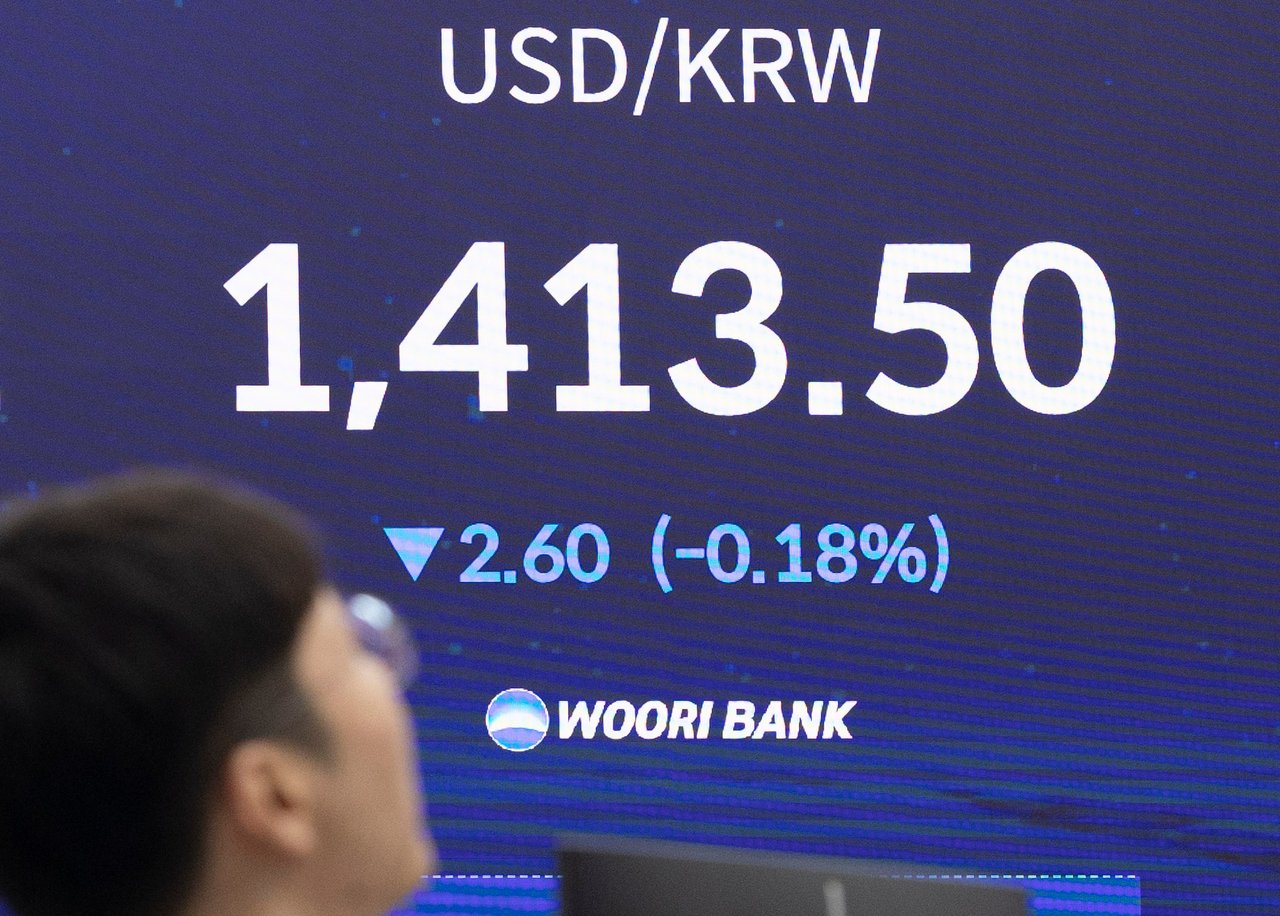
SK hynix dollar conversion, easing foreign sell-off, stronger yen drive rapid rebound
The South Korean won is nearing the 1,300-per-dollar range after weakening to 1,550 in just over a month, underscoring the currency’s sharpest volatility since the global financial crisis.
The local currency was quoted at 1,410.3 won per dollar as of 9 a.m. Monday in Seoul’s onshore market. If the currency strengthens by roughly 10 won, the exchange rate will be pushed into the 1,300-won range for the first time since October.
During trading late last week, the won strengthened to 1,407.3 per dollar, the strongest level recorded against the buck since Oct. 2, 2025, when the won stood at 1,399.5.
Expectations that proceeds from SK hynix’s American depositary receipt listing would be converted into won have provided support for the currency.
The recent easing in foreign investors’ selling of Korean stocks, which had previously pushed the won lower, has also helped. Foreign investors’ net selling of Korean stocks fell sharply to 9.81 trillion won ($6.9 billion) in July from 47.03 trillion won in June, according to the Korea Exchange.
Joint intervention by the US and Japanese governments to buy the yen has contributed to the won’s appreciation as well.
The won and yen are often viewed as a closely linked pair in the forex market, leading the two currencies to move in tandem. While the won had previously been dragged lower by the yen’s weakness, it is now benefiting from its strength.
The dollar also came under pressure after weaker-than-expected US employment data reduced expectations that the US Federal Reserve would raise interest rates later this year.
Yuanta Securities economist Kim Ho-jung said that the recent strengthening of the Korean won was “a combined result of supply factors with set deadlines, including SK hynix’s dollar conversion and Korea’s inclusion in the World Government Bond Index.”
Korean government bonds entered the WGBI, one of the world’s most closely watched sovereign bond benchmarks, in April. The inclusion is expected to continue through November.
“The outlook for a stronger won in the third quarter remains unchanged regardless of the size of the supply effects,” Kim added, putting the year-end median at 1,371 won per dollar.
While the won’s sharp appreciation offers some relief for Korea, its swings pose another challenge.
The won’s appreciation to the early 1,400-per-dollar level comes roughly a month after it climbed to 1,555.8 won per dollar on July 2. During the following 25 trading days through Aug. 7, the currency gained 139.7 won per dollar.
The average daily gain over the period was 5.6 won, more than twice the 2.5-won increase recorded between April 9 and June 30 last year, when volatility escalated amid US tariff announcements.
In July, the won-dollar exchange rate fluctuated by 47 won, marking its widest monthly swing since 2009, when the average fluctuation reached 61.2 won amid the global financial crisis.
Daily volatility has also reached its sharpest level since the global financial crisis. This year, the won-dollar exchange rate moved by 8.2 won per day on average through Aug. 7.
It was the largest daily fluctuation recorded since 2009, when the average stood at 9.4 won. The figure was also significantly higher than the 5-won average recorded in 2020 during the COVID-19 pandemic.