
 KB News Desk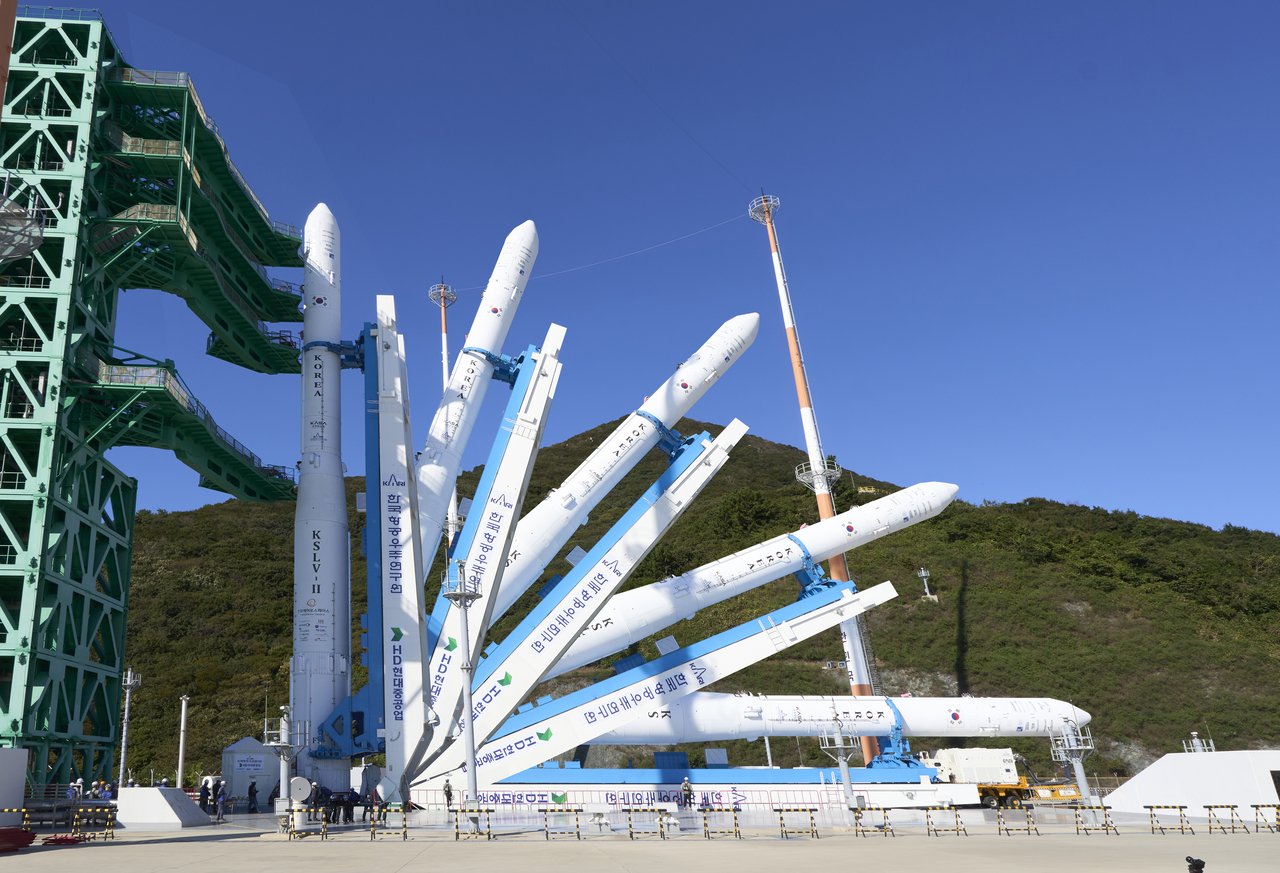
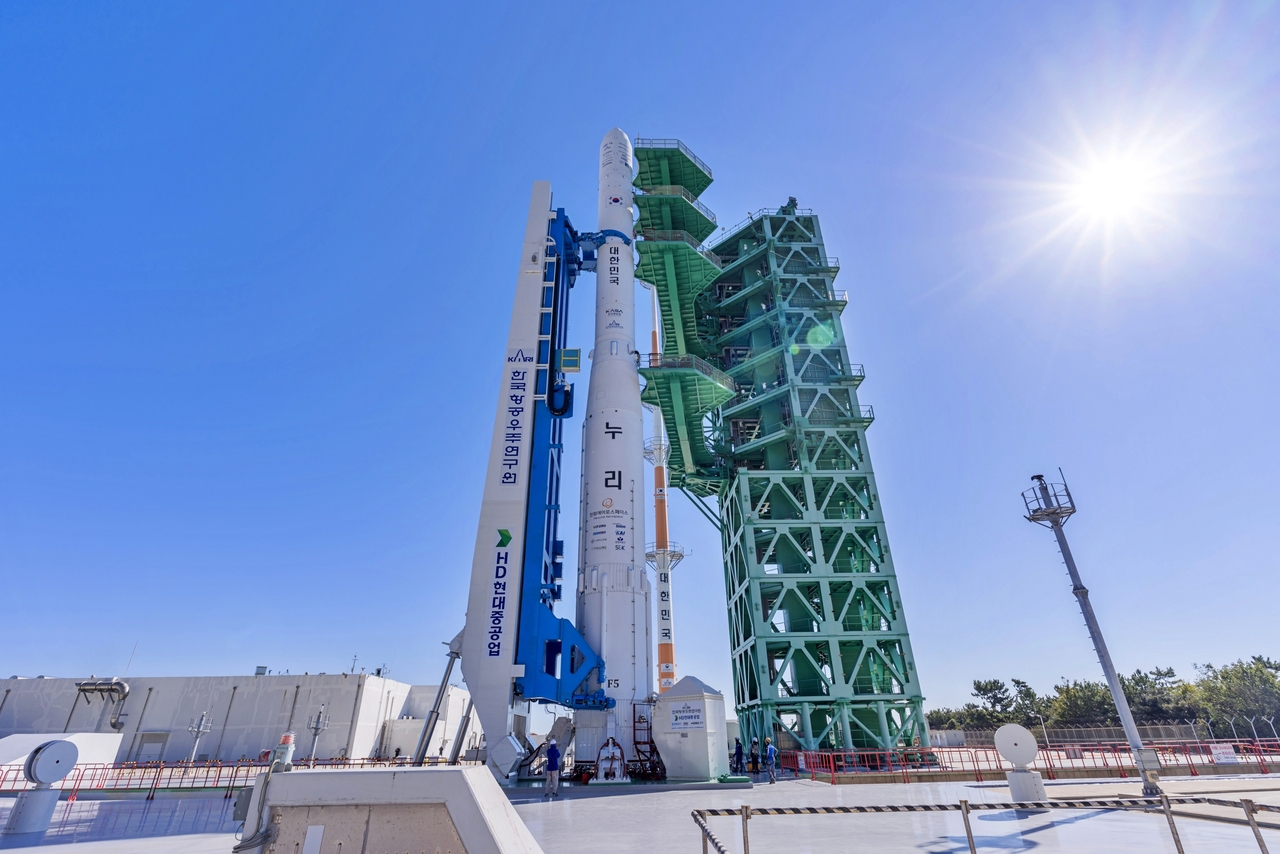
South Korea’s homegrown Nuri rocket was moved to a launchpad and raised into a vertical position Tuesday, a day before its scheduled fifth launch, the country’s space agency said.
The Korea AeroSpace Administration (KASA) said the launch team completed transporting the rocket to the launchpad at the Naro Space Center in Goheung, about 330 kilometers south of Seoul, at 7:30 a.m. after a 90-minute journey from the assembly complex.
The rocket was erected vertically and secured in place at 10:35 a.m., according to the Korea Aerospace Research Institute.
The launch team connected the rocket to the umbilical systems, which supply power and other necessary connections, and conducted a series of checks in preparation for fueling, completing the work at 8:05 p.m.
KASA will convene a launch management committee at 8 a.m. Wednesday to determine the final launch time after reviewing the rocket’s technical readiness, weather conditions and the possibility of collisions with space objects. The final launch time will be announced at 8:45 a.m.
The payload consists of five New-space Earth Observation Satellite Constellation for National Safety microsatellites, which will form part of South Korea’s first domestically launched microsatellite constellation, as well as 10 CubeSats.
The fifth flight will mark Nuri’s first attempt to sequentially deploy multiple primary satellites designed to carry out the same mission.
About four hours before liftoff on Wednesday, the launch team will begin filling the three-stage rocket with kerosene fuel and liquid oxygen oxidizer after completing system checks.
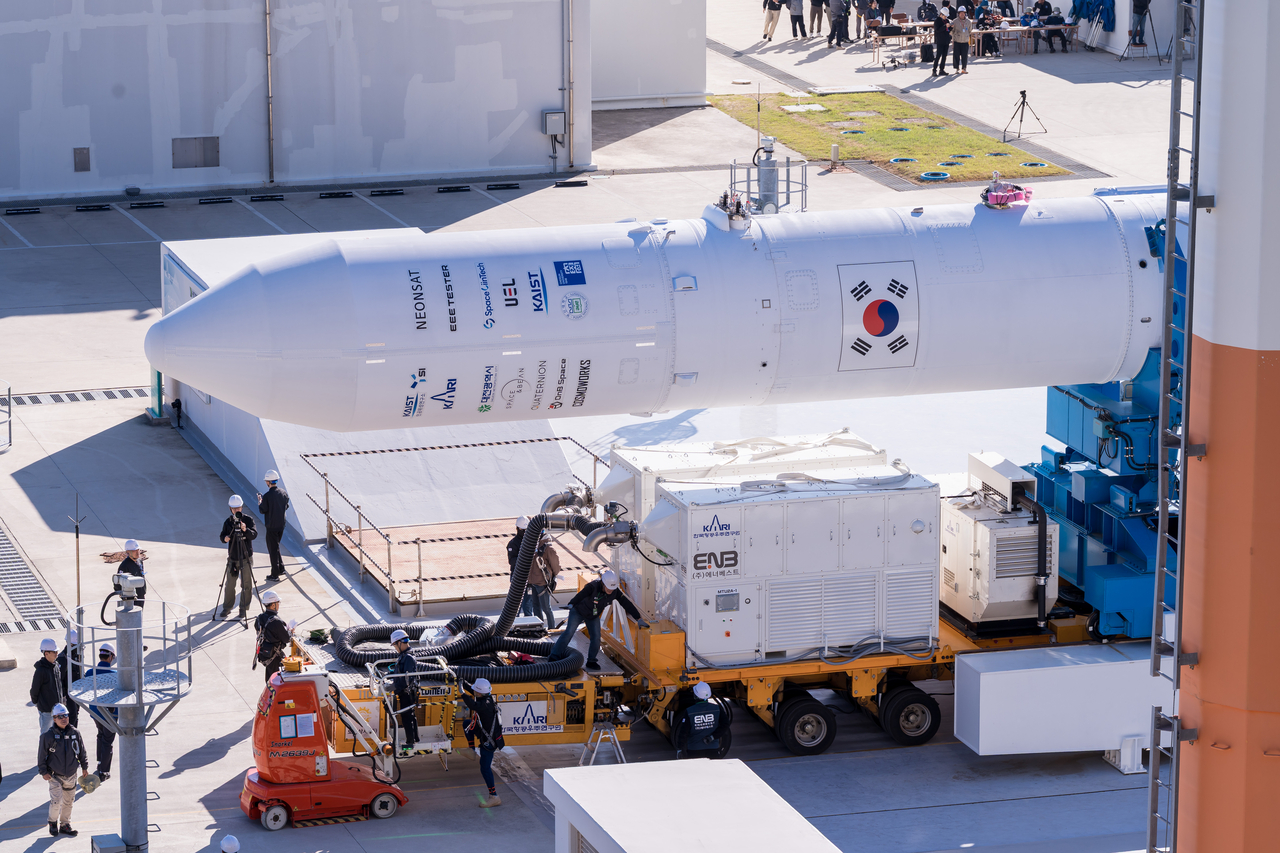
The five NEONSATs, Nos. 2 through 6, will be deployed at intervals of 35 to 40 seconds at an altitude of around 575 km. The 10 CubeSats will then be deployed two at a time at 10-second intervals.
The NEONSATs will conduct high-frequency monitoring of the Korean Peninsula and surrounding areas for national security and disaster response.
The constellation will eventually consist of 10 satellites, with another five to be launched aboard Nuri’s sixth flight scheduled for next year.
Once fully operational, the constellation will be capable of imaging the Korean Peninsula more than three times a day and revisiting the same location within 24 hours. (Yonhap)