
 KB News Desk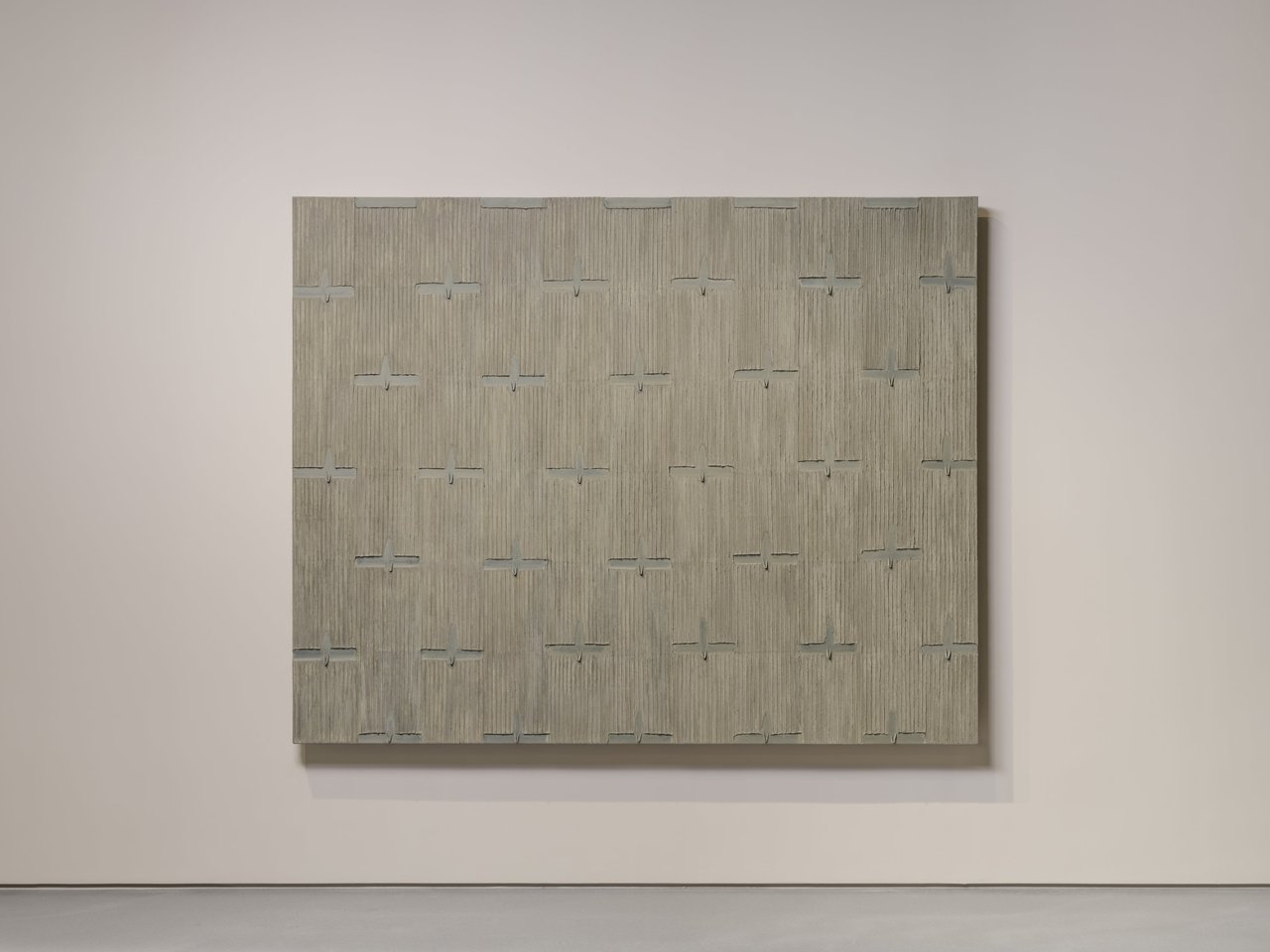
Dansaekhwa master’s museum opens Friday in Yeonhui-dong, pairing him with French painter Huong Dodinh
Dansaekhwa, Korea’s austere monochrome painting, has traveled far from home. A movement that came together in the 1970s, it was for decades a strictly local affair; today it is a regular presence in Western museums and auction rooms, sought after by collectors worldwide.
At the center of that rise is Park Seo-bo (1931-2023). For over half a century, the painter pursued his now-signature “Ecriture” series, in which he carved pencil lines into wet paint until the act of repetition itself — meditative, self-emptying — became the subject. The same decades saw him teaching at Hongik University and brokering Korean artists’ entry onto the global stage. On Friday, nearly three years after his death, a museum bearing his name opens in Seoul.
The Parkseobo Museum sits in Yeonhui-dong, a low-slung neighborhood of vintage houses and coffee shops spread along the slopes leading up to Yonsei University, in the city’s west. Why a museum should land in a corner of Seoul known for its old-school charm rather than any gallery scene is a fair question: It went up beside the house and studio where Park lived and worked until his death, which now houses the foundation bearing his name.
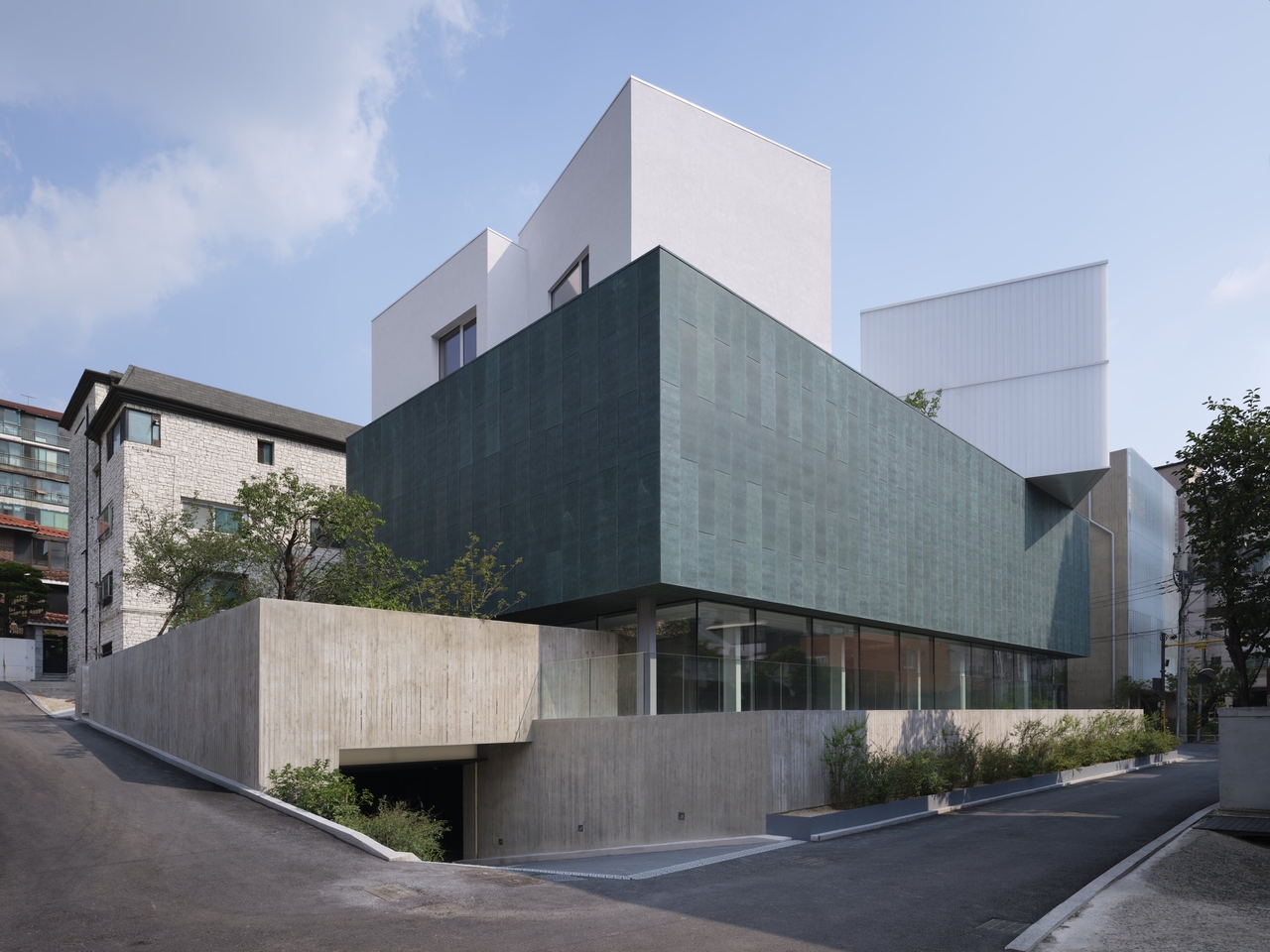
The path here has been anything but straight. After Park’s cancer diagnosis, the Parkseobo Foundation had initially envisioned a memorial hall on part of the current lot. But with a public museum project in Yecheon, the artist’s birthplace in North Gyeongsang Province, running aground — and with a separate museum on Jeju Island, under construction since 2023 — the foundation redrew its plans and decided to turn the memorial into a proper museum.
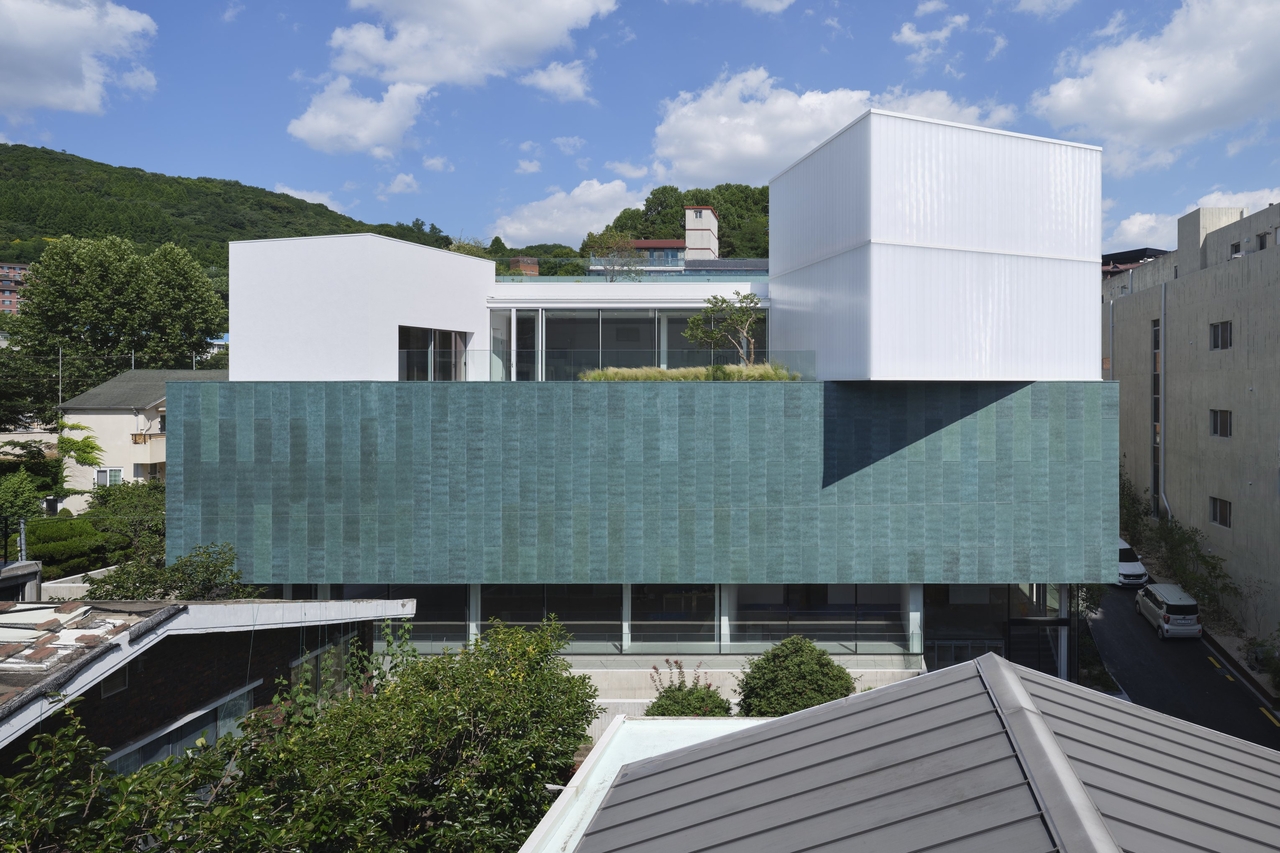
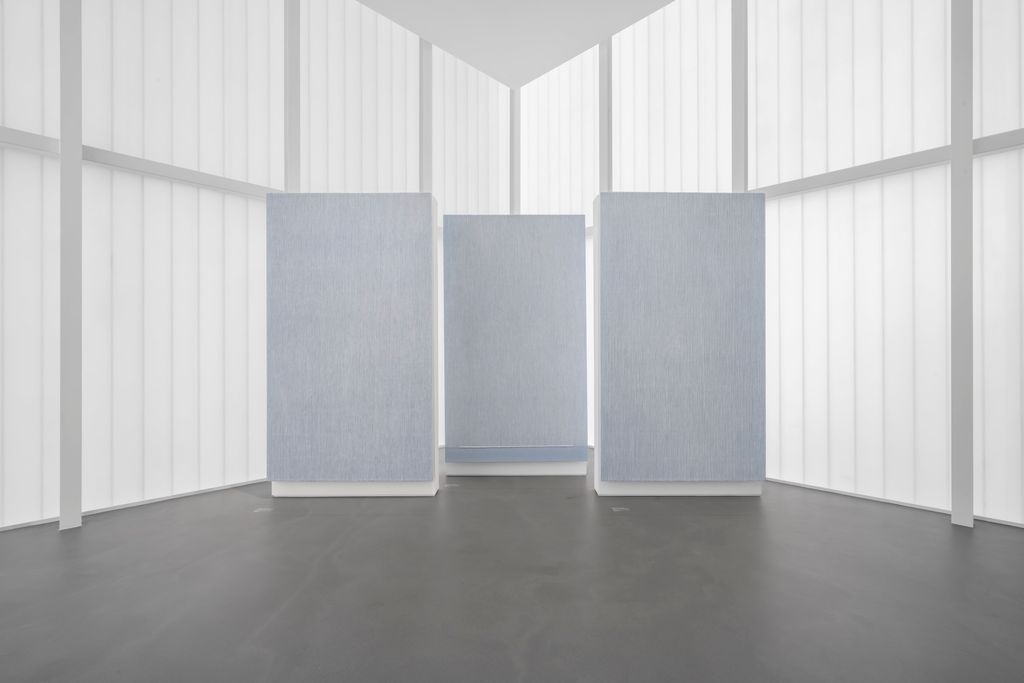
Choi Moon-gyu, an architect and professor at Yonsei University, gave the 2,000-square-meter, five-story building three galleries, complete with a garden on every floor and windows generous enough to let in the natural light most museums work hard to keep out. Crowning the structure is a cube-shaped gallery, eight meters to a side, where daylight filters in through translucent glass.
Park Seung-ho, the late artist’s younger son and chair of the foundation, made a point of saying what the place is not. “I have no intention of turning this into a shrine to Park Seo-bo,” he said at a press preview Tuesday. “Rather than stopping at commemoration, we want it to carry on the work he did all his life.” Park Seo-bo was, after all, as much a promoter and mentor as a painter, and the museum intends to continue his lifelong advocacy for fellow artists with exhibitions of lesser-known names from Korea and abroad.
True to that vision, the inaugural exhibition is not a Park retrospective but a two-person show. “Park Seo-Bo & Huong Dodinh: Emptiness Fullness,” on view through Jan. 3, pairs 25 paintings by Park with 17 by Huong Dodinh, a Vietnamese-born French painter who moved to Paris in 1953 and has worked there ever since — alone, without assistants and, until her seventies, without gallery representation.
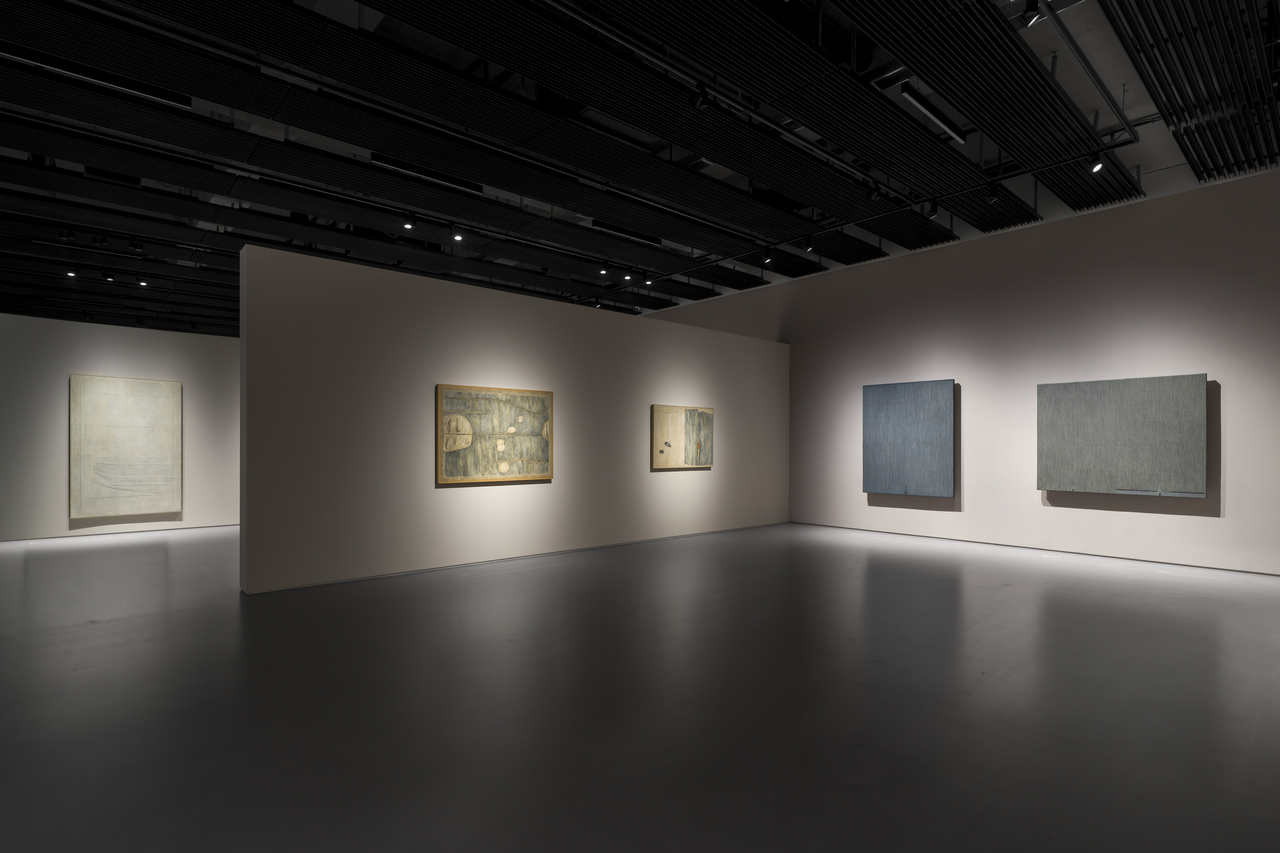
The two artists worked oceans apart, with little knowledge of each other, and on the face of it, their methods have little in common.
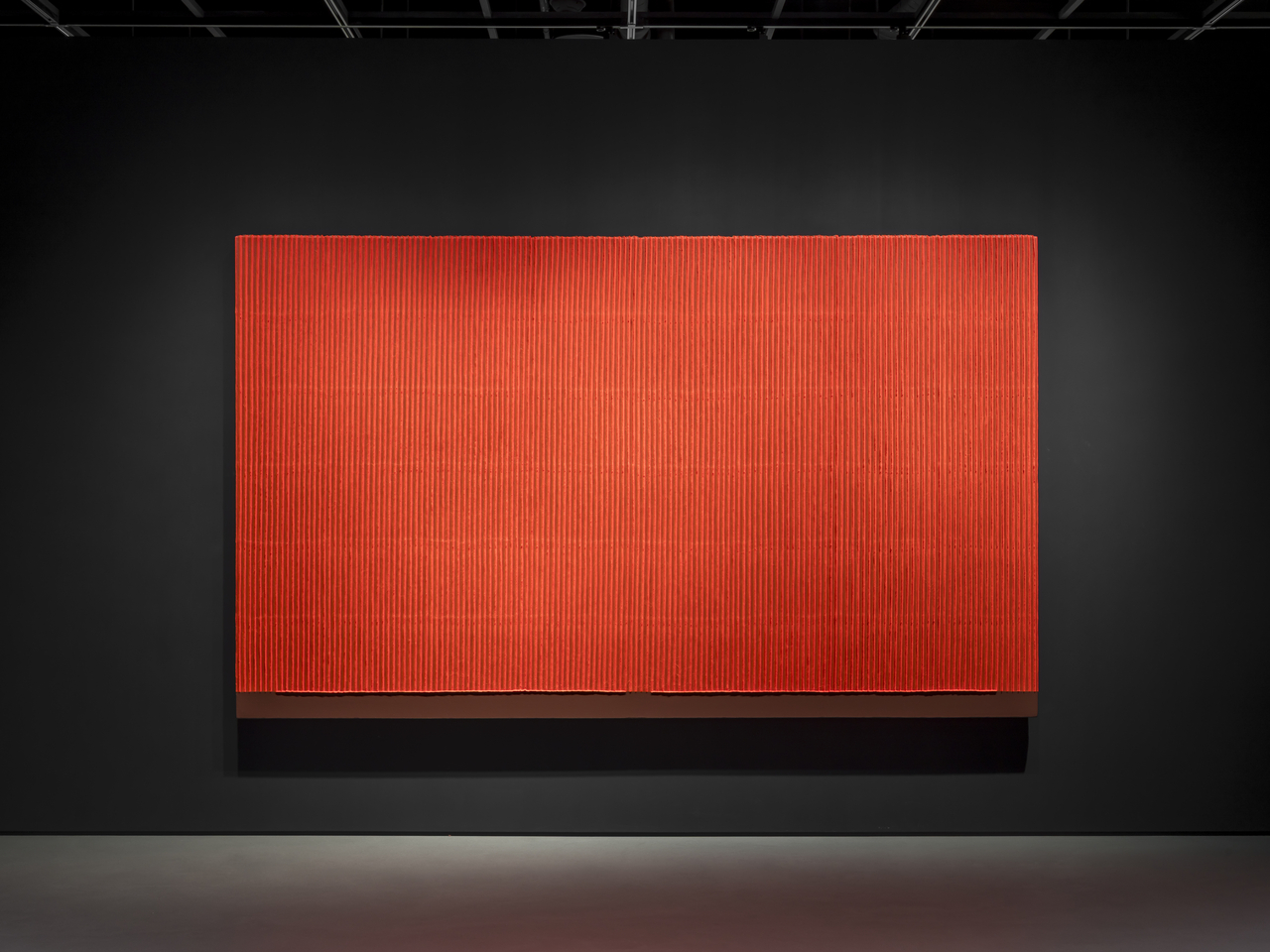
Park is known for drawing pencil lines into water-soaked “hanji,” or Korean mulberry paper, over and over until ridges and furrows rise from the surface. Dodinh layers translucent coats of pigment, ground by hand from minerals she sources herself in southern France, until the paintings seem lit from within.
Where the two meet is in the finished work: hues that stay close to nature, never synthetic, and surfaces whose texture — the seams of pressed paper, the faint ridges between coats of pigment — is best seen up close.
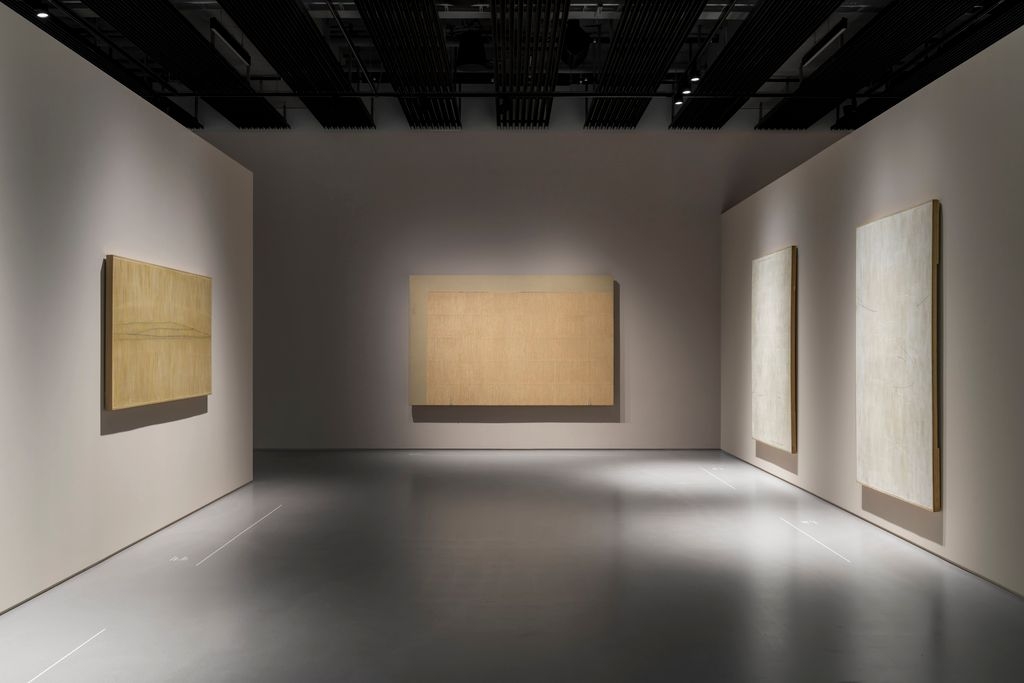
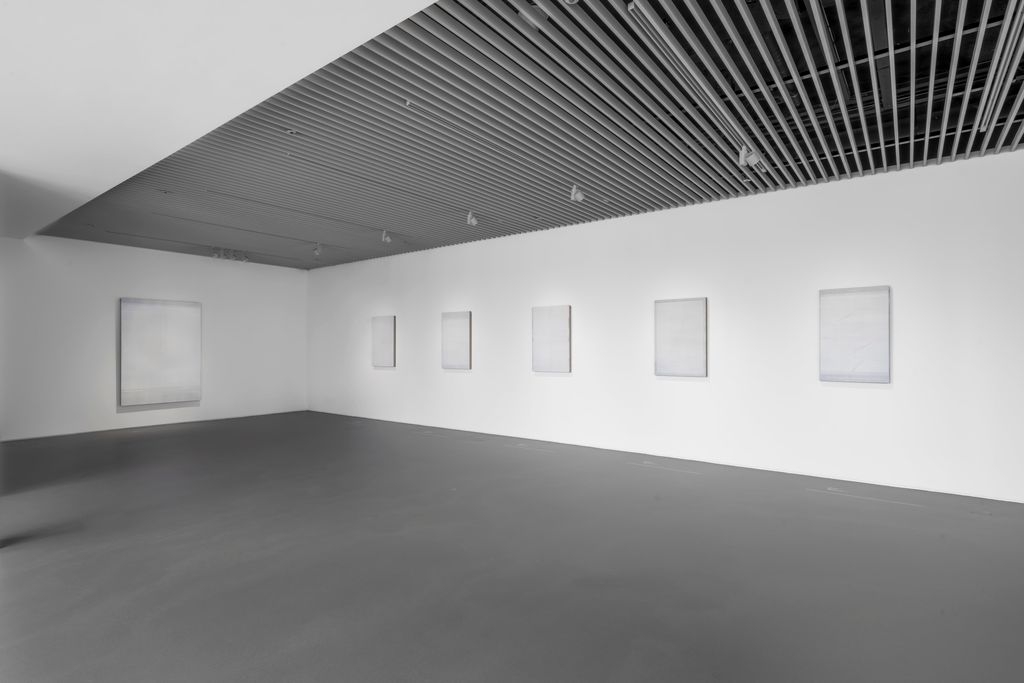
The exhibition opens two floors underground, in a gallery the museum calls Space Zero. There, the artists’ work from the 1990s hangs in alternation, Park’s furrowed black-and-white hanji surfaces beside Dodinh’s pale, layered panels.
The second floor belongs to Park alone, tracing the “Ecriture” series from the black hanji works of the late 1990s to the saturated reds and greens he adopted after 2000. The black, he once said, came from the soot-layered hearth where his mother cooked; the later colors were taken from nature in the hope they might bring viewers a measure of comfort.
Everything converges in the rooftop cube, where white works by the two artists face one another under shifting daylight. Park painted his last large-scale white hanji “Ecriture” pieces with the museum’s construction already in mind; three of them, each more than three meters tall and worked on until shortly before his death, share the room with “X.K.N.31,” a painting Dodinh dedicated to his memory.
“Dodinh’s white holds the wonder of the first snow she saw after arriving in France at 8, and the light that emerged as it melted,” said Lee Yoo-jin, a director of the foundation. “Park’s white is closer to the grayish tint of Joseon porcelain, the yellowish cast of hemp — white as it exists in nature, before bleaching.”
The two artists sat down together once, in Seoul in the summer of 2023, months before Park died, according to the museum. The conversation ran three hours through relays of Korean, English and French, until Park remarked that nature was his teacher. Dodinh waved off the interpreter before he could finish. She had, she said, understood everything.
“Dodinh was the last artist from outside Korea my father ever met,” the younger Park said. “It was a beautiful moment — half interpretation, half eye contact.”
The museum is open Tuesday through Sunday, 11 a.m. to 6 p.m. Admission is 5,000 won.