

 KB News Desk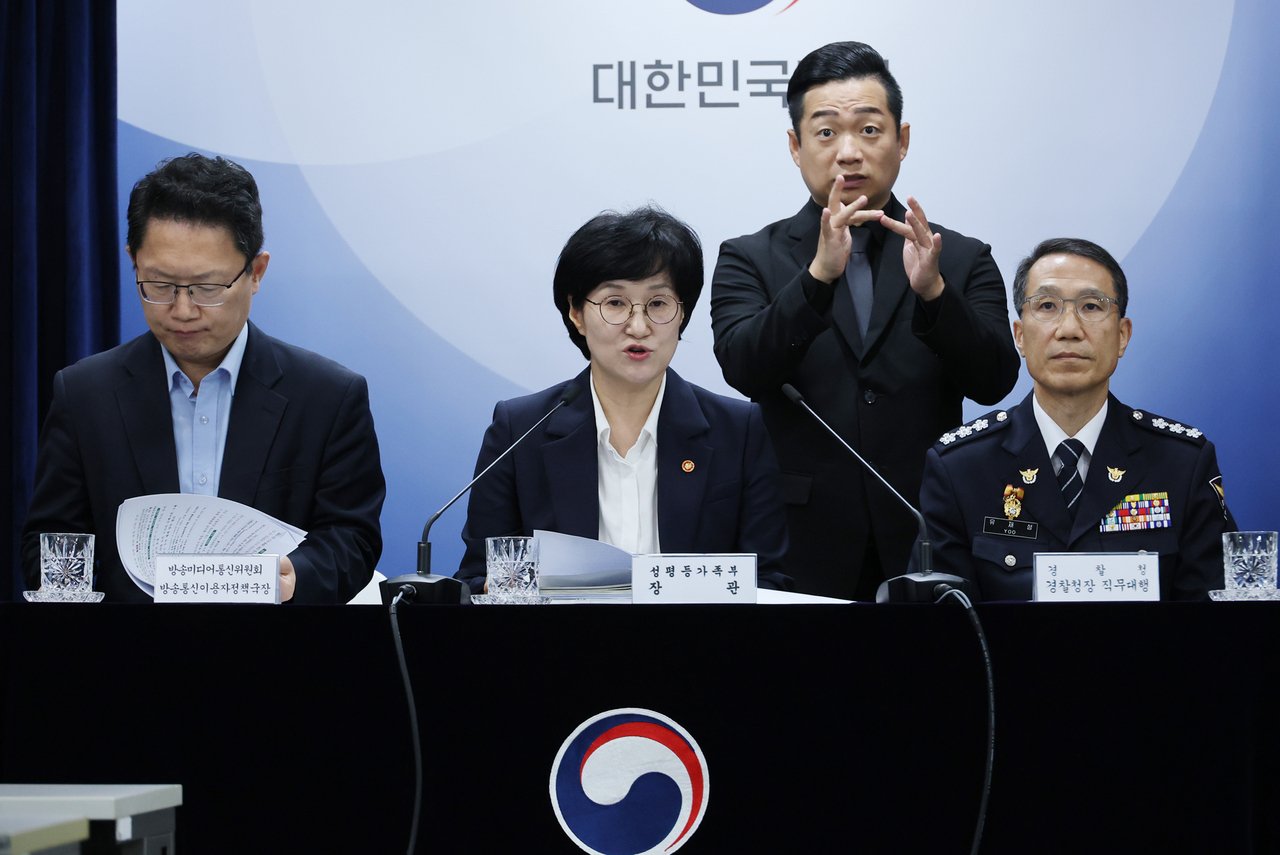
South Korea is considering allowing investigators, under warrant, to hack websites that distribute illegal sexual content to collect evidence and delete illegal data.
As many such sites are based overseas and beyond the government’s direct jurisdiction, it also plans to step up international and domestic cooperation, shifting its focus from removing individual pieces of illegal content to targeting the website operation.
The measures are part of a government-wide action plan announced Thursday to crack down on websites distributing illegal sexual content. This includes illegally filmed material, sexually explicit deepfakes, and other manipulated images and videos made using images of real people.
“We have found that as long as websites continue to ignore our removal requests, reupload content and change their domains, the suffering of victims will not end,” said Won Min-kyung, minister of gender equality and family, as she announced the measures.
“We will now go beyond supporting the removal of illegal content and address the problem at its root by disrupting the illegal websites themselves.”
The Gender Ministry said victims can face repeated harm once illegal sexual content is distributed and recirculated online.
The number of victims reached 10,637 in 2025, more than five times the 2,087 recorded in 2019, according to the ministry. Of those identified as victims last year, 45.1 percent had previously experienced digital sexual abuse.
Teenagers and people in their 20s accounted for 77.6 percent of all victims, meaning many can be vulnerable to repeated circulation of such material for years, the ministry said.
At the same time, websites have increasingly refused government requests to remove illegal content, with the refusal rate rising from 24.4 percent in 2022 to 28.5 percent last year. Stronger enforcement has been difficult because 99 percent of the 16,346 websites identified by the ministry as distributing illegal sexual content are based overseas, with 79.4 percent located in the United States.
In response, the government will consider allowing investigators, under warrant, to directly access such websites to collect evidence and delete illegal data, citing investigative powers used in the United Kingdom and Australia to gain access to computer systems.
Since 2021, Australian authorities have been allowed to remotely disrupt data, search criminal networks and take over online accounts to disrupt serious online crimes. The UK’s Investigatory Powers Act 2016 also allows law enforcement agencies, under warrant, to interfere with computer systems to obtain data in serious crime investigations, according to the ministry.
In cooperation with the police, the ministry will explore technological measures and legal revisions needed to establish a legal basis for similar investigative methods in South Korea.
Separately, the government plans to expand international cooperation to obtain information needed for investigations, working with US authorities including the Federal Bureau of Investigation, as well as international law enforcement organizations such as Interpol.
The government also plans to work with the US Federal Trade Commission to strengthen action against platforms that repeatedly refuse requests to remove illegal content, while pursuing broader civil and criminal measures against overseas operators.
At the same time, authorities plan to strengthen domestic measures when people supplying illegal content or operating websites targeting South Koreans are based in the country.
The government will tighten identity checks for financial accounts suspected of being used to operate illegal websites, making it easier to freeze accounts. It will also consider making the creation and operation of websites dedicated to distributing illegal sexual content an offense in itself, rather than prosecuting operators merely as accomplices.