
 KB News Desk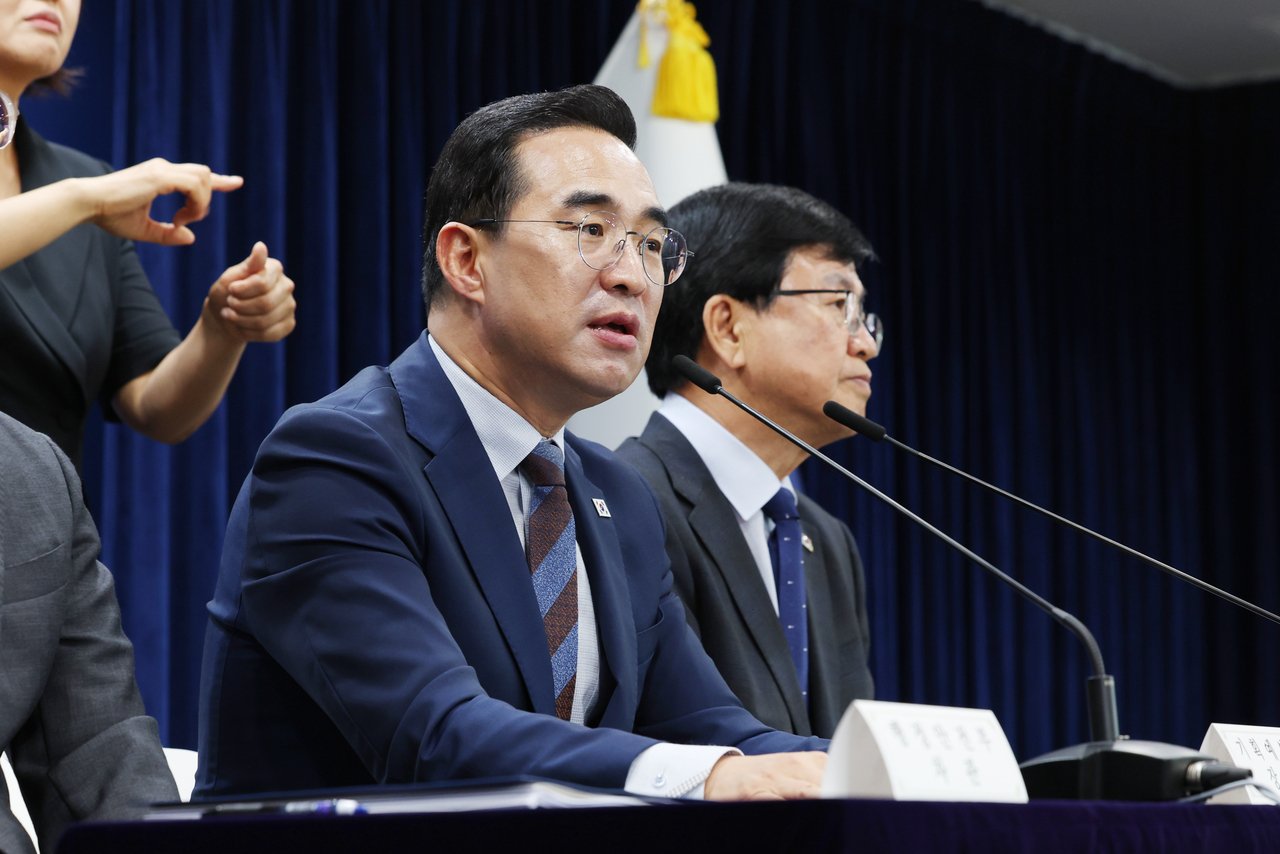
W100tr Future Response Fund takes shape as Korea rethinks how to use tax windfalls
South Korea unveiled plans Friday to create a new fiscal fund that will channel tax revenue generated by the semiconductor boom into long-term investment while serving as a buffer against future revenue downturns.
The Future Response Fund will invest in youth, new growth engines, regional development, education and talent, while accumulated reserves can be tapped when tax revenue weakens.
The plan also includes the first major overhaul of local education funding in more than half a century, aimed at reflecting the sharp decline in the school-age population.
“We need a fiscal storehouse where we can save when revenues are strong and draw on those reserves when they weaken,” Planning and Budget Minister Park Hong-keun said at a government joint press briefing in Seoul on Friday.
The government plans to use the fund both for strategic investment aimed at lifting Korea’s growth potential and to cushion swings in tax revenue, Park said.
A fiscal reservoir
At the center of the new system is a distinction between what the government calls “windfall revenue” and conventional surplus revenue.
Windfall revenue will be defined as the portion of the next year’s projected internal tax revenue that exceeds its long-term trend, based on the average annual growth of actual tax receipts over the previous 10 years. If projected revenue falls below the trend, money can instead flow from the fund back into the general account.
Surplus revenue, by contrast, refers to tax revenue that exceeds the government’s original estimate during the current fiscal year. That excess, along with remaining year-end fiscal surpluses and investment returns, can also flow into the fund.
The 10-year window is intended to capture both upturns and downturns in Korea’s semiconductor cycle, which typically runs three to five years.
“This windfall is precious ammunition as Korea competes at the forefront of the AI transformation,” Park said. “We will make sure it is invested where it is needed most.”
The fund’s programs will range from jobs, housing and asset-building for young people to AI and advanced industries, regional growth projects and broader education investment.
Reported estimates suggest the fund could exceed 100 trillion won ($72.2 billion), based on expectations for tens of trillions of won in tax revenue above its long-term trend, surplus revenue and changes to the education financing structure.
Park declined to provide an official estimate Friday but said it would be “a considerable amount,” with the exact figure to be disclosed alongside the 2027 budget proposal.
The government also plans to entrust professional asset managers with idle funds, investing in stocks and bonds with a target of returns above government bond yields.
Education funding rewritten
The government is also making a sweeping change to the education financing system, arguing that the existing structure has become increasingly out of step with Korea’s demographics.
Under the current system, 20.79 percent of internal tax revenue flows to local education authorities, meaning grants can surge alongside tax receipts regardless of changes in student numbers. Korea’s school-age population fell 32.8 percent from 8.8 million in 2010 to 5.91 million in 2025, while education grants more than doubled over the same period.
The overhaul will break that automatic link. Instead, each year’s grant will build on the previous year’s amount, adjusted for economic growth and changes in the school-age population.
With the shift raising concerns that schools could receive less funding than under the existing tax-linked system, the government has proposed safeguards to ensure grants do not fall below the previous year’s nominal amount. Under the planned legal revision, the state would be required to make up any shortfall produced by the new formula.
The government said it would preserve the intent of the 20.79 percent rule by channeling the gap between that original benchmark and the grant calculated under the new formula into a separate education and talent account within the Future Response Fund.
The money will be legally protected from transfers to other accounts and earmarked mainly for early childhood, higher and lifelong education, as well as programs to attract and retain skilled workers.
“As the minister responsible for the nation’s finances, I want to make it clear once again that funding for kindergarten, elementary and secondary education will not fall,” Park stressed. “Preserving the intent of the 20.79 percent linkage means that this money will not be used elsewhere. The resources that have gone into education will continue to be invested across the education sector and in talent.”
The government plans to submit legislation establishing the fund and revising the local education finance system to the National Assembly with its 2027 budget proposal in early September.