

 KB News Desk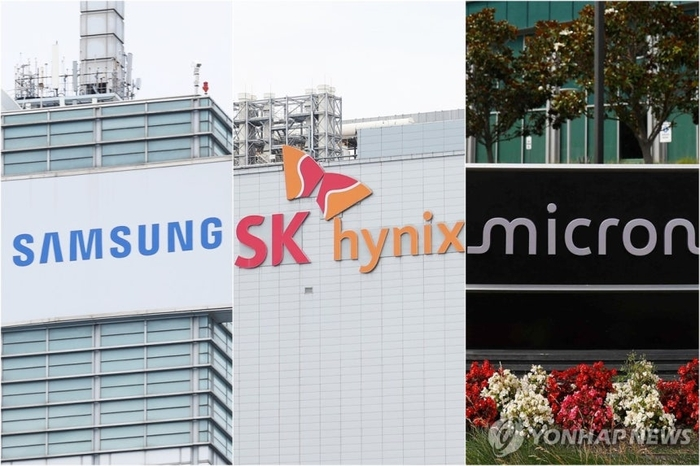
The world’s three largest memory chipmakers have been named in a proposed US class-action lawsuit accusing them of restricting DRAM supply during the industry’s shift toward artificial intelligence memory products.
Analysts, however, expect little immediate impact on Samsung Electronics, SK hynix and Micron Technology, or the memory market.
According to industry sources Tuesday, 17 plaintiffs comprising individual consumers and small businesses filed the complaint in the US District Court for the Northern District of California last week.
The lawsuit alleges that the three companies, which together account for about 90 percent of the global DRAM market, deliberately limited production of conventional memory products such as DDR3 and DDR4 while shifting capacity toward high-bandwidth memory used in AI accelerators.
The plaintiffs argue that the move contributed to a sharp rise in DRAM prices and ultimately pushed up prices for consumer electronics containing memory chips.
Industry officials and analysts, however, note that the case is at an early stage and faces a high burden of proof because the companies’ shift toward HBM has been publicly disclosed and widely viewed as a commercial response to surging AI demand rather than evidence of coordinated supply restrictions.
The complaint itself acknowledges that total DRAM wafer capacity continues to expand, with global capacity projected to rise through 2026 even as a larger share is allocated to HBM production.
Memory producers have argued that reallocating capacity toward HBM has become unavoidable as AI demand reshapes the industry. HBM chips generate significantly higher returns than conventional DRAM and require substantially more wafer capacity to manufacture.
Analysts also expect little near-term impact on pricing dynamics. US investment bank Jefferies forecasts DRAM prices will continue rising through 2027 as AI demand outpaces supply growth, regardless of the lawsuit’s outcome.
The lawsuit comes as memory makers are benefiting from one of the strongest upcycles in years. Micron recently reported record quarterly results, while Samsung Electronics and SK hynix are both expected to post sharp earnings gains driven by AI-related demand and higher memory prices.
The case also differs from earlier DRAM antitrust cases in the 2000s, which involved explicit allegations of price coordination and output agreements. The current complaint centers instead on whether the industry’s publicly announced shift toward HBM indirectly tightened the supply of conventional memory products.