
 KB News Desk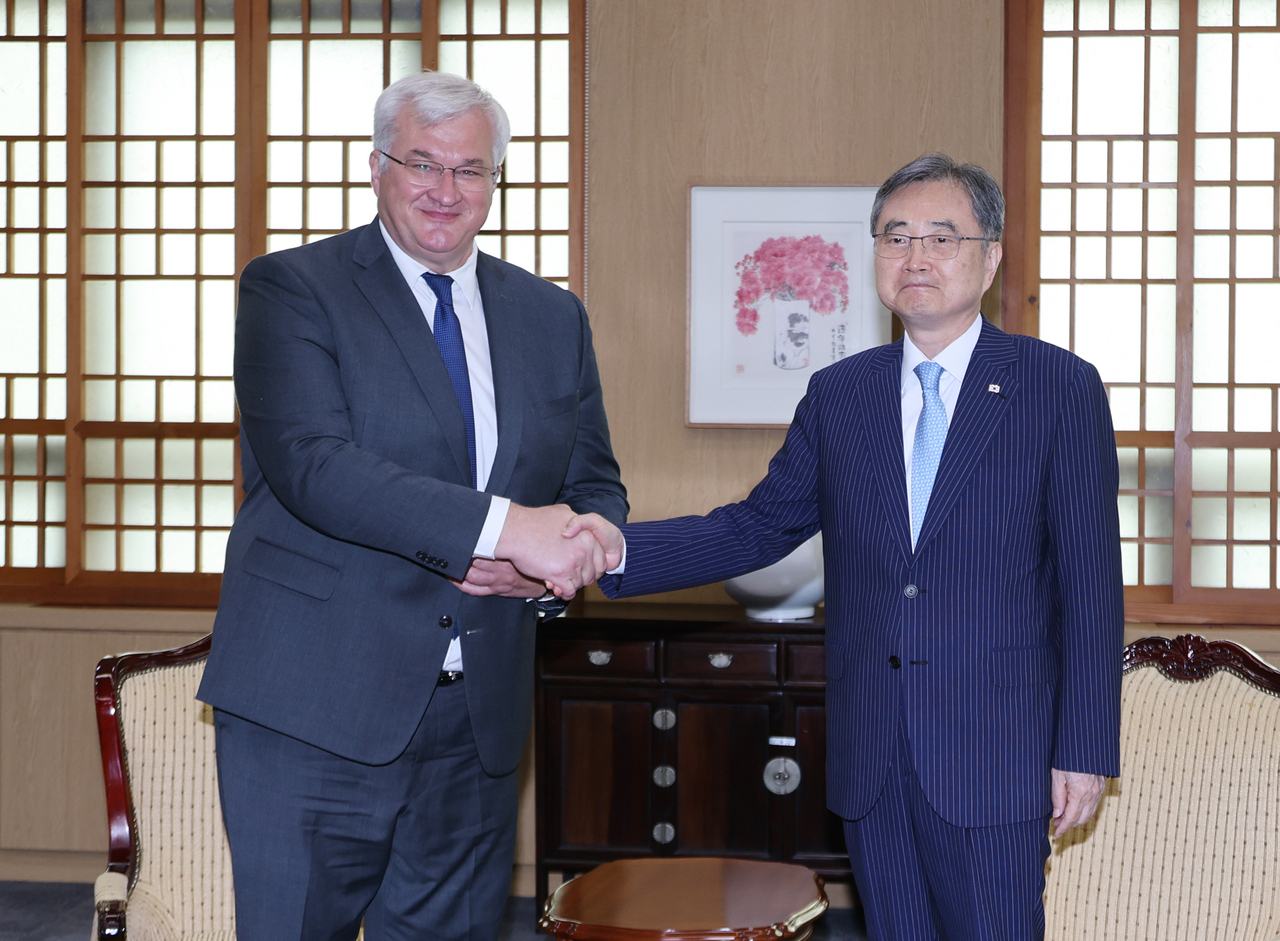
Seoul maintains humanitarian approach as transfer of North Korean POWs to South Korea remains stalled
Russia has proposed exchanging thousands of Ukrainian detainees for two North Korean soldiers captured by Ukraine, Ukraine’s top diplomat told experts in Seoul, sources close to the matter confirmed Thursday.
If confirmed, the proposal could complicate Seoul’s efforts to bring the prisoners to South Korea. Separate diplomatic sources familiar with the matter, however, expressed skepticism over whether Moscow would make such an offer.
The remark by Ukrainian Foreign Minister Andrii Sybiha was made during his visit to Seoul earlier this week. He met with South Korean Foreign Minister Cho Hyun and discussed the fate of the two North Korean prisoners of war, who have publicly expressed their wish to resettle in South Korea.
According to diplomatic sources, Sybiha told officials at the Asan Institute for Policy Studies in Seoul on Monday during a private meeting that Moscow had proposed returning the two North Korean prisoners in exchange for the release of thousands of Ukrainians currently detained by Russia.
“The remark came up as (Sybiha) explained the background to the various issues he discussed, but it was not itself the subject of discussion,” the source told The Korea Herald.
In a post on X on Monday, Sybiha said he held discussions at the Asan Institute with former Foreign Minister Yoon Young-kwan, senior researcher Shim Sang-min and researcher Saeme Kim.
He described the institute as “one of Asia’s most influential research hubs for foreign policy and national security” and said the talks focused on the growing security linkage between Europe and the Indo-Pacific region, as well as “the threats of Russia’s increased engagement of the DPRK” in the war against Ukraine, using the abbreviation for North Korea’s official name, the Democratic People’s Republic of Korea. He also warned that Moscow was “exporting destabilisation to the Korean Peninsula,” referring to Russia’s expanding military cooperation with North Korea.
The reported proposal highlights what observers see as competing priorities facing Kyiv. South Korea has maintained it would accept the two North Korean soldiers if they choose to come, but some diplomatic sources say Ukraine appears to view the prisoners as an important bargaining chip in efforts to secure the release of its own citizens detained by Russia.
Kyiv has said it would not forcibly return North Korean prisoners of war against their wishes, but no final decision has been made, with Ukrainian officials also considering how the case could affect the handling of POWs from other countries, sources said.
The issue of the transfer of the two North Korean soldiers was also discussed during Cho and Sybiha’s bilateral meeting in Seoul on Tuesday. Following the talks, the two governments said they agreed to seek a solution “in accordance with international law and humanitarian principles” while respecting the free will of the prisoners.
Ukraine first disclosed the capture of the two North Korean soldiers in Russia’s Kursk region in January 2025, marking the first known case of North Korean troops being taken alive since their deployment to support Moscow’s war effort. They have since reportedly expressed their desire to come to South Korea.
South Korea considers North Koreans constitutionally its citizens and has repeatedly said it is prepared to receive the two men if they voluntarily choose to come.
Despite the apparent convergence on that principle, diplomats say the path forward remains uncertain.
According to multiple diplomatic sources, discussions between Seoul and Kyiv have broadened beyond the immediate issue of the prisoners to include South Korea’s potential role in Ukraine’s postwar reconstruction.
While neither government has publicly linked the two issues, sources said Ukraine has sought greater clarity on how South Korea could participate in rebuilding infrastructure, energy facilities and other sectors once the war ends.
Ukraine has repeatedly expressed hope that South Korean companies will participate in postwar reconstruction. Following Tuesday’s foreign ministers’ meeting, Seoul said it would continue reviewing humanitarian assistance for Ukraine’s recovery and reconstruction.