
 KB News Desk
Virtual roads and wire cars: carmaker reinvents how vehicles are tested and validated
HWASEONG, Gyeonggi Province — As vehicles evolve into software-heavy machines, quality inspection has become increasingly complex, raising the bar for advanced, efficient testing powered by digital twin, robotics and artificial intelligence.
A key example of this shift is Hyundai Motor Group’s Namyang research center in Hwaseong, Gyeonggi Province, where the automaker is pioneering new inspection technologies for the era of software-defined vehicles (SDVs).
The Namyang center unveiled its new Advanced Mobility Solutions building in June, uniting cutting-edge equipment and development capabilities previously dispersed across the campus to streamline vehicle development and enhance collaboration.
Hyundai offered the media a first look inside four of its key quality inspection facilities on Wednesday. While the virtual driving simulator studio operates separately, digital measurement center, 3D printing solutions center, and open validation and automation lab are fully integrated into the AMS building.
Test-driving virtual vehicles
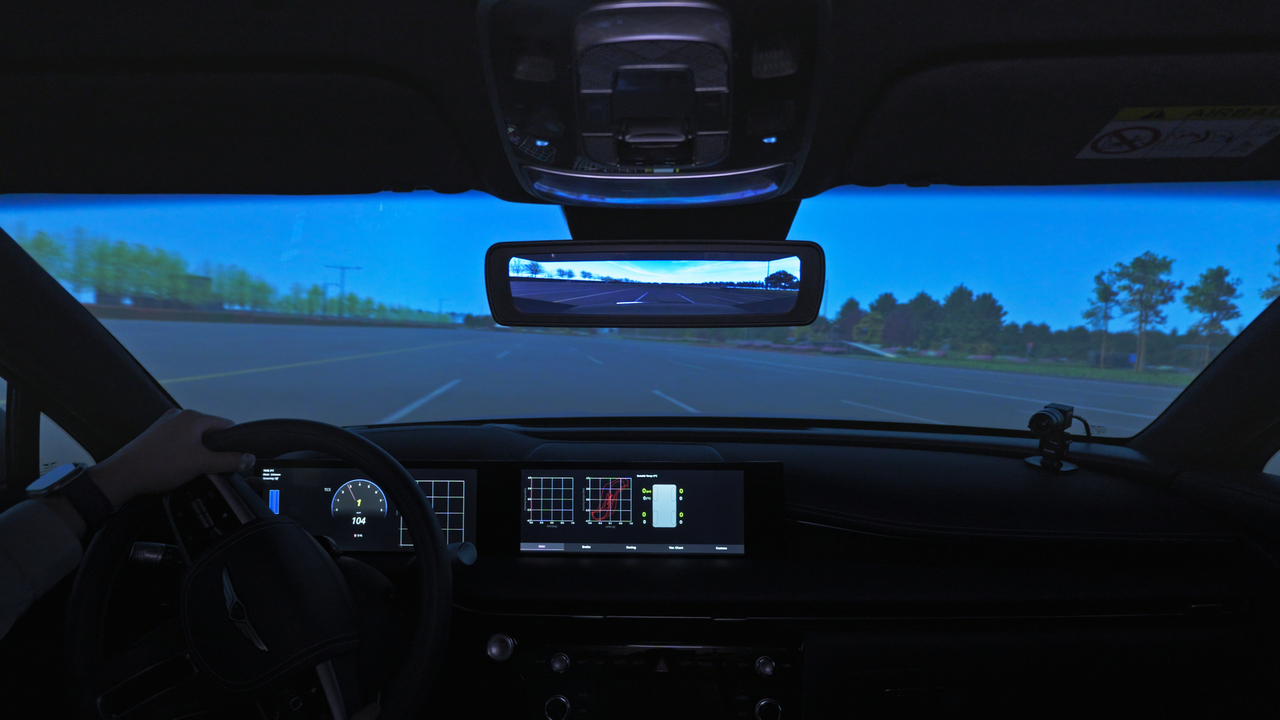
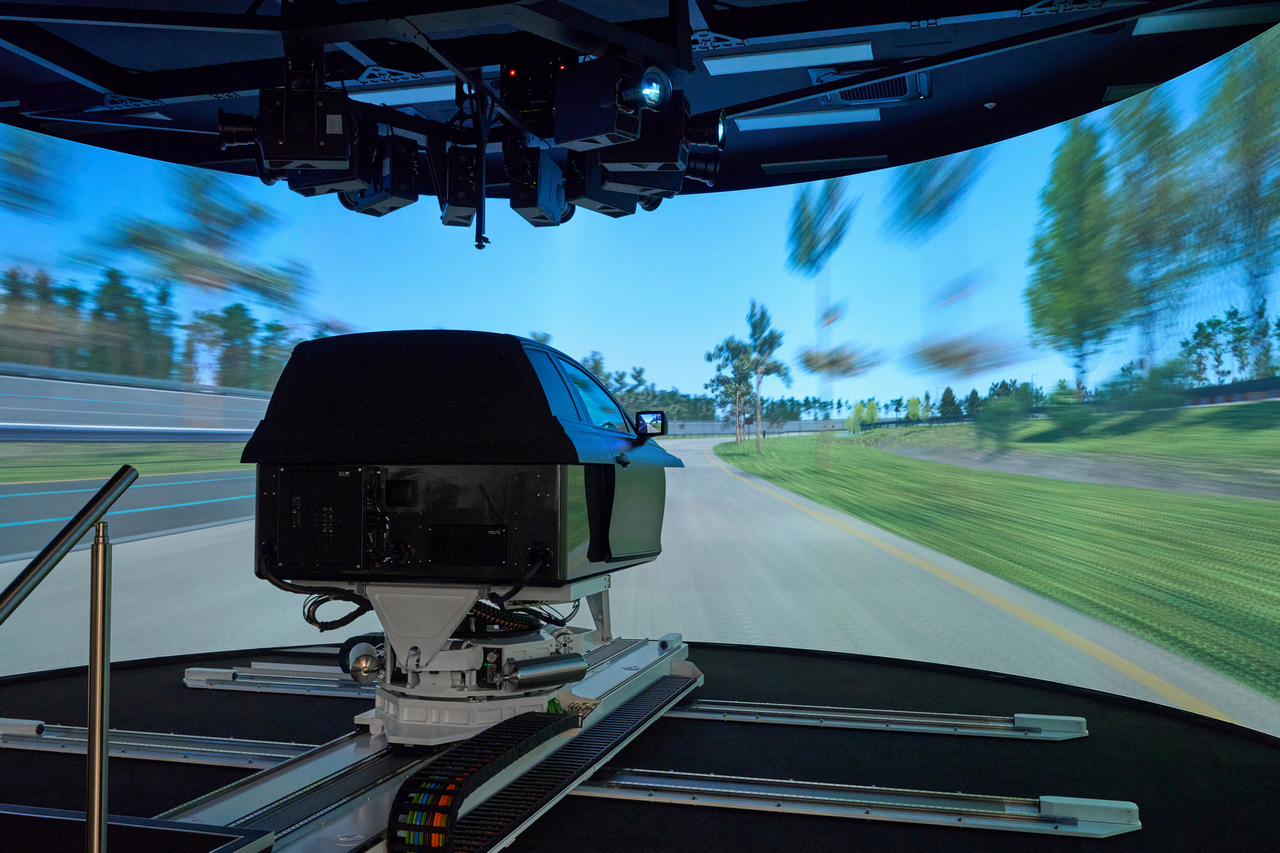
At the virtual driving simulator studio, engineers evaluate vehicle ride, handling and other performance characteristics in highly realistic virtual environments before building prototypes.
According to Jung Pil-young, senior researcher of the driving performance concept development team at Namyang research center, the studio installed its own driving simulator in February after relying on simulators leased from external providers since 2020. The in-house facility enables the team to validate Hyundai, Kia, and high-performance N models more efficiently.
For the demonstration, the simulator’s lightweight carbon-fiber cockpit featured components from the Genesis G80 sedan, such as the steering wheel, seats and pedals, to replicate the feel of driving the actual vehicle.
The cockpit is mounted on a motion platform capable of reproducing movements known as the six degrees of freedom — surge, sway, heave, roll, pitch and yaw. This realistically reproduces vehicle dynamics, while nine projectors create a seamless 270-degree, 4K panoramic view of real-world roads.
Jung said engineers can test-drive virtual vehicles on digital-twin test tracks worldwide.
By scanning the tracks down to the millimeter, the simulator replicates almost everything from road slopes, surface irregularities, speed bumps and asphalt textures. This is powered by Hyundai’s world-first “Terrain Server” that processes massive datasets in real-time without lagging the simulator.
The technology enhances cost efficiency and accelerates decision-making throughout vehicle development, reducing the time required to build and evaluate physical mockups from one to two months to about a week.
The ability to test all key vehicle parameters within one or two hours also streamlines data analysis, helping engineers to make faster, more informed development decisions.
Robotics-powered measurement
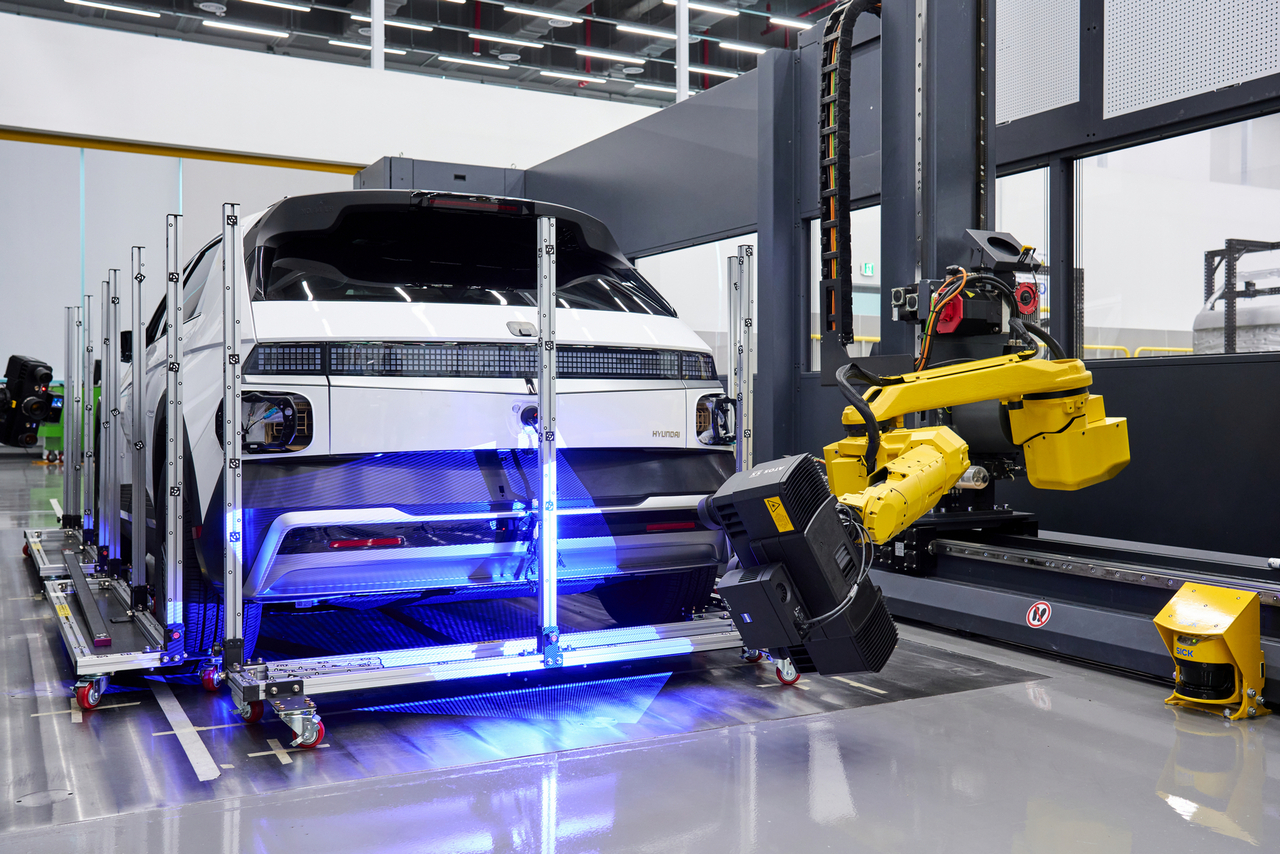
The next stop on the tour was the Digital Measurement Center, where Hyundai demonstrated how robotics and 3D scanning technologies have advanced the precision measurement of vehicle bodies and components.
By detecting even the smallest dimensional deviations, the system helps ensure structural integrity, build quality and a more refined driving experience before a vehicle enters mass production.
For vehicle body structure measurement, the center uses a 3D coordinate measuring machine that captures roughly 1,000 measurement points and combines them into 600 to 700 quality evaluation metrics. This system is transferred directly to mass-production plants, enabling vehicles to be built to the same quality standards.
Engineers also showcased how robotic arms, equipped with 3D scanners, and autonomous mobile robots can inspect movable body components such as hoods, doors, and tailgates without human intervention.
This leads to more accurate prediction of potential manufacturing issues — such as panel gaps, misalignment or poor fit — and helps determine whether the root cause lies with the component itself or the assembly process.
3D printing auto components
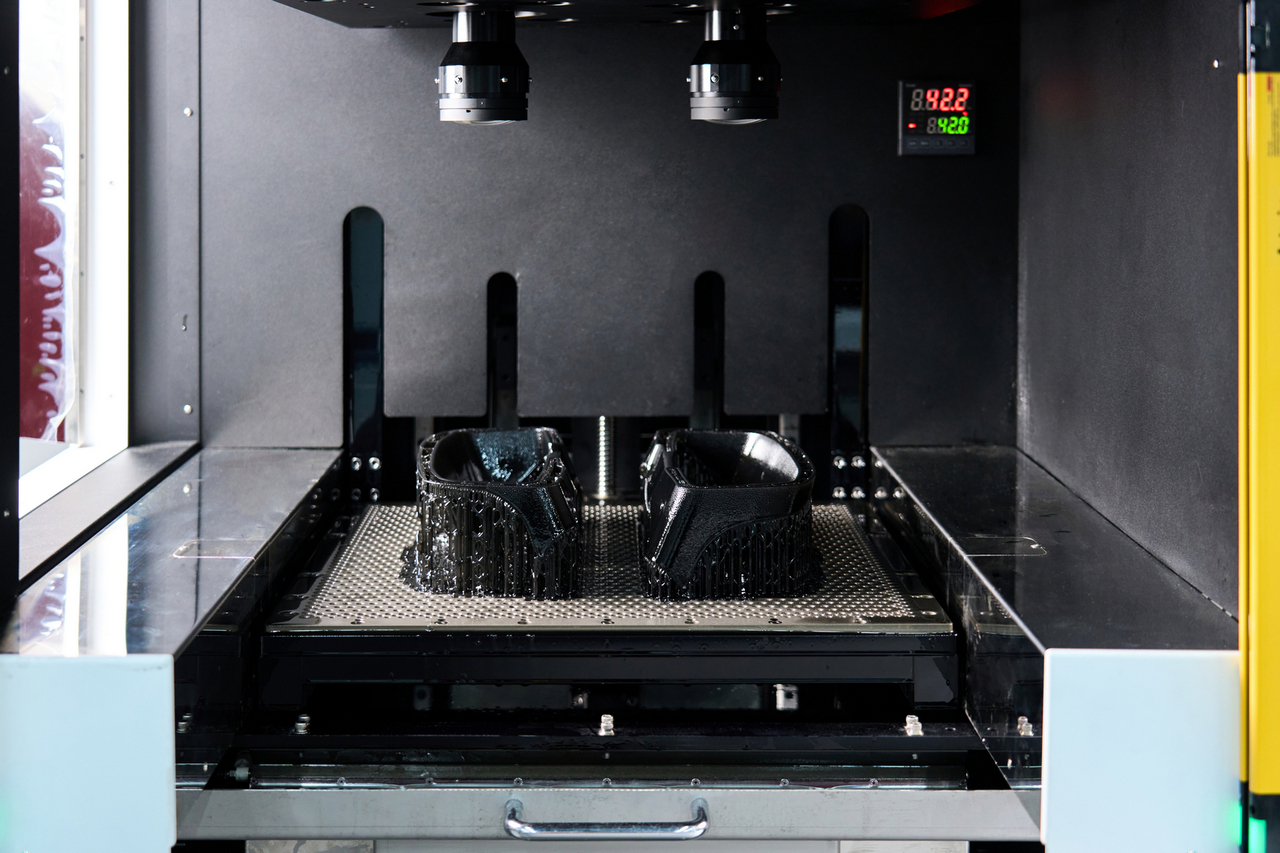
For vehicle development, the Additive Manufacturing Solutions Center uses 3D printing technology to build vehicle components layer by layer, for faster prototyping and low-volume production than conventional manufacturing methods, which rely on expensive molds.
Hyundai said the technology is also used to recreate components for legacy models such as the Pony sedan.
During the tour, engineers demonstrated polymer- and metal-based additive manufacturing systems capable of producing prototype pieces, large motor housings, and lightweight but durable structures.
Controller validations for SDVs
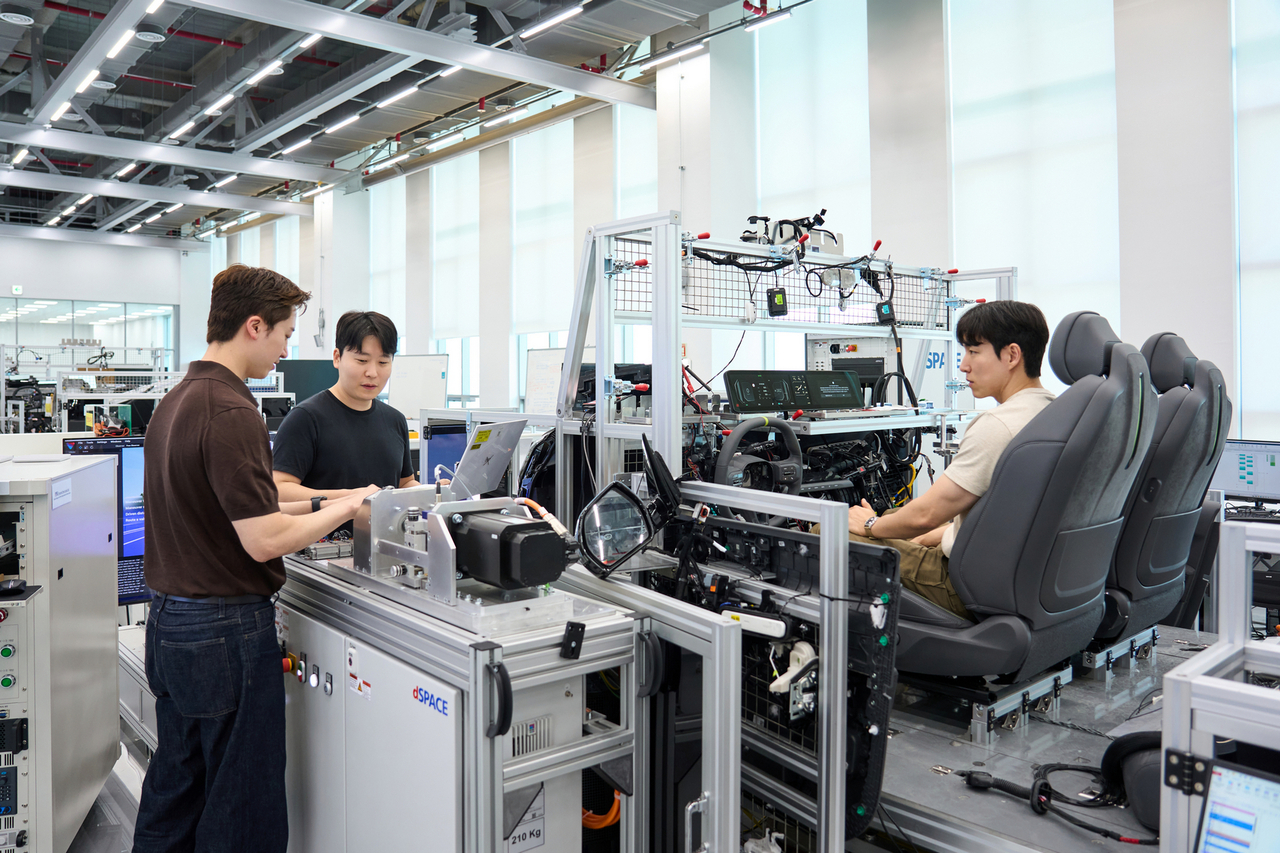
The tour concluded at the next-generation open validation and automation lab (Nova Lab). The newly established controller validation center is designed to support the growing complexity of vehicle electronics as the company transitions to SDVs.
The lab validates electronic control units before physical prototypes are built by mounting production-spec electronic components on “wire cars” — vehicle platforms that replicate real vehicle electrical architectures without a complete body.
The facility can conduct simultaneous testing across 14 validation testing bays, with each wire car accommodating hundreds of electronic components and up to 500 connector interfaces. Hyundai said the setup helps detect software and hardware issues early to reduce time and cost later in the development process.
The lab can also simulate a wide range of driving scenarios, including advanced driver assistance system functions such as adaptive cruise control, allowing engineers to repeatedly reproduce specific fault conditions that would be difficult to recreate on public roads.
Nova Lab is also gearing up for Hyundai’s pivot to SDVs. The facility validates the company’s next-generation SDV architecture, which replaces numerous domain-specific controllers with centralized high-performance vehicle controllers and zonal controllers. Two of its 14 workstations are already dedicated to testing the new system before it is deployed in production vehicles.