

 KB News Desk
Pension fund expected to trim domestic equities as Kospi rally lifts allocation above target
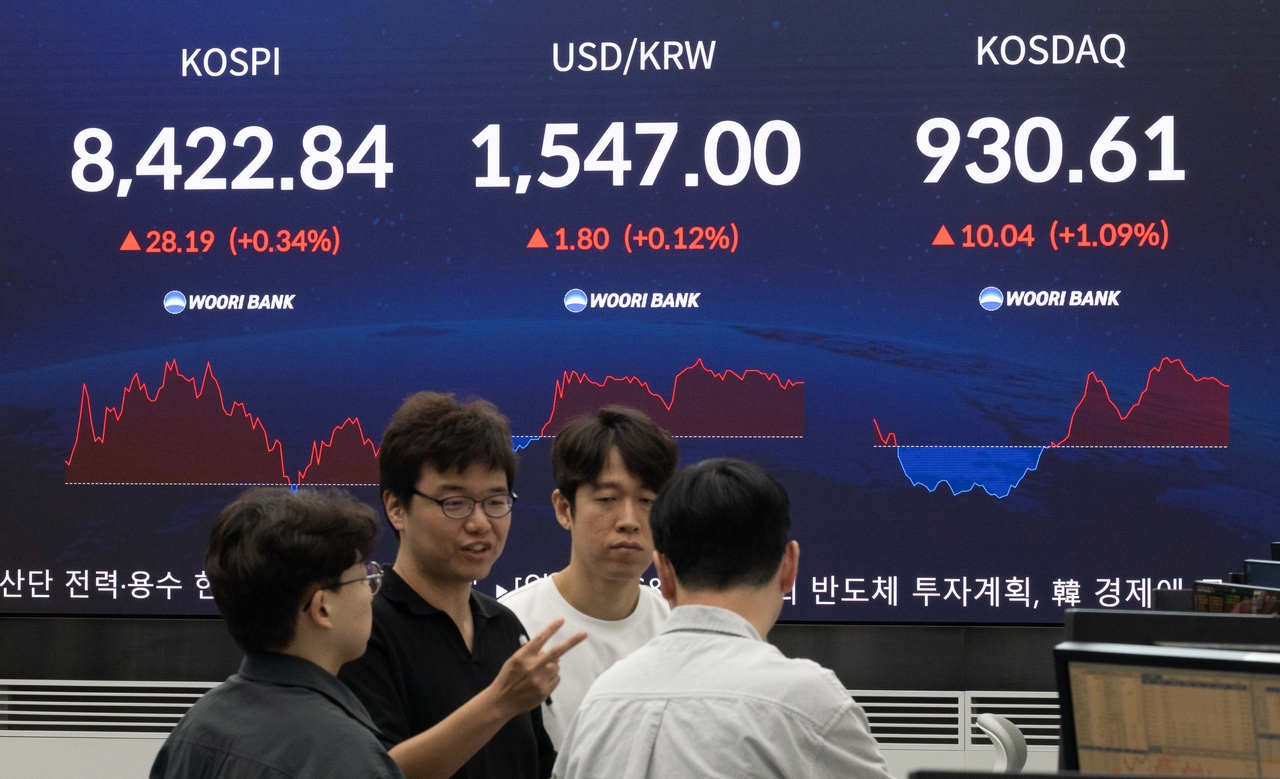
The South Korean stock market faces a potential supply overhang as the National Pension Service, the world’s third-largest pension fund by total assets, is expected to rebalance its domestic stock holdings from Wednesday, fueling concerns over a sizable sell-off.
Though the benchmark Kospi’s blistering rally is expected to have pushed its domestic equity weighting well above target levels, the pension fund had deferred rebalancing through the end of June, allowing it to maintain its expanded stock holdings.
Starting Wednesday, however, the fund is expected to begin trimming its domestic equity exposure.
Like most institutional investors, the NPS mechanically reduces holdings in assets whose weightings exceed target levels and increases exposure to those that fall below their targets, thereby improving long-term performance and reducing portfolio risk.
The NPS’ target allocation to domestic equities for this year stands at 20.8 percent. With an allowable deviation range of 8 percentage points above or below the target, the upper limit of its domestic equity allocation can reach as high as 28.8 percent.
While the NPS has not disclosed the exact size of its domestic equity holdings as of June, they are estimated to account for roughly 30 percent of its total assets, up nearly 5 percentage point from its 25.1 percent holding as of end-April.
With the pension fund not disclosing its detailed rebalancing strategy, estimates from brokerage firms on the scale of the expected stock sales vary widely.
Shinyoung Securities said in a recent report that the NPS’ domestic stock sales could amount to 74.4 trillion won ($48 billion) if the Kospi reclaims the 9,000-point mark. If the Kospi remains at around 8,500 points, the sell-off could be maintained between 14.7 trillion won and 51.2 trillion won.
According to Daishin Securities, the pension fund would need to sell roughly 20 trillion-57 trillion won of domestic stocks to bring the weighting back within target.
While estimates of the sell-off’s size vary, market analysts broadly expect the NPS to pursue a rebalancing strategy aimed at minimizing market disruption, spreading sales over an extended period rather than unloading large volumes at once.
“The NPS is likely to scale down its annual, monthly and daily rebalancing caps to minimize market impact,” said Cho Yong-gu, an analyst at Shinyoung Securities.
“The fund is expected to slow the pace of sales and may consider raising its year-end target allocation to domestic equities.”
Addressing concerns over the rebalancing, NPS Chairman and CEO Kim Sung-joo said the pension fund would seek to minimize any impact on the market.
“A private-sector investor whose sole objective is profit maximization may choose to sell large volumes or buy aggressively at low prices, but the NPS acts with great caution,” Kim said on June 23.
“As a public institution, we operate under the principle of minimizing market disruption.”