
 KB News Desk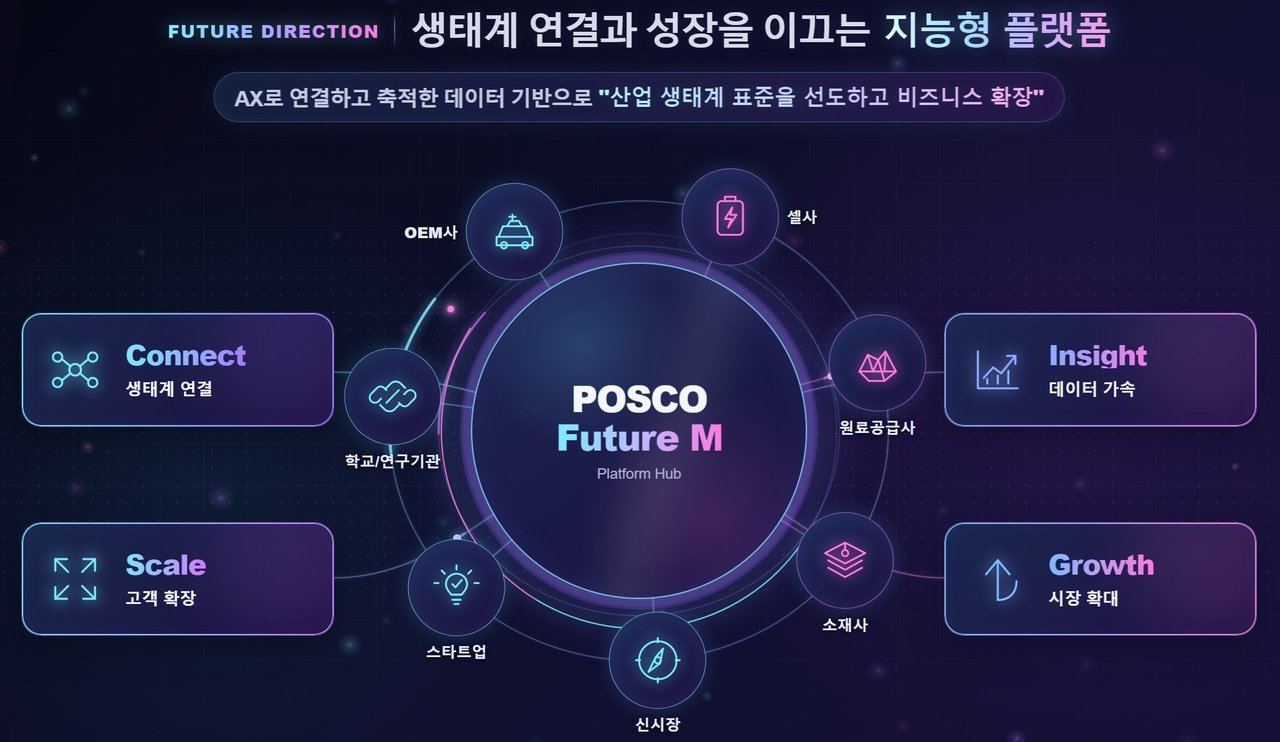
Posco Future M is stepping up its AI transformation to improve manufacturing efficiency, targeting a 30 percent productivity increase and 50 percent reduction in product development time by the first half of 2028.
The Korean battery materials-maker aims to build an “AI-native” operating system in which artificial intelligence identifies and executes process improvements, while employees oversee final decisions.
As part of the initiative, the company selected 28 employee-developed AI projects through its AI 100-Day Challenge, which launched in June. The projects cover manufacturing, office operations, safety and employee training, with field-testing and feedback planned ahead of deployment by the first half of 2027.
The top prize went to an AI model that analyzes kiln heater operating data to predict equipment failures and prioritize inspections, potentially reducing unexpected repairs and improving cathode material production efficiency.
Two other award-winning projects focus on AI-powered procurement, including automated searches and alternative material recommendations, and the automation of electron microscope imaging, analysis and reporting.
The initiative builds on Posco Future M’s digital transformation strategy unveiled in July under the vision “Battery of Things Ecosystem Game Changer.”
The strategy centers on standardizing processes, integrating data and expanding AI applications across manufacturing and research. Key priorities include AI agents for process optimization, an integrated data platform, intelligent factories and stronger collaboration with strategic customers.
In September, the company launched a companywide AI transformation project to accelerate adoption across manufacturing, R&D, marketing and other business functions.

![[단독] 한국외대, 베트남 외교아카데미와 복수학위 추진…연 20~30명 규모](https://korbiznews.com/wp-content/uploads/2026/10/news-p.v1.20261014.01b370138b1a4a5f9d748d831ca1480d_P1.png)