
 KB News Desk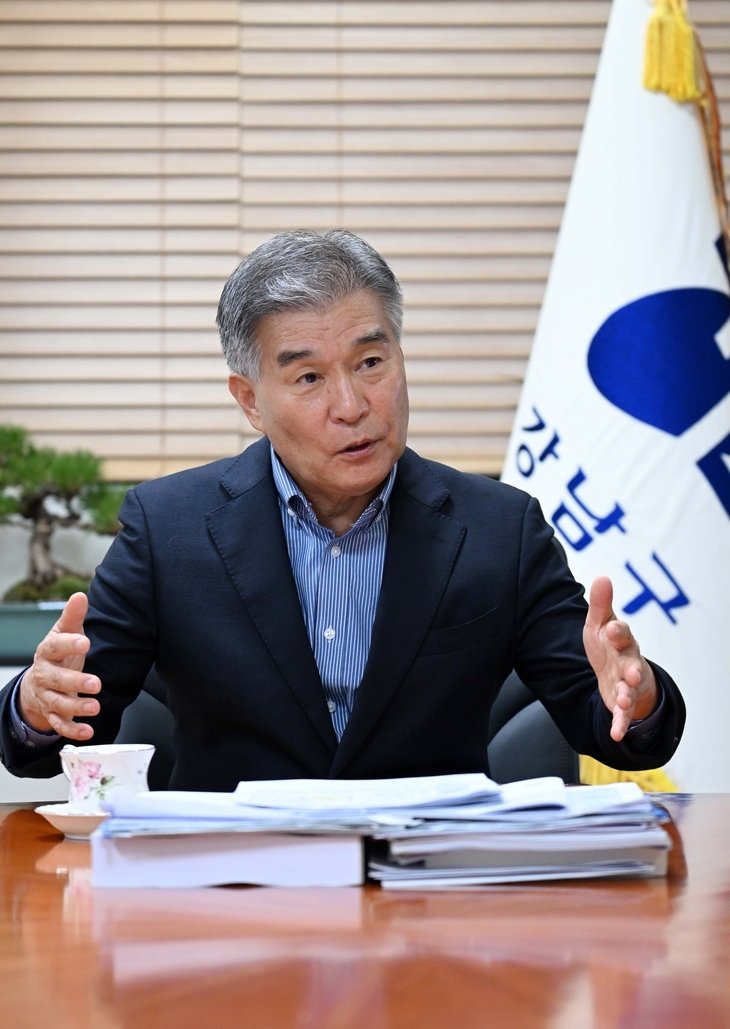
Kim’s four-year vision spans a MICE hub, robotics and AI investment, and faster redevelopment of aging apartments
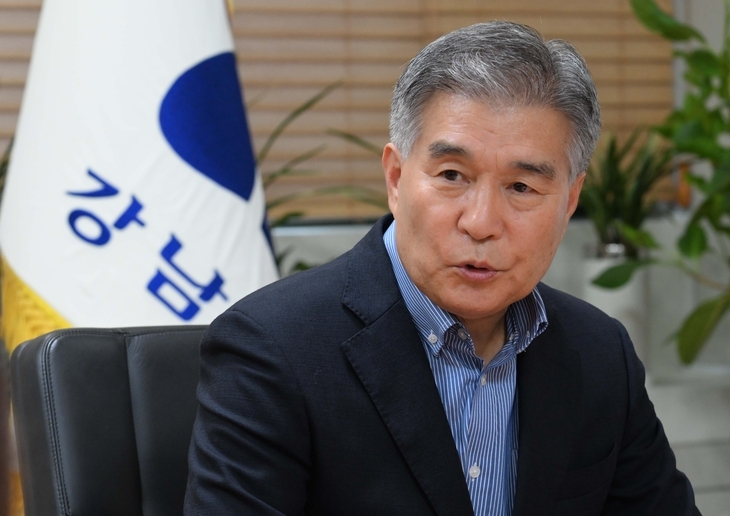
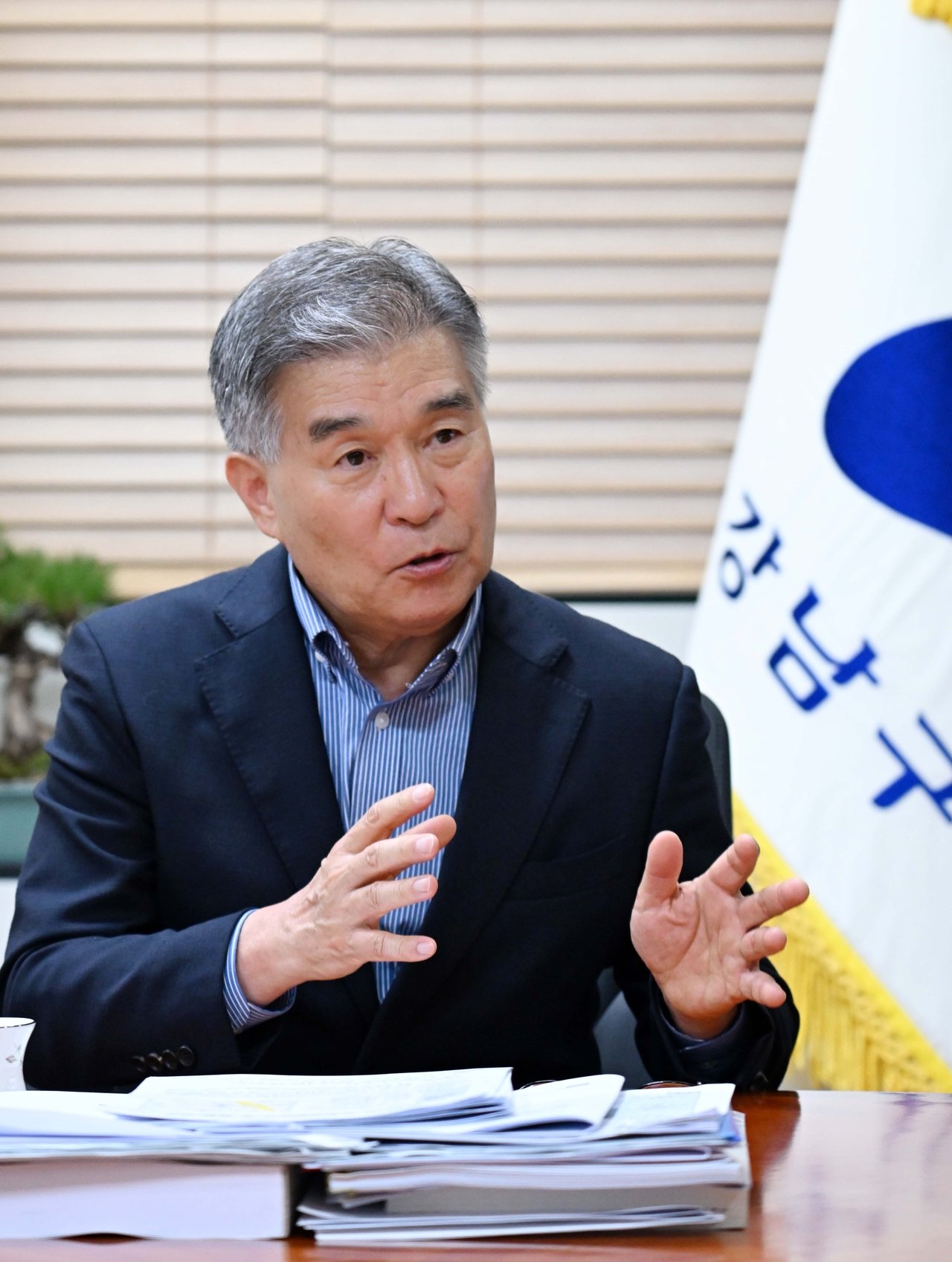
Gangnam-gu Mayor Kim Hyeon-ki likens his first three months in office to Forrest Gump’s long run.
He said he began running alone, but district officials and residents have since joined him in pursuing what he calls a “major transformation of Gangnam.”
“I’ve gained considerable confidence. I now believe we can make it happen,” Kim said in an interview with The Korea Herald at his office Tuesday.
His priority is to prepare the district for the future rather than rest on its past success.
“If we remain content with where we are, we have no future,” the mayor said.
Gangnam, an affluent district in southern Seoul established 51 years ago and home to around 550,000 residents, gained global fame through Psy’s “Gangnam Style.” But it is increasingly showing its age, Kim said, noting Apgujeong Rodeo Street and Garosu-gil as examples.
The 2026 Gangnam Festival, held Oct. 3-5, took over Dosan-daero, a major road through the district’s best-known shopping and fashion areas. The parade marked an unprecedented attempt by the district to bring a large-scale event to the heart of Gangnam.
The festival featured K-pop performances, a concert headlined by Psy, food vendors and a street parade.
“The festival drew so many foreign tourists, reaffirming the strength of Korean cultural content,” Kim said.
Kim’s vision divides Gangnam into three industrial zones: Korean cultural industries in Cheongdam, Sinsa and Nonhyeon; meetings, incentives, conventions and exhibitions (MICE) around Samseong Station; and robotics and AI in Suseo.
“Gangnam is already at the center of K-content drawing global attention — K-pop, K-fashion, K-beauty and K-food. We will build on those strengths to brand Gangnam as a place people around the world most want to visit and return to,” Kim said.
The MICE strategy centers on the underground development of Yeongdong-daero and Hyundai Motor Group’s Global Business Complex, alongside the broader international business and convention district linking Coex and the Jamsil Sports Complex.
“Samseong-dong, particularly Samseong Station, will be at the center of the MICE district,” Kim said. He cited an estimated 590 trillion won ($441 billion) in economic impact from the development.
Medical tourism is another part of Kim’s strategy to revitalize the district. Medical institutions in Gangnam treated 650,958 foreign patients last year, up 72.6 percent from a year earlier and marking a third consecutive annual record, according to the district office.
“The district’s role is to support services that private medical providers cannot easily organize themselves, including overseas promotion and connections with hotels and other accommodation providers,” Kim said.
For Kim, Gangnam’s transformation also starts at home, with rebuilding its aging apartment complexes. One of his first actions after taking office was to approve the creation of a task force to fast-track reconstruction projects across the district.
“My goal is to shorten administrative procedures within the district’s authority as much as possible,” Kim said. “We are cutting processing times for approvals to establish reconstruction associations by nearly half.”
“We also dispatched a support team of district officials and experts to mediate disputes among the residents. When the district takes an active role, these problems can be resolved.”
Kim expressed reservations about a proposal backed by the government and the ruling Democratic Party of Korea to transfer authority over reconstruction projects involving fewer than 500 households from the Seoul city government to district offices.
“Citywide coordination remains important for coherent urban planning and infrastructure, including water and sewage systems,” he said.
Asked what he hopes to achieve over his four-year term, Kim did not hesitate.
“I’m decisive by nature,” he said. “Gangnam is showing its age after more than 50 years. I would be happy simply to be remembered as having turned that around and laid the groundwork for a new leap forward.”


![[단독] 한국외대, 베트남 외교아카데미와 복수학위 추진…연 20~30명 규모](https://korbiznews.com/wp-content/uploads/2026/10/news-p.v1.20261014.01b370138b1a4a5f9d748d831ca1480d_P1.png)