

 KB News Desk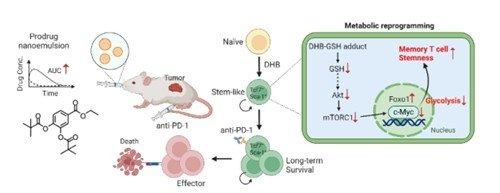
Researchers from Sungkyunkwan University and the University of Michigan have developed an oral nanomedicine that uses a gut bacterial metabolite to enhance the immune system’s ability to fight cancer.
Sungkyunkwan University said Monday that a team led by medical school professor Cho Young-seok, who specializes in Nuclear Medicine and Molecular Imaging, collaborated with professor James J. Moon’s team at the University of Michigan and other researchers on the microbiome-based treatment.
The researchers identified 3,4-dihydroxybenzoic acid, or DHB, as a naturally occurring gut microbial metabolite that can help immune cells target tumors.
Tests showed that DHB promoted stem cell-like properties in CD8+ T cells, which are crucial to the body’s antitumor response. These properties helped the cells survive longer and sustain their attack on cancer cells.
Experiments showed that DHB promoted stem cell-like properties in CD8+ T cells, which are central to the body’s antitumor response. This helped the cells survive longer and sustain their attack on cancer cells.
DHB, however, is cleared from the body within minutes, limiting its potential as a treatment. But researchers used nanotechnology to create an oral formulation that remains effective in the body for longer.
In animal studies, the nanomedicine, when administered alongside an existing cancer immunotherapy, eliminated tumors and triggered an immune memory response that protected against recurrence, according to the university.
The findings are published in the journal Nature Nanotechnology.