
 KB News Desk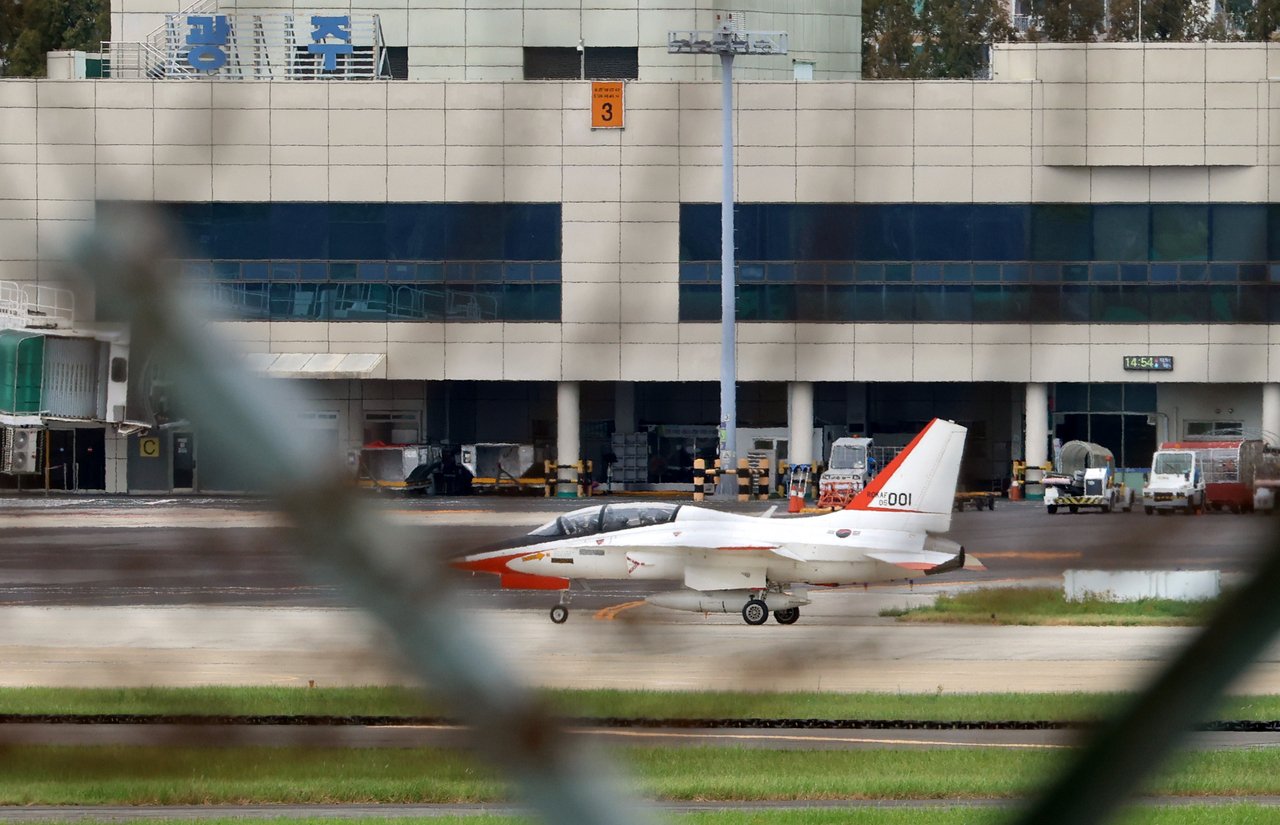
South Korea is moving to vacate Gwangju Air Base by mid-2028 as part of the Lee Jae Myung administration’s plan to make way for a semiconductor industrial cluster.
As part of the effort, the Defense Ministry is preparing to temporarily relocate units of the Air Force’s 1st Fighter Wing stationed at Gwangju to other air bases, a move that could also require the reassignment of some forces already stationed at the receiving bases.
But the relocation faces a series of military challenges, including potential disruptions to fighter pilot training, adjustments to southwestern air defense operations and the construction of additional facilities for what could be a more than four-year temporary deployment.
Military officials said Friday that the Air Force is reviewing the use of three bases for the temporary relocation: Seosan in South Chungcheong Province, Yecheon in North Gyeongsang Province and Chungju in North Chungcheong Province.
Wider reshuffle
The plan is not expected to simply divide the three flying squadrons currently stationed at Gwangju among the three bases.
The 1st Fighter Wing plays a key role in the Air Force’s fighter pilot training pipeline, handling advanced and tactical flight training after student pilots complete basic flight training at the 3rd Flying Training Wing in Sacheon, South Gyeongsang Province.
Trainer aircraft at Gwangju would need to remain together at a single base to preserve the existing pilot training system, while other units could be relocated separately, according to a military official.
Under one arrangement being reviewed, forces from Gwangju would move to Yecheon and Seosan, while some forces already stationed at Yecheon would in turn be relocated to Chungju.
The broader reshuffle could also force changes to the Air Force’s readiness posture in southwestern South Korea.
“We are reviewing various measures to minimize the impact on readiness,” a Joint Chiefs of Staff official said, adding that adjustments to alert duties at other fighter bases were among options under consideration.
The move would also require the relocation of personnel, simulators and supporting equipment. Although the three bases already have basic flight infrastructure, additional aircraft shelters, maintenance facilities, offices and accommodation would still have to be built.
Preparatory work is expected to begin this year, with construction potentially starting in 2027 ahead of the mid-2028 relocation target.
The tight schedule comes as the Air Force is also fielding the KF-21, South Korea’s domestically developed 4.5-generation fighter.
Yecheon is expected to play a major role in the KF-21 deployment, even as the relocation plan could result in some forces already stationed there being moved to Chungju.
An Air Force official said the relocation would be carried out without affecting the existing KF-21 fielding schedule.
Four-year interim
The temporary deployment could last more than four years before the forces are moved again.
The Defense Ministry aims to select the final site for the new military air base in Muan, South Jeolla Province, by the end of this year, while the Gwangju metropolitan government is targeting completion of the new base by December 2032.
Under the current timeline, affected units would leave Gwangju by mid-2028, operate from temporary bases for about 4 1/2 years and then move again to Muan.
Ministry officials said additional facilities built for the temporary relocation would be designed for reuse where possible to reduce costs.
The Air Force has also yet to decide whether to maintain the 1st Fighter Wing during the interim period or temporarily disband it before reestablishing it in Muan.
The United States is another variable, as Gwangju Air Base is designated as a collocated operating base, or COB, where US forces can deploy during contingencies on the Korean Peninsula.
Ministry officials said consultations with Washington were underway but declined to say whether those functions would move to Muan or be redistributed elsewhere.