
 KB News Desk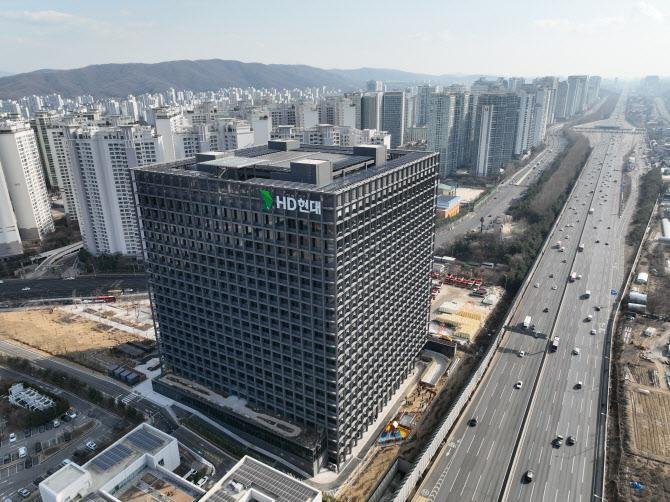
HD Hyundai has been accelerating efforts to expand its presence in the hydrogen fuel cell market.
HD Korea Shipbuilding & Offshore Engineering (KSOE), an HD Hyundai subsidiary supervising its shipyards, said Monday that its unit HD Hydrogen acquired a controlling stake in Convion, a Finnish fuel cell system company, for 72 million euros ($80 million).
HD Hydrogen is HD KSOE’s wholly-owned subsidiary founded this month to produce hydrogen fuel cells. HD KSOE invested 140 billion won ($106 million) in HD Hydrogen.
Established in 2012, Convion specializes in solid oxide fuel cell (SOFC) and solid oxide electrolyzer cell (SOEC) technologies. It is one of the few companies in the world with a track record of developing and supplying commercial SOFC generation systems.
With the latest deal, HD KSOE seeks a two-track strategy to lead the hydrogen fuel cell market.
HD Hydrogen will oversee the entire fuel cell business and take charge of the power generation and marine units in Korea, while Convion will continue to develop core fuel cell technologies in Europe.
Both SOFC and SOEC technologies are considered critical for the use of hydrogen energy.
Additionally, complex technical skills and a long period of time are needed to develop the technologies because SOFC and SOEC are activated at high temperatures.
HD Hyundai, therefore, expects HD Hydrogen’s acquisition of Convion to allow the company to outrun its market rivals.
Last October, HD KSOE signed a 45 million euro contract with Elcogen, a leading fuel cell company, to invest in upgrading the large-scale SOFC system.
“Along with hydrogen fuel cell and water electrolysis technologies, HD Hyundai is also focusing on developing future energy sources, such as small modular reactors,” an HD KSOE official said.
“With technologies to develop the world’s cleanest energy sources, we plan to become the frontrunner in the future green shipbuilding industry.”
According to the International Energy Agency and the International Renewable Energy Agency, the size of the hydrogen fuel cell and water electrolysis market is expected to increase to 17 trillion won in 2030 from 2.5 trillion won in 2023, with an average annual growth rate of 30 percent.
The market size is expected to reach 55 trillion won in 2040, once the application of marine hydrogen fuel cells is in full swing and water electrolysis technology is commercialized.