
 KB News Desk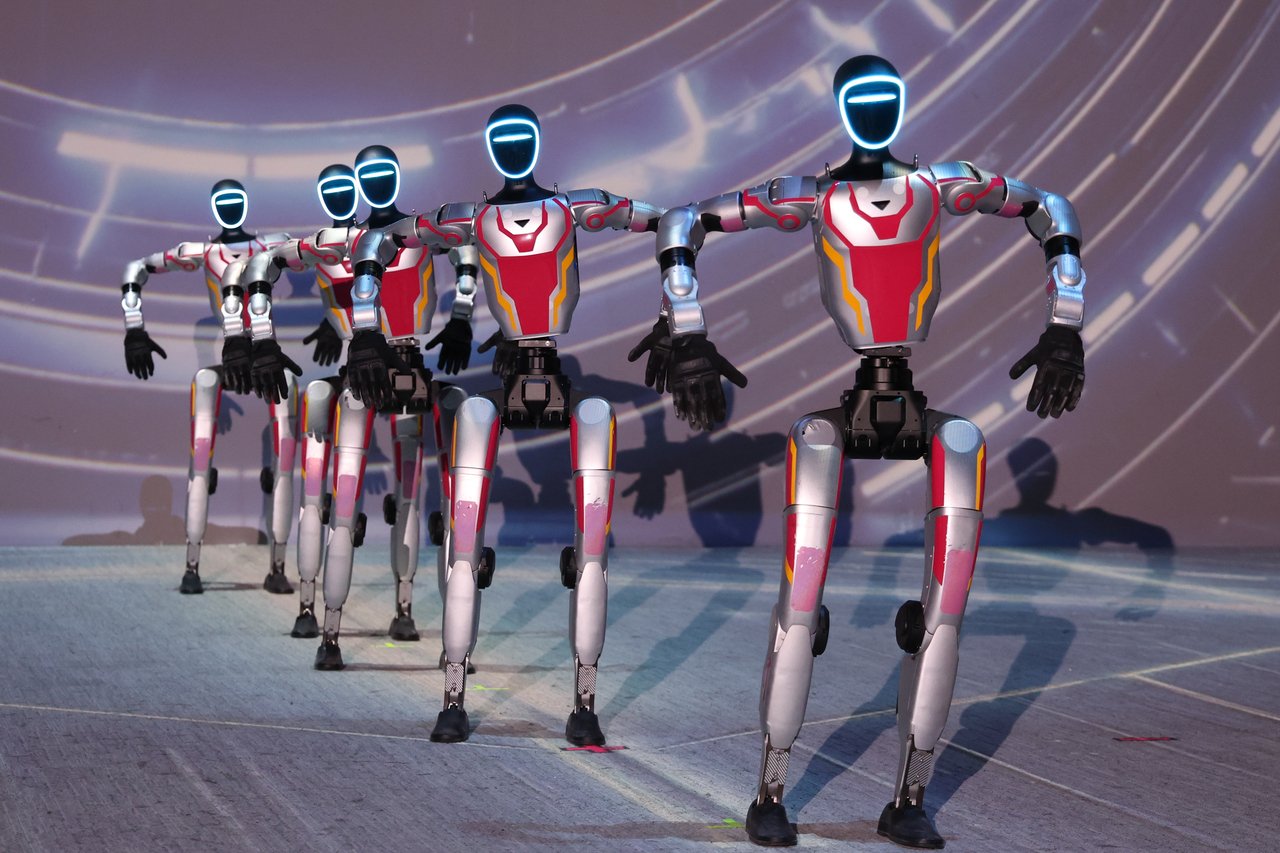
Self-described world’s first robot cultural complex seeks entertainment only robots can deliver
A dozen humanoid robots line up onstage. Rose’s “APT.” starts playing, and they begin to dance in formation. After that, it’s Saja Boys’ “Soda Pop” and Yena’s “Catch Catch,” with the machines shifting positions and keeping pace with one another.
At first, it looks awkward. Watch a little longer, though, and it becomes surprisingly compelling.
This was the scene Friday at the official opening of Galaxy Robot Park, which Galaxy Corporation bills as the world’s first robot-centered cultural complex, located in an isolated corner of Gwangjin-gu, eastern Seoul.
At the heart of the venue is Robot Arena, where Galaxy Corporation CEO Choi Yong-ho invited reporters to watch a roughly 40-minute showcase of robots dancing, performing martial arts and sharing the stage with humans.
The K-pop numbers were among the more intriguing demonstrations. According to Choi, the robots are not individually controlled by human operators. Artificial intelligence analyzes choreography in videos online, allowing the robots to coordinate formations and maintain their distance from one another while performing. Choi described the system as a form of “autonomous driving” for robots.
The performance also showed noticeable improvement from what Galaxy Corporation demonstrated just four months earlier.
The humanoid robots used by the company are made by China’s Unitree Robotics. At Galaxy Corporation’s headquarters in April, two robots experienced operational errors and even fell during the demonstration.
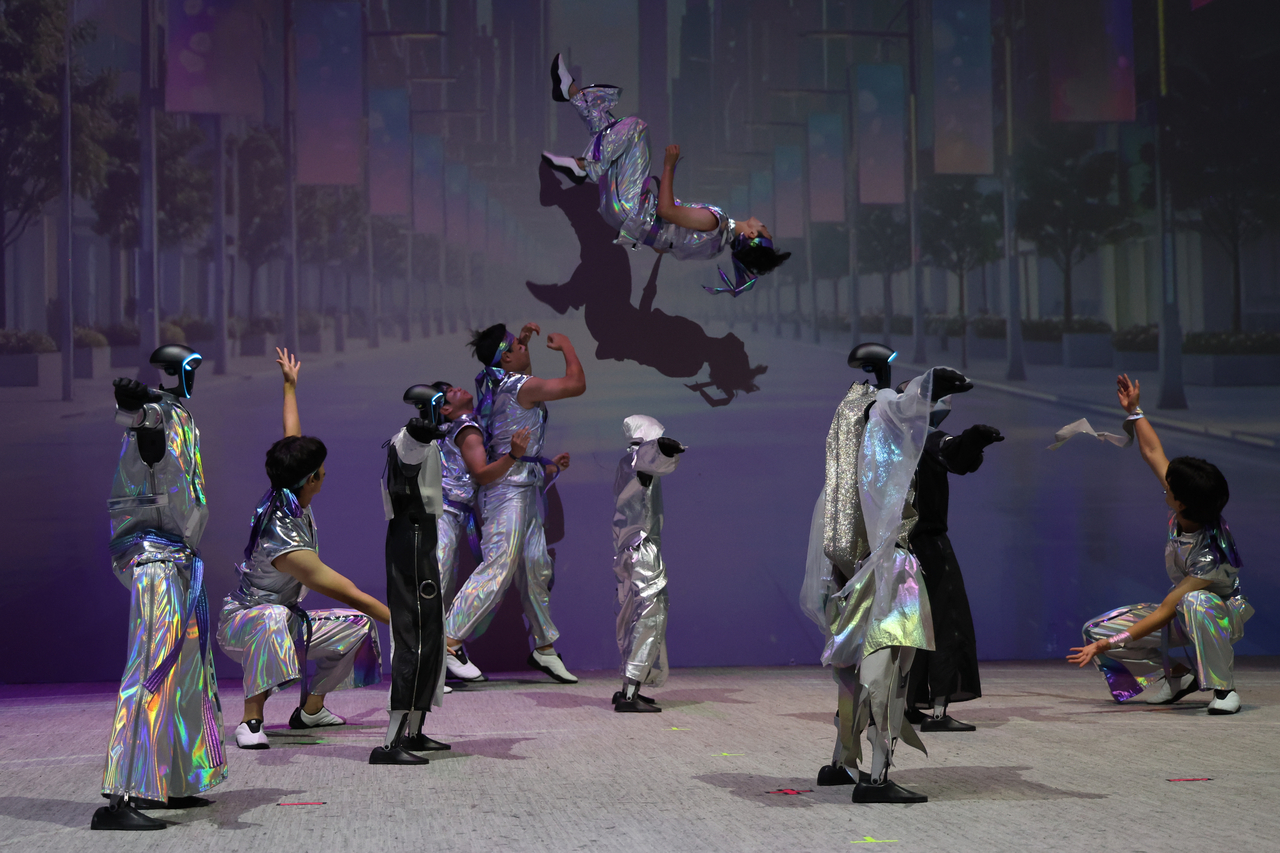
Friday’s performance went much more smoothly. During the finale, more than 10 robots and at least five human performers moved across the stage in a mix of taekwondo and dance without any obvious collisions or major technical failures.
The arena added to the spectacle. Its white interior was reminiscent of the “Red Light, Green Light” set from Netflix’s “Squid Game,” while graphics transformed the backdrop into spaceships, imaginary game worlds and other fantastical settings as the scenes changed. At times, the combination of robots and enveloping visuals felt closer to watching a 3D movie in an IMAX theater than a conventional stage show.
Robot circus
Yet for a venue carrying the lofty label of the world’s first robot cultural complex, Galaxy Robot Park still feels very much like a work in progress.
Its location is the first drawback. Despite being in Seoul, the park sits in a relatively isolated area with little nearby beyond roads and highway access. Reporters attending Friday’s event took a shuttle bus from the nearest public transportation station.
More importantly, the Robot Arena did not quite create the feeling of entering a future where humans and robots naturally coexist. The 40-minute program often felt more like a series of elaborate robot circus acts.
The ingredients were familiar — K-pop, taekwondo and visual elements reminiscent of popular Korean cultural content — with robots providing the novelty. Entertaining as it was, the show left a more fundamental question unanswered: What can Galaxy Robot Park offer that only robots can do?
The taekwondo collaboration highlighted that limitation. Humans and robots occupied the same stage without colliding, an impressive technical feat, but largely took turns performing their respective parts. There was little genuine interaction to suggest what human-robot performance might eventually become.
Perhaps not for adults
There is an important caveat to that criticism. Choi made clear that Galaxy Robot Park is designed primarily with children in mind.
The park began its preopening period on May 5 and drew some 20,000 visitors over the following three and a half months, according to the company. The roughly 5,000-pyeong complex also includes a restaurant and bakery for family visitors.
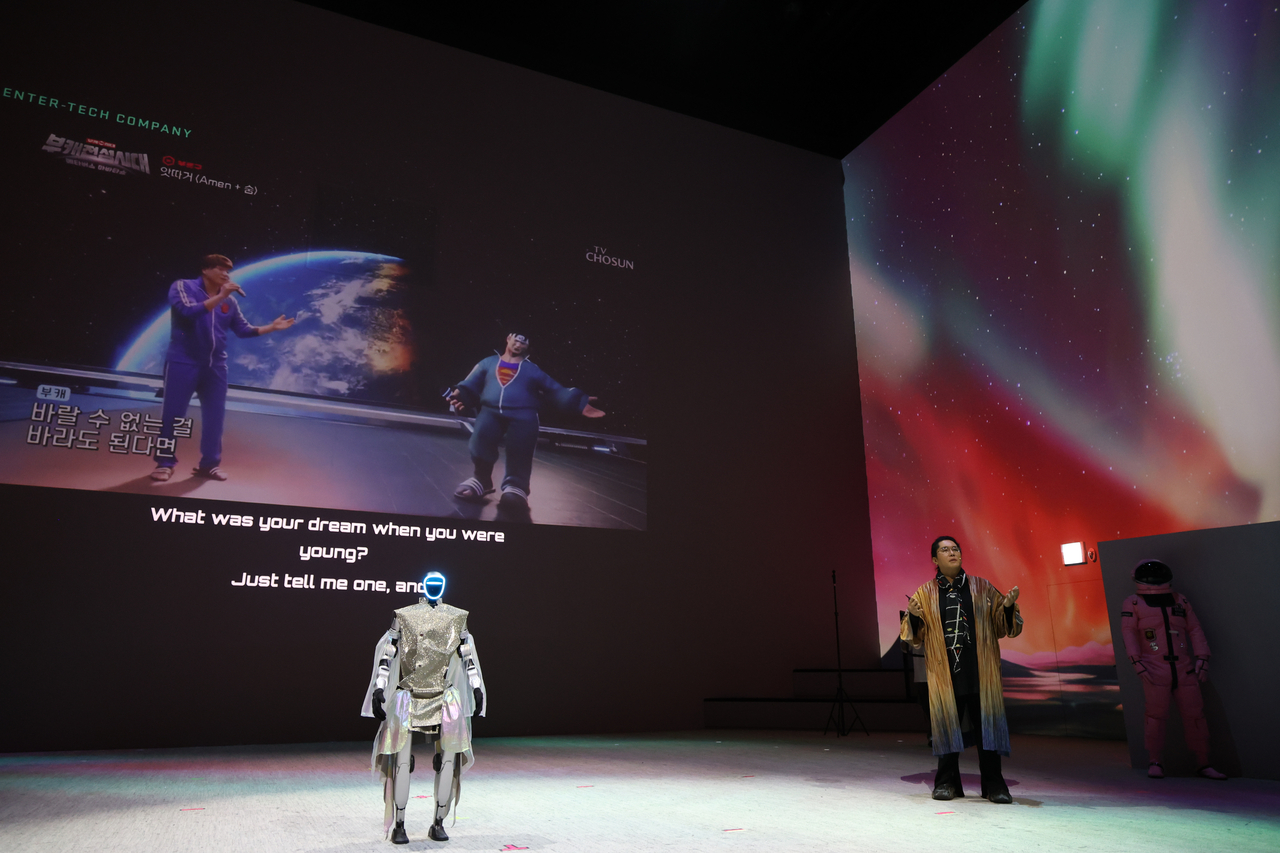
The Robot Arena is only part of the experience. Visitors can interact with hugging, drawing and boxing robots, while 17 new types of robots were added for the grand opening, according to Galaxy Corporation. Some draw portraits, make ice cream or play the piano.
Seen from a child’s perspective, the concept becomes easier to appreciate. The technical imperfections that stand out to an adult may matter less when the attraction is simply the chance to interact with a humanoid robot up close.
A robot world tour
Choi’s ambitions extend far beyond the Seoul venue.
His short-term goal is to open a second Galaxy Robot Arena in Dubai by the end of this year.
“We’re opening in Dubai so tourists and foreign visitors from 100 countries around the world can experience physical robots,” Choi said.
A separate project is planned for New York. Choi said he intends to unveil a robot modeled after his own face in Manhattan on Sept. 21, the International Day of Peace, alongside 17 other robots.
Then comes an idea more directly connected to Galaxy Corporation’s entertainment business: robot idols.
Choi said the company plans to launch a robot idol act in the first half of next year, followed by a world tour in the second half.
“Once Big Bang and Taemin finish their world tours, the robot world tour will begin. We will tour more than 100 countries,” Choi said.
“Current K-pop world tours are limited to around 30 to 35 countries. Humans have limitations. Robots can go places; they can perform simultaneously, and they can do dangerous things.”
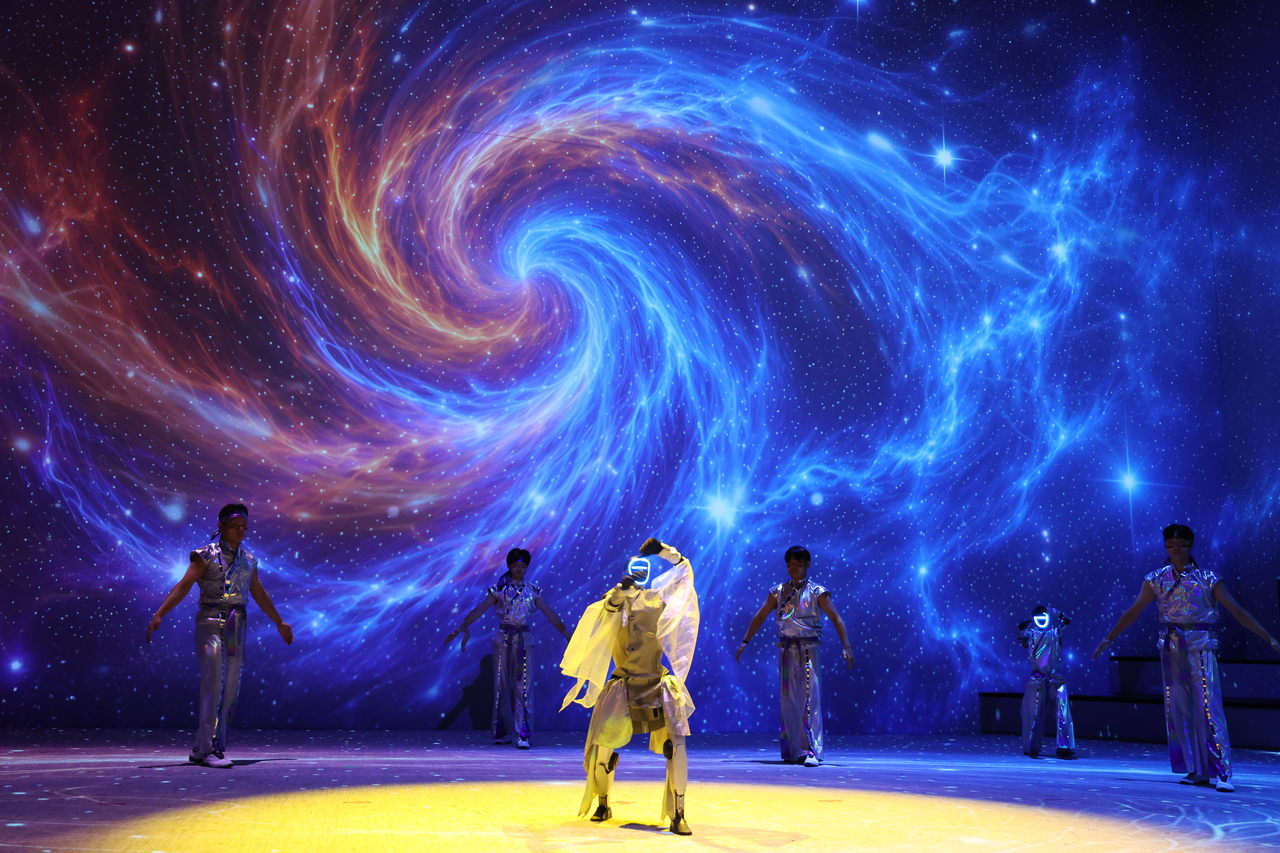
For now, it remains an audacious blueprint.
There is still a considerable gap between Choi’s vision and what Galaxy Robot Park can deliver today. The performances remain somewhat awkward, the human-robot interaction limited and the content reliant on familiar cultural references.
But Friday’s showcase also offered tangible evidence of progress. Four months after robots stumbled and fell during a demonstration, more than 10 of them were dancing and performing martial arts alongside humans without an obvious mishap.
Whether that progress can eventually lead to robot idols touring 100 countries is another question entirely.
If Choi’s plans do materialize, however, they do not necessarily have to represent the future of K-pop itself. They could instead develop into something different — a new form of entertainment that takes K-pop as its starting point and moves in another direction.