
 KB News Desk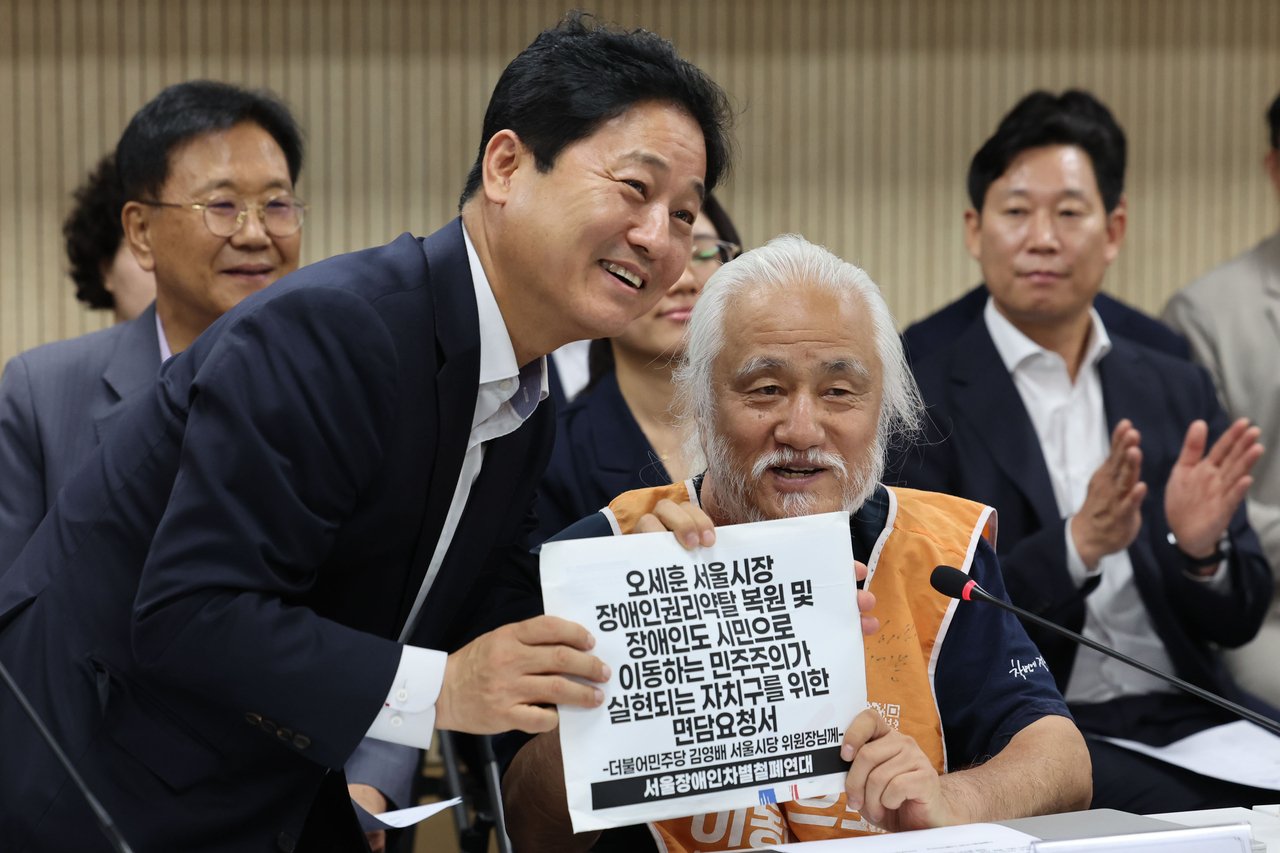
A disability rights group in Seoul ended nearly five years of rush-hour subway protests Monday after reaching an agreement with Democratic Party of Korea members of the Seoul Metropolitan Council.
At a joint news conference held at the city council at 11:30 a.m., Solidarity Against Disability Discrimination and the majority party announced the agreement, under which the party pledged to pass ordinances guaranteeing the rights of people with disabilities to mobility and employment.
The group has staged 73 subway protests since Dec. 3, 2021, calling for improved accessibility, including the installation of more elevators at subway stations, and stronger protections for people with mobility difficulties.
The protests were held around 8 a.m. on weekdays, when subways are often crowded with commuters. Protesters typically boarded trains in wheelchairs and got off at subsequent stations, but the resulting delays drew criticism from some commuters.
The capital’s subway operator, Seoul Metro, took a hard-line approach, at times skipping stops at stations where protests were taking place. The forced removal of protesters and injuries among demonstrators sparked debate over how authorities should balance protest rights with disruptions to commuters.
“It is an important question whether people with disabilities can have their rights to mobility and work protected so they can live together in local communities, even without shouting for their rights on the subway during rush hour,” said Lee Gyu-sik, a co-leader of SADD.
“We received a political commitment from the Democratic Party of the Seoul Metropolitan Council, so we will end the rush hour campaign that has continued for more than four years.”
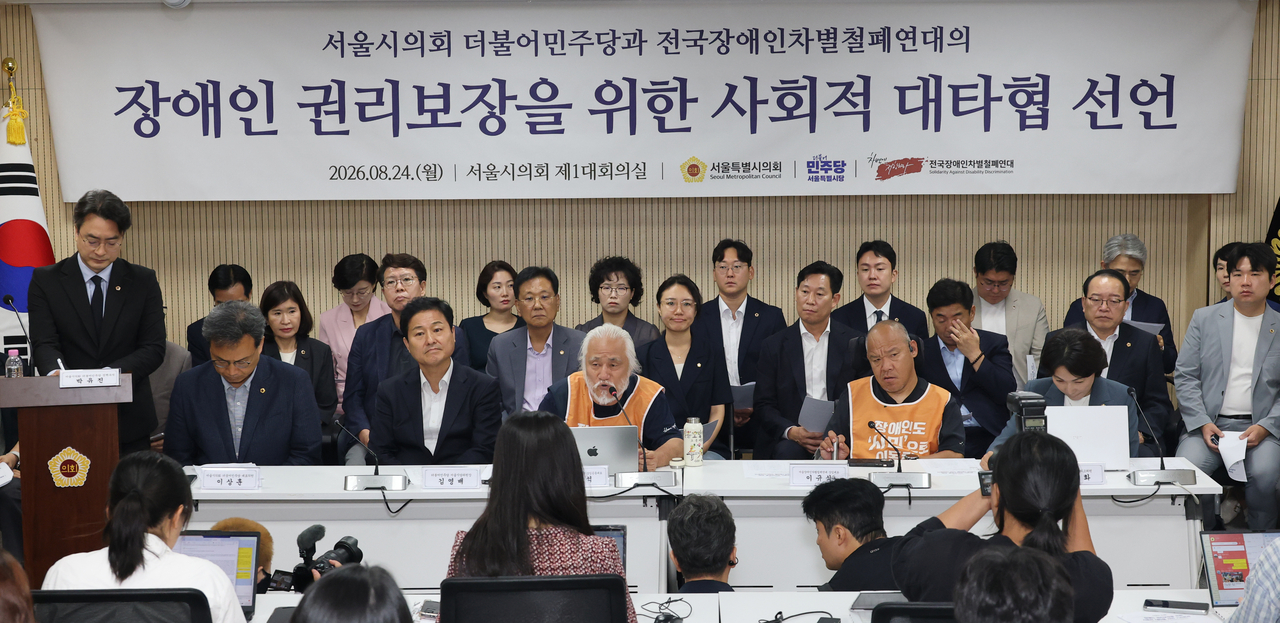
The party pledged to introduce two ordinances.
The first, amending the Seoul Metropolitan Government Ordinance on the Promotion of Transportation Convenience of Mobility Disadvantaged Persons, would establish mobility rights for people with disabilities as rights that must be guaranteed, rather than treating accessibility merely as a matter of convenience.
The other would amend an ordinance on employment and vocational rehabilitation to formally define customized employment programs for people with severe disabilities.
The party plans to pass both ordinances at a plenary session on Sept. 11. It holds 80 of the council’s 118 seats, enough to pass the measures and potentially override a request for reconsideration from Seoul Mayor Oh Se-hoon.
“I don’t think Mayor Oh will request reconsideration,” said Lee Sang-hoon, floor leader of the Democratic Party in the Seoul Metropolitan Council.
“Even if he does, the people have given the Democratic Party more than two-thirds of the seats, and we will make sure the ordinances take effect in accordance with their wishes.”
The agreement came five days after Park Kyung-seok, another co-leader of SADD, agreed to suspend the group’s daily subway protests following a meeting with Budget Minister Park Hong-keun on Wednesday.
At the meeting, Park Hong-keun said he had listened to the group’s views on mobility rights and public-sector jobs for people with disabilities, while asking for understanding on the limits of government spending.
SADD, meanwhile, plans to continue weekly protests involving boarding buses on Wednesdays.
“There are rarely delays when we board buses. It only takes some time for two or three wheelchairs to get on,” Park Kyung-seok said.
He added that the group would continue to call attention to Seoul’s failure to meet an ordinance that called for low-floor buses to be fully introduced across the city by 2025.