
 KB News Desk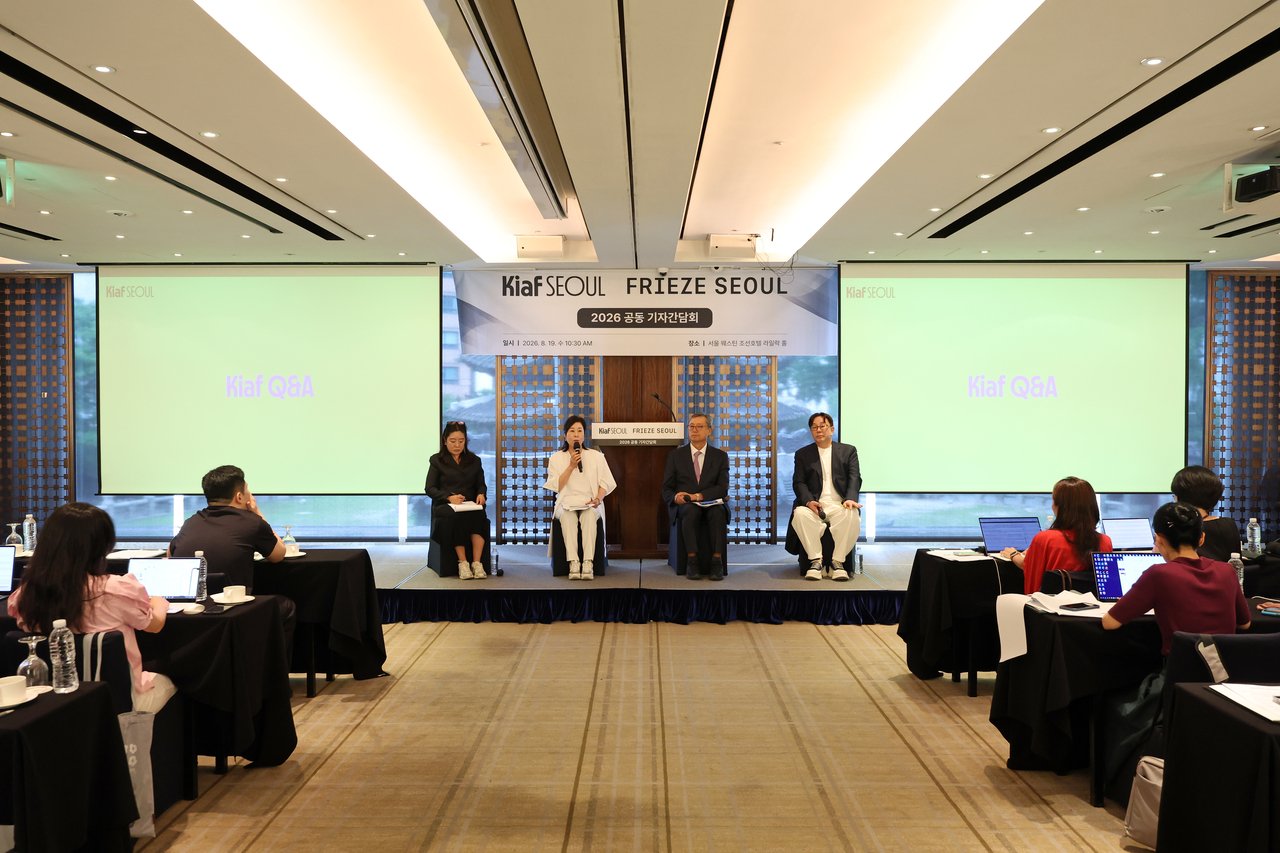
Ahead of next year’s split, the fairs return to Coex Sept. 2 with new sections, Kiaf’s first creative director and 300-plus galleries
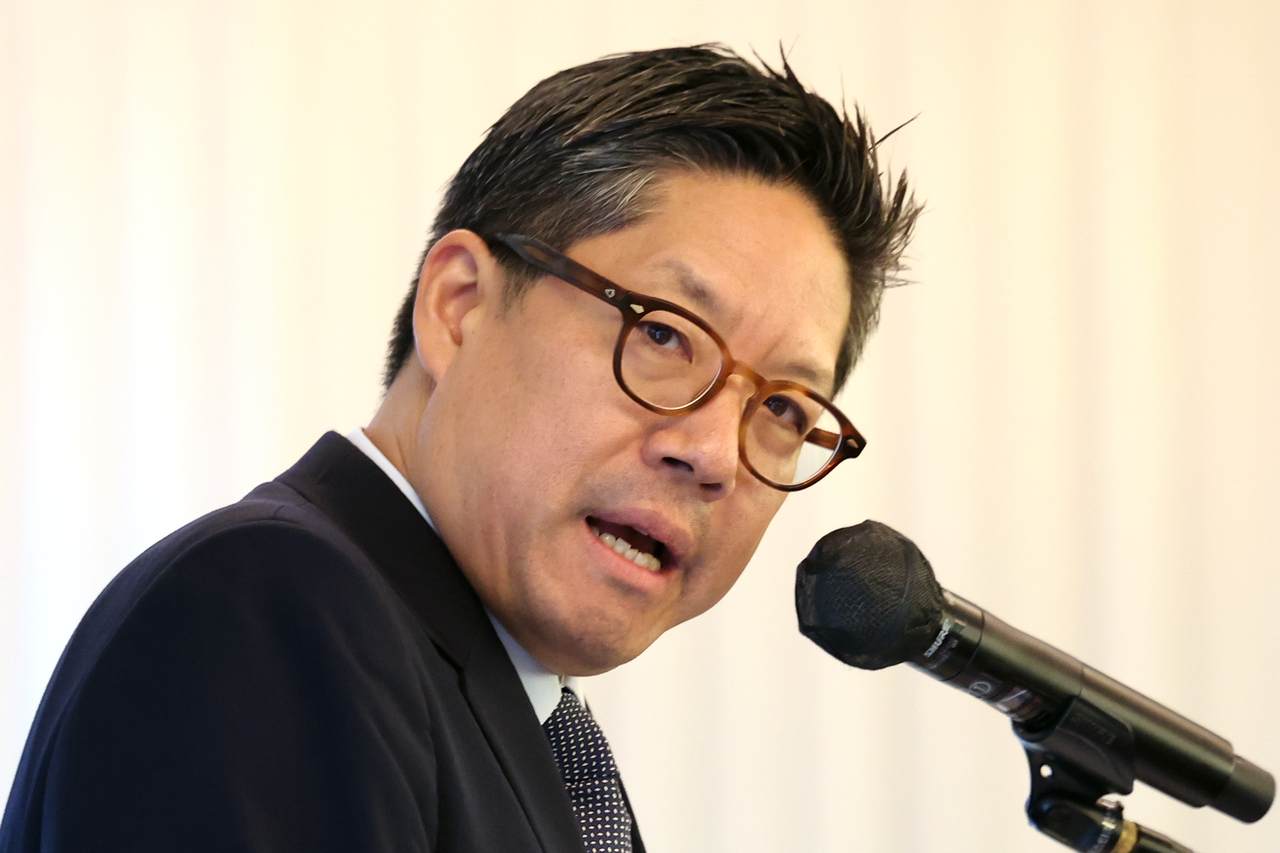
“We were told by Coex quite late. Earlier this year. … When we heard that there was going to be construction, there was hope that we could continue. But I had to look at other places, just to protect Frieze.”
Patrick Lee, director of Frieze Seoul, was answering the question that trailed Wednesday’s joint press conference in central Seoul: The fair moves to Dongdaemun Design Plaza in 2027, ending its five-year run alongside Kiaf Seoul at Coex as the convention center undergoes renovations.
First, though, comes one last September where the two fairs share the same venue. Frieze Seoul and Kiaf open at Coex in southern Seoul on Sept. 2, bringing together 300-plus galleries.
Frieze Seoul, now in its fifth edition, runs through Sept. 5 with more than 130 galleries from over 30 countries and regions. Kiaf, the homegrown fair run by the Galleries Association of Korea, hosts 175 galleries from 18 countries through Sept. 6 as it marks its 25th anniversary.
The two events have opened side by side at Coex every September since 2022, when Frieze picked Seoul for its inaugural fair in Asia and paired up with Kiaf, which launched in 2002 as Korea’s first international art fair. The partnership has kept the first week of September busy with exhibitions, performances and late-night gallery openings spilling across Seoul.
“This September is our fifth year, which is quite unbelievable,” Lee said. “The first year, if you recall, we had COVID issues — people who couldn’t travel here. I look back at those times begging galleries, begging museums to open late for us, and when I see where we are now, it’s been very rewarding.”
Frieze Seoul introduces two new curated sections this year. Spotlight, led by Koh Won-seok, director of Line Cultural Foundation, presents solo shows of 15 20th-century artists from Korea and beyond who have been overlooked in Western-centered art history. Material Practice, organized by independent curator Cho Hye-young, gathers work in ceramics, textiles, glass, metal, wood and hanji — traditional Korean paper — where contemporary art crosses into craft and design.
Focus, the fair’s returning platform for galleries under 12 years old, expands beyond Asia for the first time, with 16 exhibitors each staging a solo presentation.
Shinsegae Group joins as the fair’s first headline partner, and Frieze magazine plans to launch a Korean-language quarterly next summer, with a sample issue of Frieze Korea handed out at both fairs.
“Frieze started off as a magazine — it started off in 1991, and the fair was built, I think it was 11 years after, from that community,” Lee said. “I think that’s really the soul of Frieze.”
Kiaf, for its part, brought on its first creative director this year, tapping designer Jung Kuho to oversee branding, space design and special exhibitions under the theme of “Coexistence.”
Two shows anchor that theme: “HUMAL,” a portmanteau of “human” and “animal” that turns to instinct and bodily sensation in the age of AI, and “VIRTUAL VITAL,” which extends it into augmented reality.
“Wherever you look these days, the conversation is about technology and AI,” Jung said. “We thought this was the moment to step back and redefine what is essentially human.”
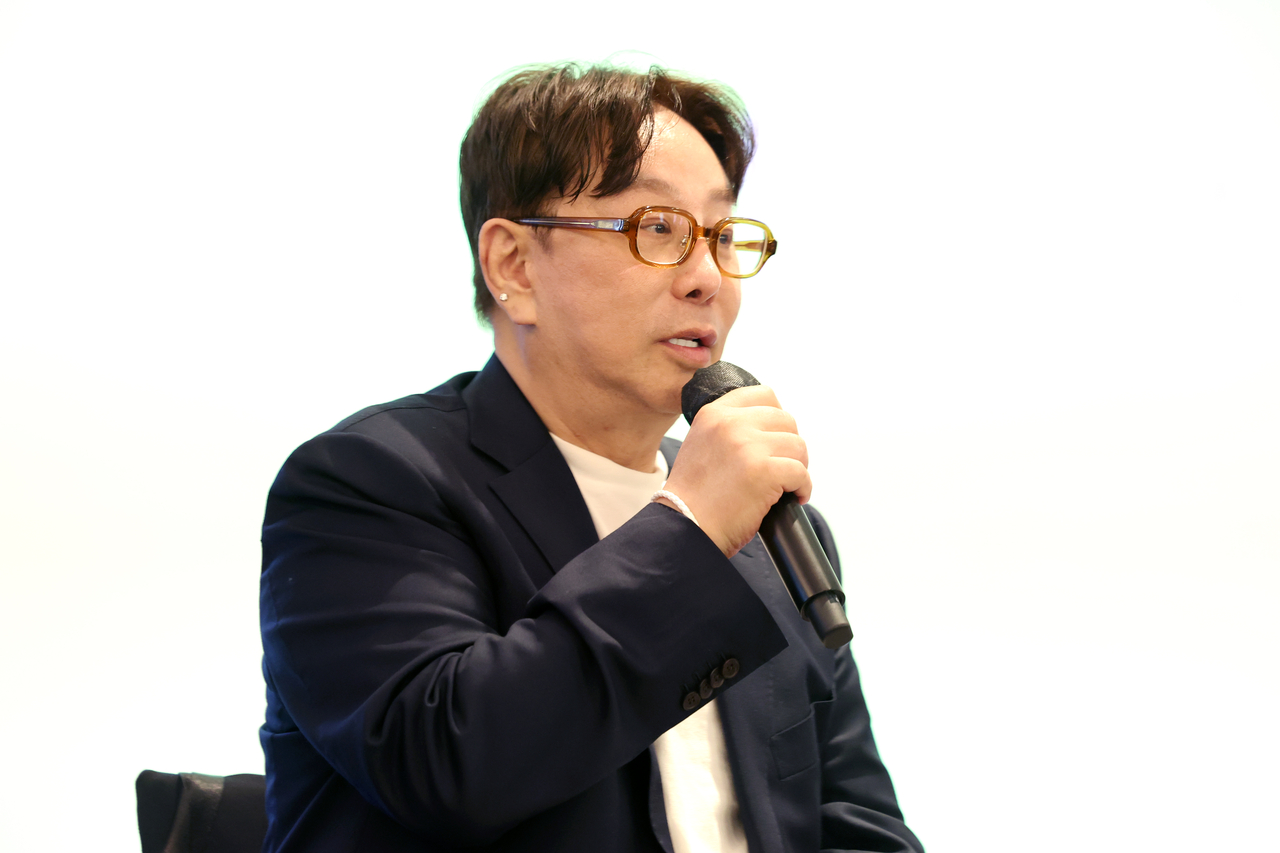
“Some people worry that AI will be the death of culture, and of art in particular. That’s not the case at all,” said Lee Sung-hoon, president of the Galleries Association of Korea. “Culture and technology, humanity and technology can develop in harmony and achieve something far greater together.”
Kiaf’s program also features a recital by pianist Cho Seong-jin at Coex on Sept. 4 and a media art exhibition spread across eight locations around downtown Seoul in partnership with the city government.
As for next year’s relocation, the Frieze director said staying in Seoul near its partner fair was the biggest factor behind choosing DDP. “It’s very important that we be in Seoul, to be close to Kiaf also, and the infrastructure here. In Seoul, there are not many huge venues that can support something like this,” he said. Both sides said the partnership will continue, joint tickets included.
Asked whether Kiaf could eventually stand without Frieze, Lee Sung-hoon admitted that the venue issue had made the association think about an exit strategy.
“Our view is that the time hasn’t come,” he said. We can climb much higher and develop much further. So we intend to keep this partnership going as long as we can.”