
 KB News Desk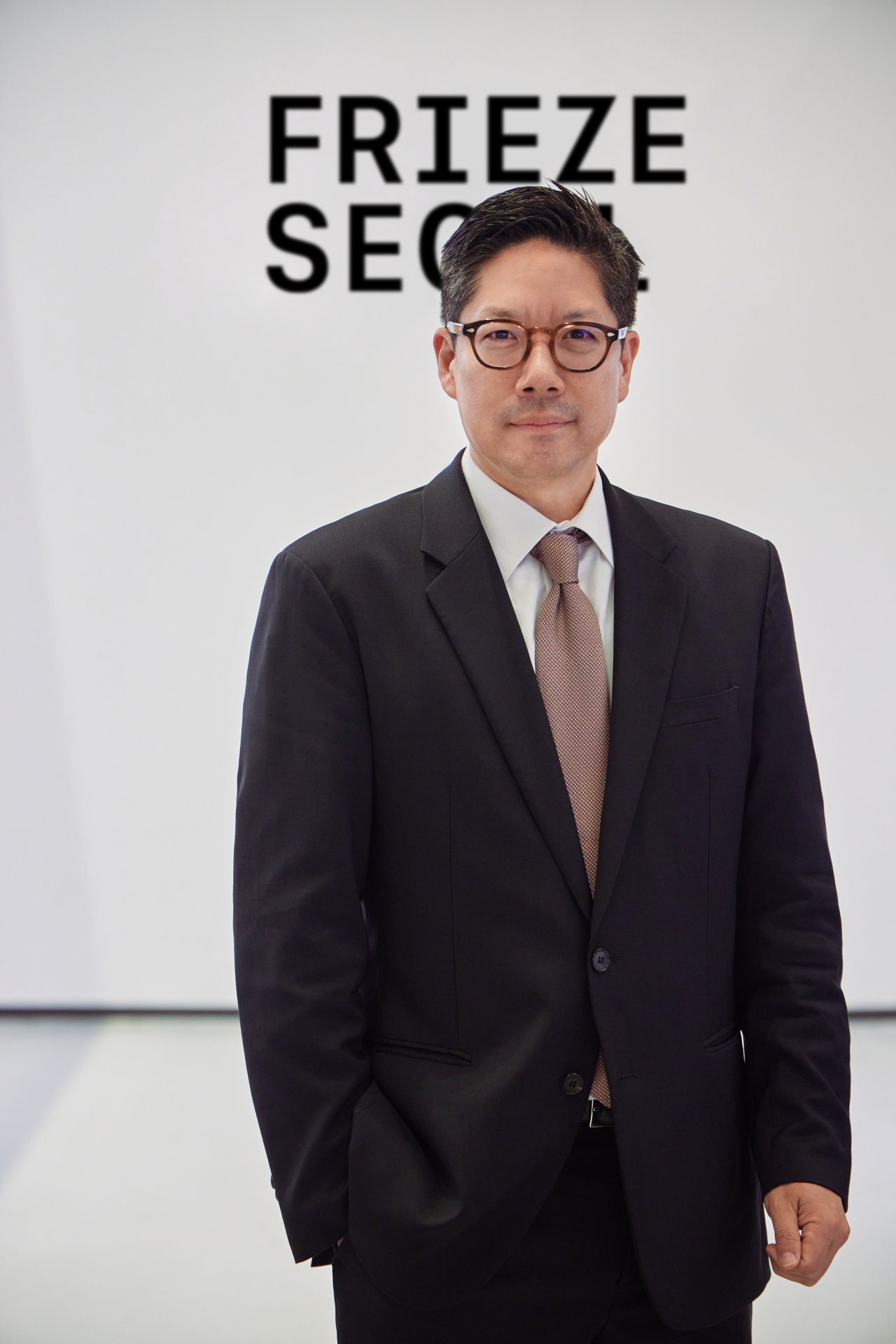
Director Patrick Lee wants Frieze Seoul to be more than an art fair — a place where the global art world comes to meet
Frieze House Seoul, Frieze’s recently opened permanent gallery space in Jung-gu, serves as the art fair’s year-round base in the city beyond its annual event.
Ahead of the fifth edition of Frieze Seoul that kicks off on Sept. 2, it will host exhibitions presented by New York’s Paula Cooper Gallery and Japanese gallery Yumekoubou.
The space recently concluded a relay exhibition series organized with Korean galleries.
Patrick Lee, director of Frieze Seoul, wants the house to reflect Frieze’s origins as a magazine spanning art, film, design and literature, rather than function solely as an exhibition venue.
“I want it to be more like the magazine. That is what Frieze’s soul is about,” Lee told The Korea Herald at Frieze House Seoul on Thursday.
“Frieze started as a magazine with critical discourse. The fair is completely separate, but I think the soul of the company is the magazine.”
The ambitious art fair, launched in 2022 as Frieze’s first fair in Asia, has brought collectors, curators and other art professionals from around the world to the Korean capital. Galleries, museums and other institutions now plan major exhibitions and events around the fair, making late August and early September one of the busiest periods on Korea’s art calendar.
Looking back at the previous four editions, Lee said one of the most significant changes has been the way different players in the art world coordinate their programs and work together — a level of collaboration rarely seen in Korea before the fair’s arrival.
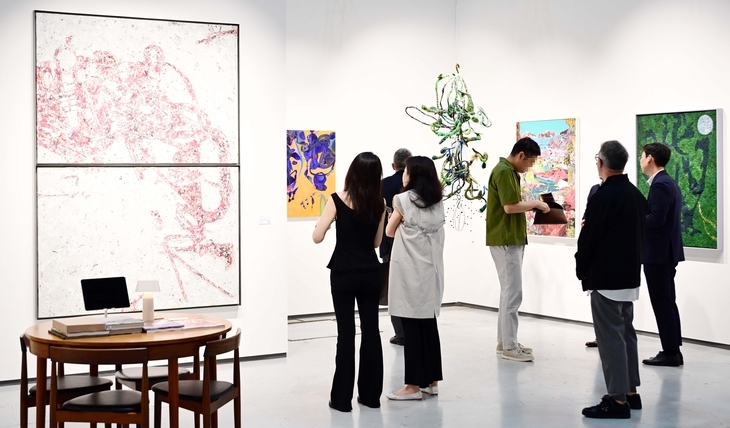
“When the fair first opened, I had to ask museums to extend their exhibitions and galleries to coordinate their opening nights. Some would ask, ‘Why do we have to do that?’ But after the first year, it completely changed,” Lee said.
“People saw the energy and realized that a different audience was coming to Seoul.”
For Lee, the role of an art fair extends beyond immediate sales.
Its strength lies in gathering a focused community of collectors, curators, museum professionals, writers and galleries and creating opportunities for lasting relationships.
“The best fairs are the ones that can create an atmosphere that allows for the maximum opportunity to network and convene,” he said.
His confidence in Seoul is rooted in changes he has witnessed since he began working as a gallerist in Korea in the mid-2000s. Over the past two decades, Korean artists, curators, museums, collectors and other parts of the art ecosystem have steadily expanded their international presence.
“This is anything but overnight,” he said, dismissing the idea that Korea’s cultural rise occurred suddenly. “Frieze coming here was a validation of what was already happening here.”
While Frieze Seoul has established itself within Korea, Lee believes it must develop further to become an essential event on the global art calendar. His goal is leading collectors, curators and museum professionals to feel that Seoul is a destination they must visit each year.
“I want every person in the art world to think, ‘I’ve got to consider Frieze Seoul. I’ve got to consider going,'” he said. “I want it to be a place where important dialogue happens.”
Beyond Korean collectors
Four years of running the fair have also given Lee a closer look at Korean collectors.
He cautioned against generalizing, noting that Korea has established collectors who have been active since the 1980s as well as a younger generation still developing its confidence and taste.
“Even the younger ones are very loyal. They study a lot,” he said, adding that it takes time for collectors “to develop their eyes, to try and to have confidence.”
“I think some galleries are having some difficulty meeting them, and a major part of our job is to help galleries identify these collectors and create opportunities for dialogue,” he said.
While cultivating its relationships with Korean collectors remains important, Lee sees Frieze Seoul’s future as distinctly regional. Its long-term growth, he said, will depend on attracting galleries, collectors and institutions from across Asia.
This year, more than 70 percent of the over 125 participating galleries from 30 countries are based in the Asia-Pacific region, reflecting the fair’s growing regional focus.
“That is a mandate of mine — it has to have its own color. I did not want the fair to be the same as London, with the same galleries. We are based in Asia, so I hope to see better representation from other Asian countries. That is our goal,” he said.
As part of its efforts to strengthen Frieze Seoul’s position as an Asian hub, Frieze recently appointed a VIP consultant dedicated to Southeast Asia to deepen its ties with collectors and institutions across the region, according to Lee.
“My outlook is really regional. Asia is a huge place. If we rely solely on Korean collectors, it will be challenging to sustain a fair of this magnitude,” he said.
The fifth Frieze Seoul will run Sept. 2-5 at COEX in southern Seoul alongside Kiaf Seoul, its partner since 2022.
Frieze began as a contemporary art magazine in 1991 and launched its first fair in London in 2003. It now stages fairs in London, Los Angeles, New York and Seoul, with Frieze Abu Dhabi set to debut in November.