
 KB News Desk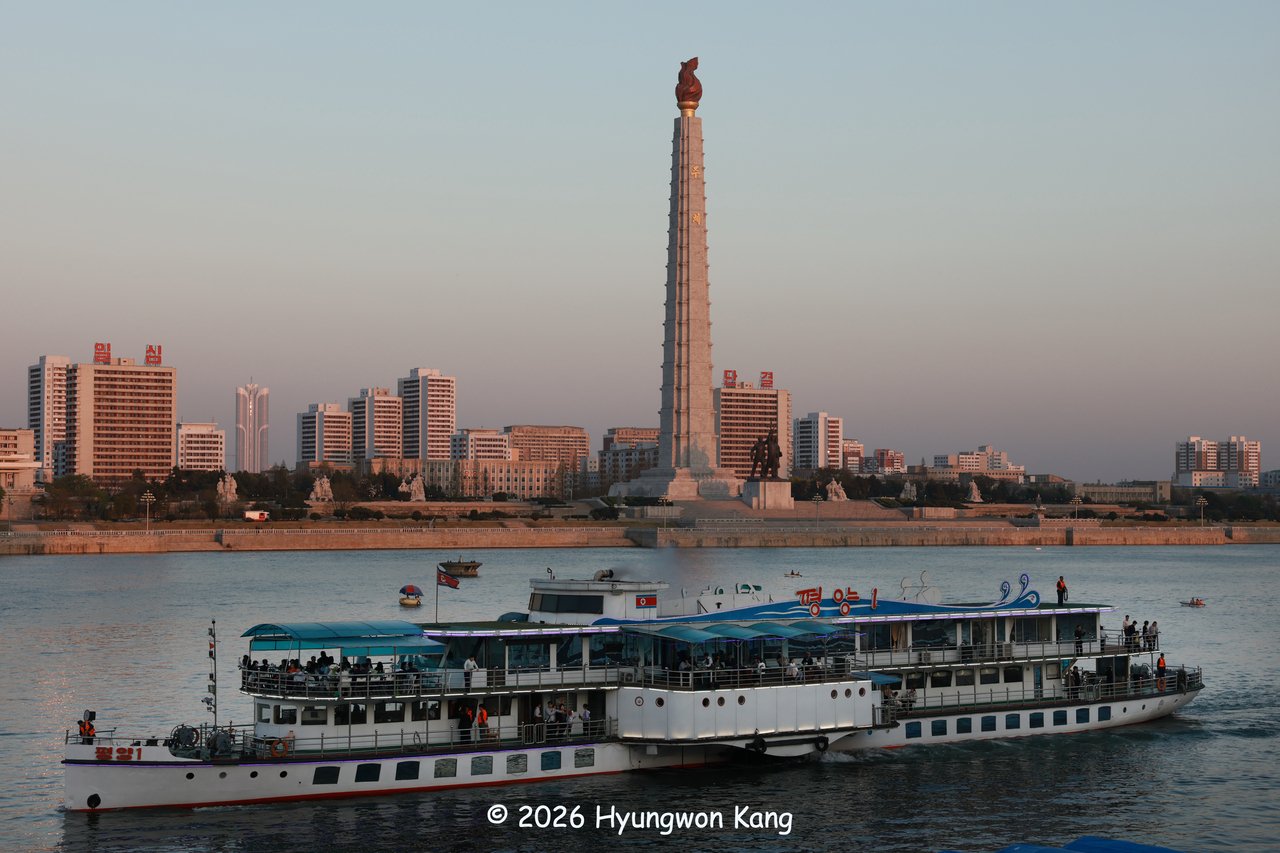
The Annals of the Joseon Dynasty record the confrontation in Pyongyang in 1866 in stark terms.
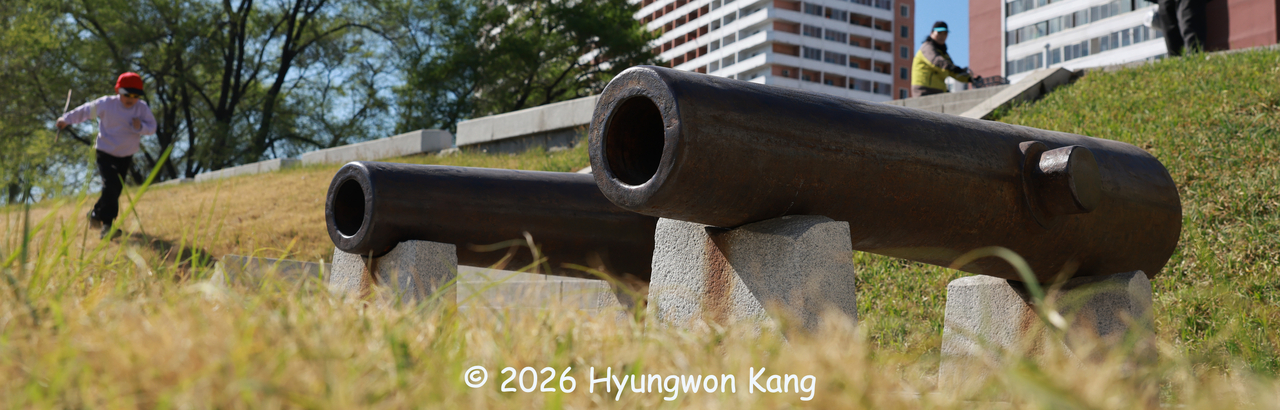
A report submitted by Pak Kyusu, governor of Pyongan Province, stated that the foreign vessel anchored at Pyongyang had become increasingly violent, firing cannon and guns and killing Koreans. Korean forces concluded that a fire attack was the most effective way to subdue the ship.
As flames spread to the vessel, two men — including the British missionary Robert Jermain Thomas — came forward asking that their lives be spared. They were captured and brought ashore, where an enraged crowd killed them. The remaining crew members were also killed.
The “strange-looking vessel,” or iyangson, described in the Joseon record, was the General Sherman, an American-flagged armed merchant vessel.
On the bank of the Taedong River in Pyongyang, which I visited this April, a massive stone monument commemorates its destruction. Its inscription identifies the vessel as the “US imperialist aggressor ship Sherman” and says the people of Pyongyang sank it at Hansajong Rapids on Sept. 2, 1866.
Set aside the ideological language, and the historical event behind the monument remains significant.
The General Sherman, owned by an American but chartered by the British firm Meadows & Co., carried a multinational crew of Americans, Britons, Chinese and Malays, as well as cannon.
As it sailed upriver toward Pyongyang, Joseon officials repeatedly warned that unauthorized foreign trade was prohibited and that entering an inland river without permission violated Korean sovereignty.
The warnings were ignored.
Yet Joseon officials initially extended traditional Korean hospitality, providing the foreign visitors with food and supplies.
The confrontation escalated after the summer rains ended and the Taedong River water levels fell, making the vessel increasingly difficult to maneuver. Crew members seized the Korean official Yi Hyon-ik and held him captive. Fighting followed, and the ship opened fire.
Another entry in the annals reported that the foreign vessel fired on Korean boats and people, leaving seven dead and five wounded. The court was told that Koreans had treated the foreigners generously before the crew detained an official and injured civilians.
The provincial authorities asked permission to use whatever military measures were necessary.
Permission was granted.
US naval historical records broadly confirm this sequence: The General Sherman continued upriver despite Korean warnings, seized a Korean official, fired on people ashore, became stranded and was ultimately destroyed by fire.
The man who directed that response, Pak Kyu-su, is particularly important because he was no simple isolationist.
A grandson of the great Silhak scholar Pak Chi-won, Pak had witnessed the growing power of Western powers and later became one of Joseon’s leading advocates for opening Korea to the outside world. His intellectual circle helped nurture reformers including Kim Ok-gyun and Pak Yong-hyo.
Even more strikingly, Pak Kyu-su later advocated diplomatic relations with the US, which he regarded as potentially useful in helping Joseon avoid international isolation.
The General Sherman incident therefore cannot be reduced either to North Korea’s story of patriotic Koreans defeating an American imperialist invader or to the old Western image of an irrational “Hermit Kingdom” destroying an innocent trading vessel.
Pak Kyu-su’s position might instead be summarized:
Come with respect, and we will respond with respect. Come with force, and we will resist with force.
Five years later, US warships returned in the 1871 Shinmiyangyo, the first major armed conflict between Joseon and the United States.
Yet in 1882, only 16 years after the General Sherman incident, the two countries established formal diplomatic relations.
A relationship that began in violence eventually returned to diplomacy.
That history has renewed relevance in 2026.
US President Donald Trump has said he wants to meet North Korean leader Kim Jong-un again. Yet the failure of previous negotiations leaves Washington and Seoul confronting an uncomfortable reality: North Korea already possesses nuclear weapons.
Recognizing that reality is not the same as formally recognizing North Korea as a nuclear-weapon state. Nor does talking with Pyongyang mean accepting its demands.
It means that diplomacy must begin with the country that actually exists.
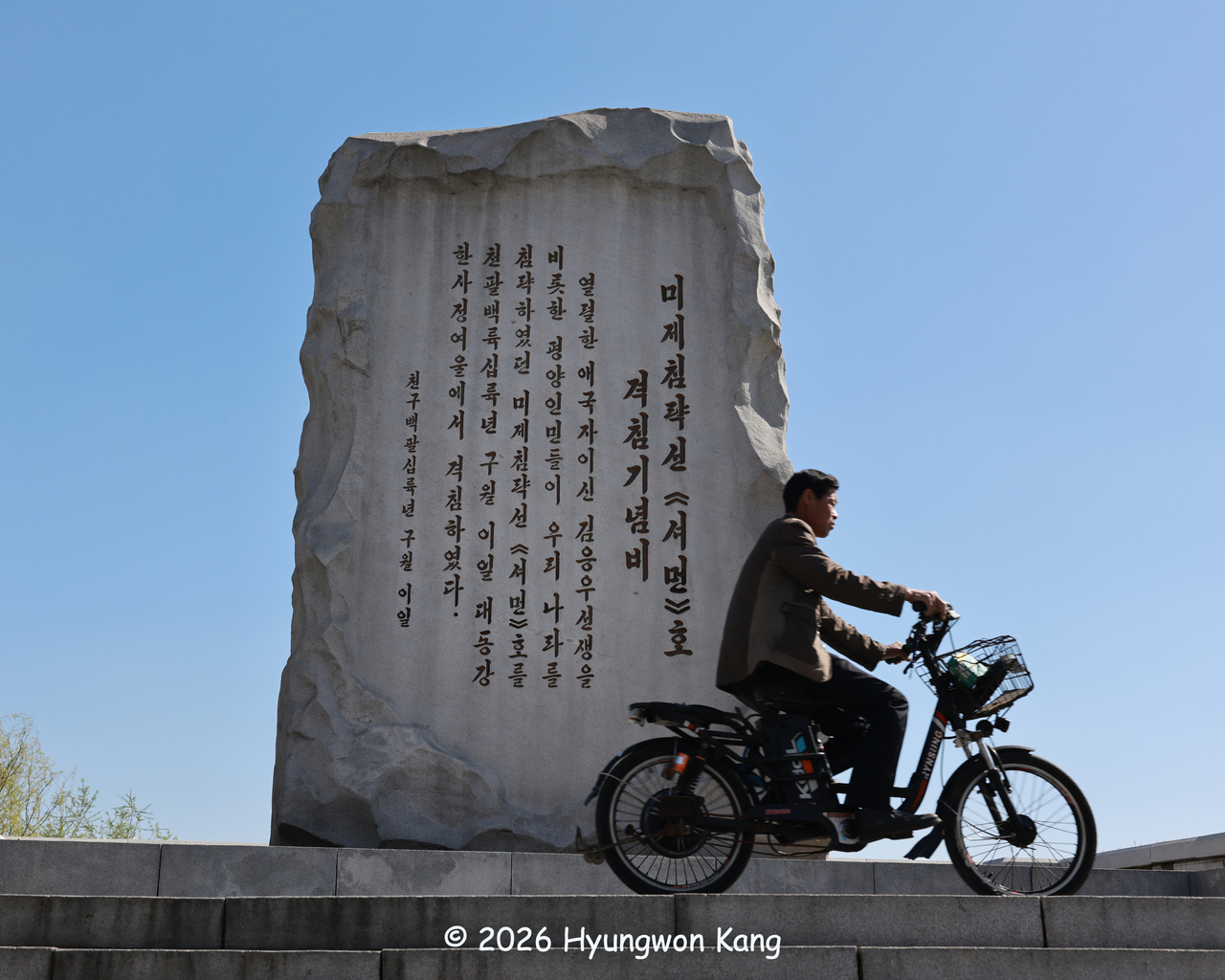
When I stood beside the Taedong River this April and photographed the monument to the General Sherman, what struck me was the distance between the political narrative carved into the stone and the more complicated history behind it.
But one lesson survives.
In 1866, foreigners sailed up the Taedong River believing they could engage Korea on terms of their choosing. Joseon told them otherwise. They ignored the warning, and the result was catastrophic.
One hundred and sixty years later, Washington should not make the opposite version of the same mistake by waiting for North Korea to become the country it wishes it were before engaging it.
The question is whether Seoul, Pyongyang and Washington can acknowledge the reality before them long enough to begin changing it.
The Taedong River leaves an uncomfortable but enduring lesson:
When diplomacy refuses to recognize reality, the cost can become much higher.
-30-

By Hyungwon Kang
Hyungwon Kang is a Korean American photojournalist, columnist, author and two-time Pulitzer Prize winner. He reported on North Korea in 1995, 1997 and 2026. Kang is the author of “Visual History of Korea” and “Seonbi Country Korea, Seeking Sagehood.” His ongoing Visual History of Korea project documents Korean history and culture across all of Korea for global audiences.
The views expressed in this article are the writer’s own. — Ed.