
 KB News Desk
Every summer, cicada nymphs emerge from the soil and climb trees to shed their skins. At a riverside ecological park in Seoul, however, some are being collected before they make it that far.
The Seoul Metropolitan Government said Wednesday that it had received complaints about people taking cicada nymphs in large numbers from Yeouido Saetgang Ecological Park, a green space along a narrow waterway on the southern edge of Yeouido.
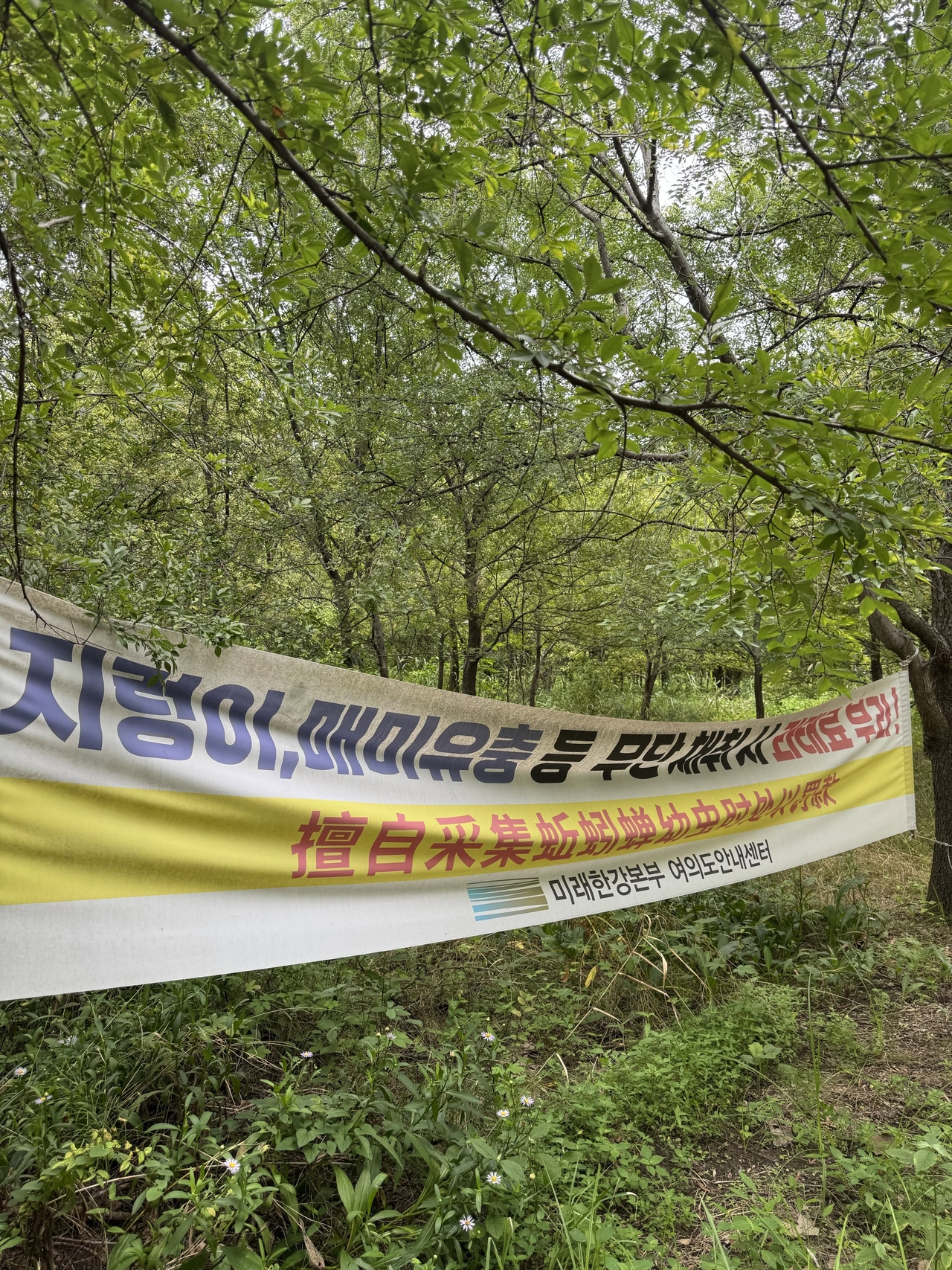
The reports have prompted the city to put up banners around the park warning visitors not to collect cicada nymphs or other wildlife. The notices are displayed in Chinese as well as Korean.
Reports of people collecting the nymphs at night have circulated online, with witnesses describing groups walking through the park after dark carrying large containers.
“There were two people who looked like foreigners filling these huge containers with something,” one user wrote on Threads. “I went over to see what it was, and it turned out to be cicadas. I couldn’t believe it.”
Eating cicadas and their nymphs is part of the food culture in some parts of China and Southeast Asia, although large-scale collection of the insects for food is uncommon in South Korea. Similar reports emerged last year from an ecological park in Busan, where people were reported to have collected cicada nymphs in large quantities.
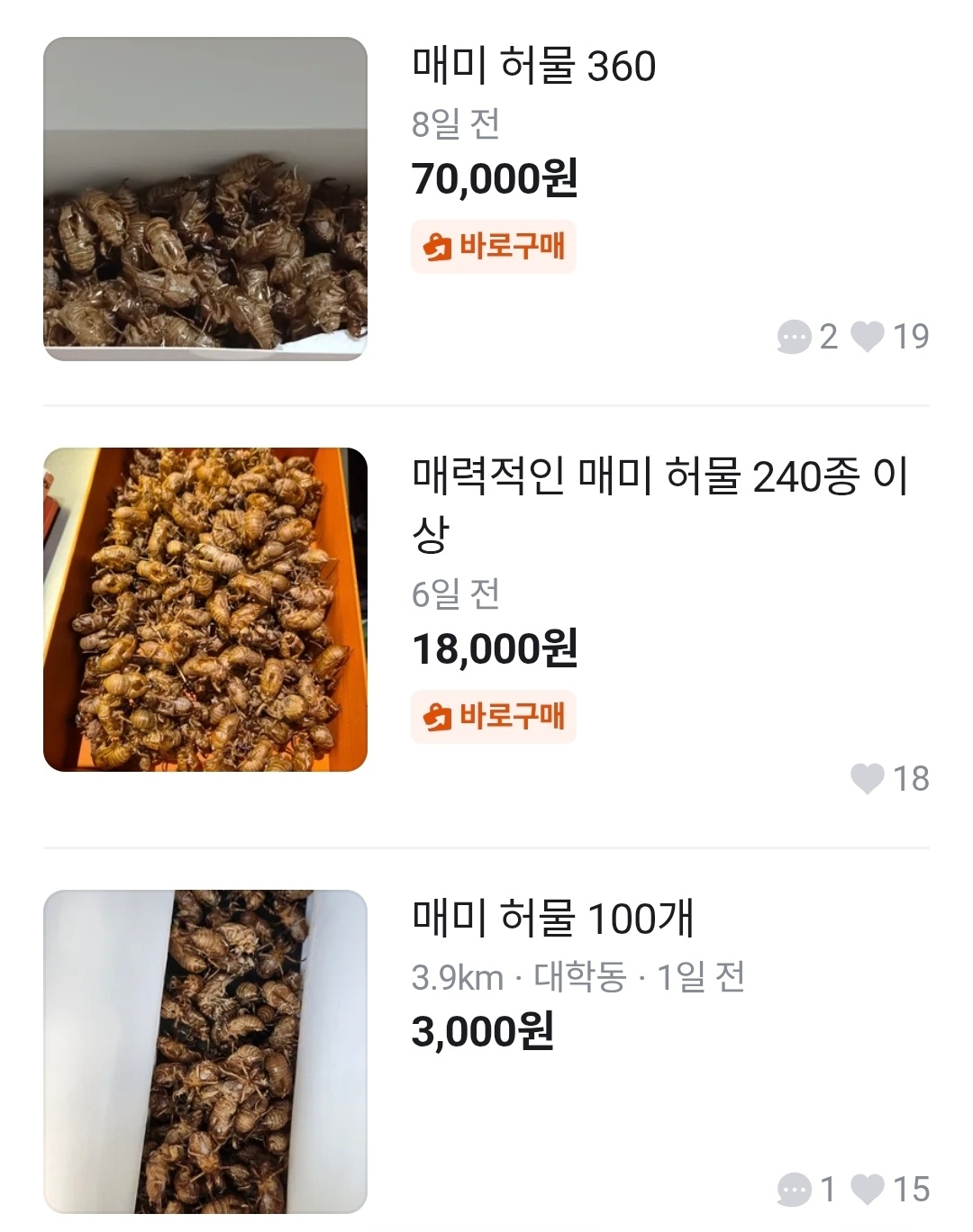
Discarded cicada shells have also appeared on local secondhand marketplaces. On Tuesday, 100 cicada shells were listed for 3,000 won ($2.10) on local secondhand marketplace Karrot.
“These are cicada shells collected straight from nature, in all different shapes and sizes. They’re great for decorating or for kids to use to learn about nature,” the listing read.
Cicadas are not a protected species in South Korea under laws governing natural monuments or endangered wildlife. However, collecting insects or plants without permission in areas covered by Seoul’s ordinance on the conservation and use of Han River parks can result in a fine of up to 100,000 won.
The city plans to increase patrols around the park to prevent the unauthorized collection of cicadas and other insects and impose fines on those who fail to comply with warnings.
“The restrictions are particularly necessary at Saetgang Ecological Park, which provides a habitat for a variety of plants and animals and hosts nature observation programs for children. Indiscriminate insect collecting could disrupt the park’s ecosystem,” a city official said.