
 KB News Desk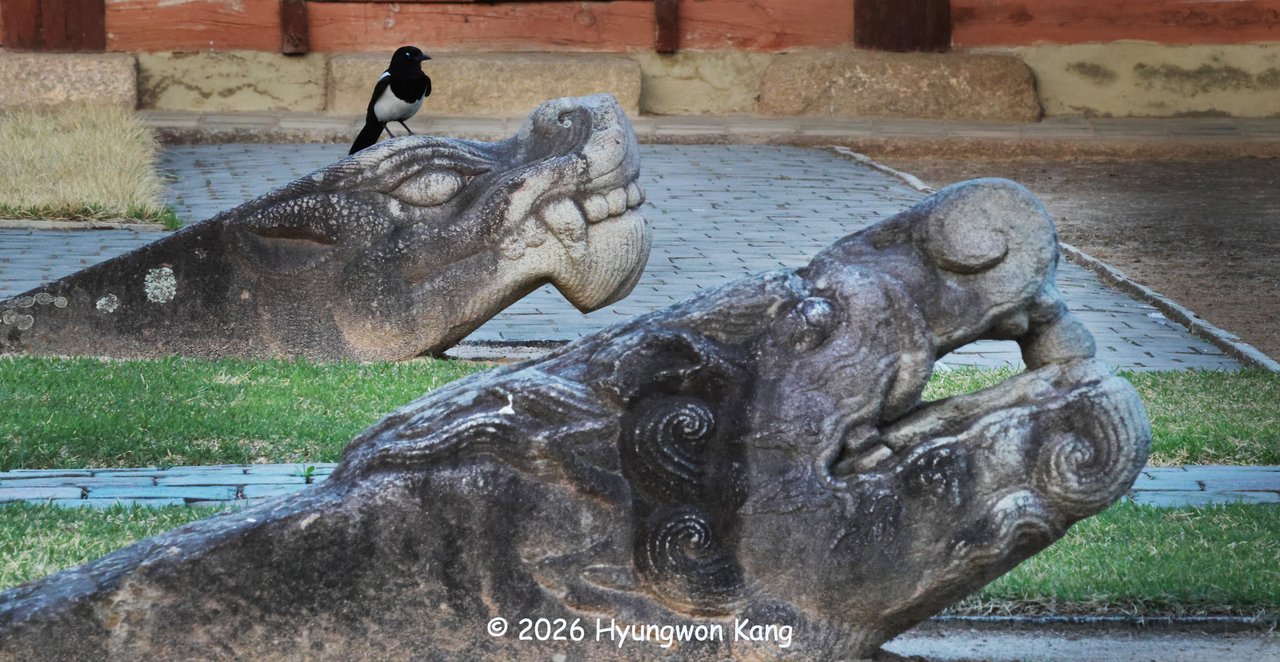
The first thing that caught me by surprise at the Koryo Museum in Kaesong was a pair of enormous stone dragon heads emerging from the ground.
One dragon, its mouth closed and clenched canine teeth exposed, wears a fierce expression. The other holds a “yeouiju” in its open mouth. In Korean and East Asian tradition, the yeouiju symbolizes the dragon’s power and, in Buddhist symbolism, wisdom that dispels delusion and reveals truth.
With piercing eyes, exposed teeth and curling whiskers, the dragons appear fearsome and magnificent, as though their bodies remain buried beneath the earth and they might rise at any moment.
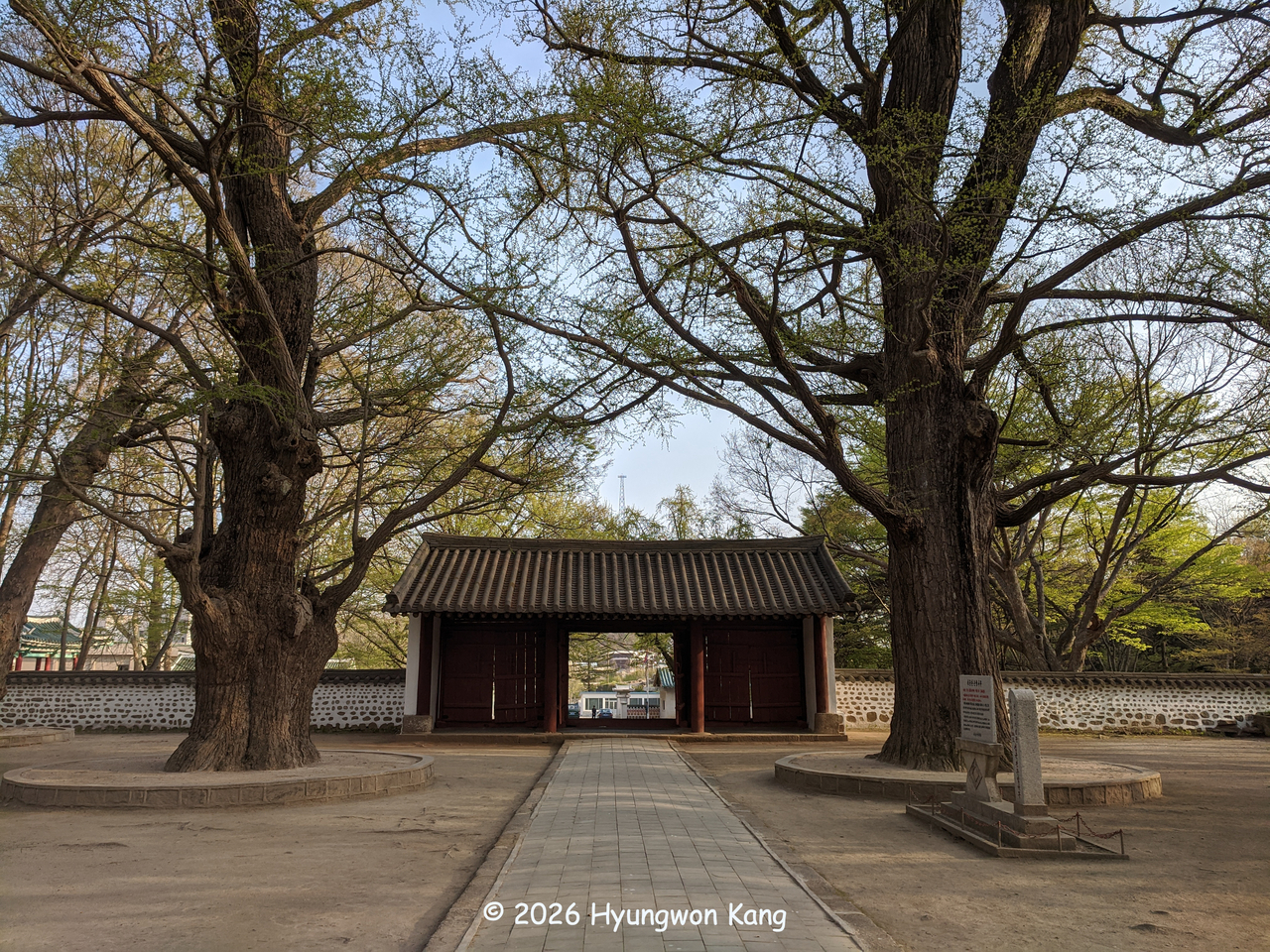
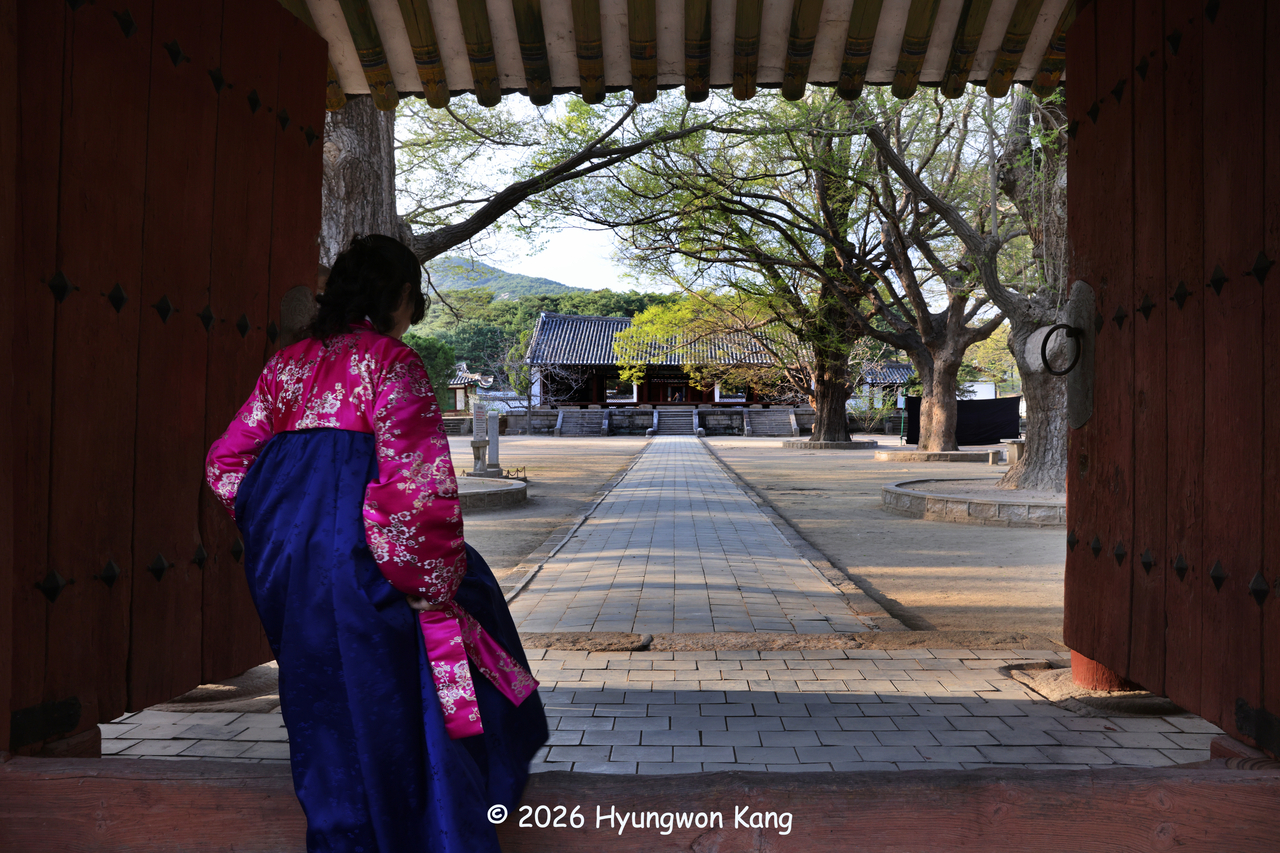
The museum occupies the historic grounds of Koryo Songgyungwan, part of UNESCO’s Historic Monuments and Sites in Kaesong. But the dragons did not originally belong there.
The pair once guarded the royal palace Suchanggung. Today, their bodies remain buried beneath the museum courtyard, with only their great stone heads exposed above ground.
Their journey from a royal palace to an ancient school tells, in miniature, the story of the final decades of the Goryeo Kingdom, which is known as Koryo in the North.
In 1361, the Red Turbans, a rebel movement that emerged amid the collapse of the Yuan dynasty, invaded Goryeo and captured Gaegyeong, or presently the North’s Kaesong. King Kongmin fled south to present-day Andong, North Gyeongsang Province. During the occupation, the imperial palace at Manwoldae was burned and left in ruins.
Goryeo forces later recovered the capital, and military commanders such as Choe Yong and Yi Seong-gye rose in stature during this turbulent era.
Three decades later, Yi Seong-gye was enthroned at Suchanggung in Gaegyeong on the 17th day of the seventh lunar month of 1392. A general of Goryeo had become the first king of Joseon, which would replace it.
The two dragons are therefore more than decorative sculptures. They are survivors from the threshold between two kingdoms.
Standing before them also led me to another thought: Political regimes can disappear quickly, but institutions of learning often endure.
Goryeo’s highest state school was the Gukjagam, established in Gaegyeong in 992 and later renamed Songgyungwan in late Goryeo. Unlike earlier schools, it was founded in part to prepare students for civil service examinations, a new system through which sons of the central and provincial ruling classes could compete for appointment as government officials.
The Gukjagam developed into a broad institution with both Confucian and technical divisions, making it roughly equivalent in function to a comprehensive modern university. Confucian education expanded significantly with the establishment of the Seven Courses, or “Chiljae,” but the school’s curriculum was never limited to Confucian learning. It also taught subjects such as law, calligraphy and mathematics, while Goryeo’s examination system selected specialists in medicine, law, mathematics, astronomy and geomancy.
Even Buddhism had its own examination: The “seung-gwa,” or Buddhist clerical examination, selected monks for recognized religious ranks.
This breadth is important because Goryeo was not intellectually monochromatic. Buddhism was enormously influential, while Confucian learning shaped government education and administration. Taoist beliefs, geomancy and indigenous traditions also formed part of Goryeo’s intellectual world.
UNESCO specifically recognizes this integration of Buddhist, Confucian, Taoist and geomantic concepts in Kaesong, describing the city as evidence of Goryeo’s transition from a predominantly Buddhist political and cultural order toward Confucian and eventually neo-Confucian thought.
Gaegyeong was more than a royal capital. It was a center of government, education, scholarship, religion, astronomy, diplomacy and cultural exchange.
One of the most vivid descriptions of this intellectual culture comes from the Goryeo Dogyeong, or Illustrated Account of Goryeo, written by Song dynasty envoy Xu Jing after his visit in 1123.
Xu Jing produced an eyewitness account of Goryeo’s government, architecture, customs and daily life. He observed:
“The people of Goryeo considered it shameful to be unable to read. In private homes, the sound of people reading aloud never ceased.” — Goryeo Dogyeong, Xu Jing, 1123
That was more than 900 years ago.
Yet it sounds remarkably familiar today.
In both Koreas, education remains one of society’s most deeply held values. This emphasis did not begin with today’s intense competition for university admission or private cram schools. The tradition of cultivating talent through learning and using education to prepare people for public service reaches deep into the Goryeo period.
Education in Goryeo was closely tied to the state examination system. Literary composition and knowledge of the Confucian classics were tested in selecting civil officials, while specialists in technical fields were recruited through separate examinations. At the same time, aristocratic privilege remained powerful through the “eumseo” system, which allowed descendants of high-ranking officials to enter government service without taking civil service examinations.
Goryeo society combined the principle of selecting talent through education and examination with privileges based on family background and social status. Even so, learning and scholarship were regarded not only as paths to individual advancement, but also as essential instruments of government.
Today, North and South Korea have vastly different political systems and educational institutions. Yet on both ends of the peninsula, the cultural tradition of placing great importance on education, scholarship and knowledge as foundations for social advancement remains deeply rooted.
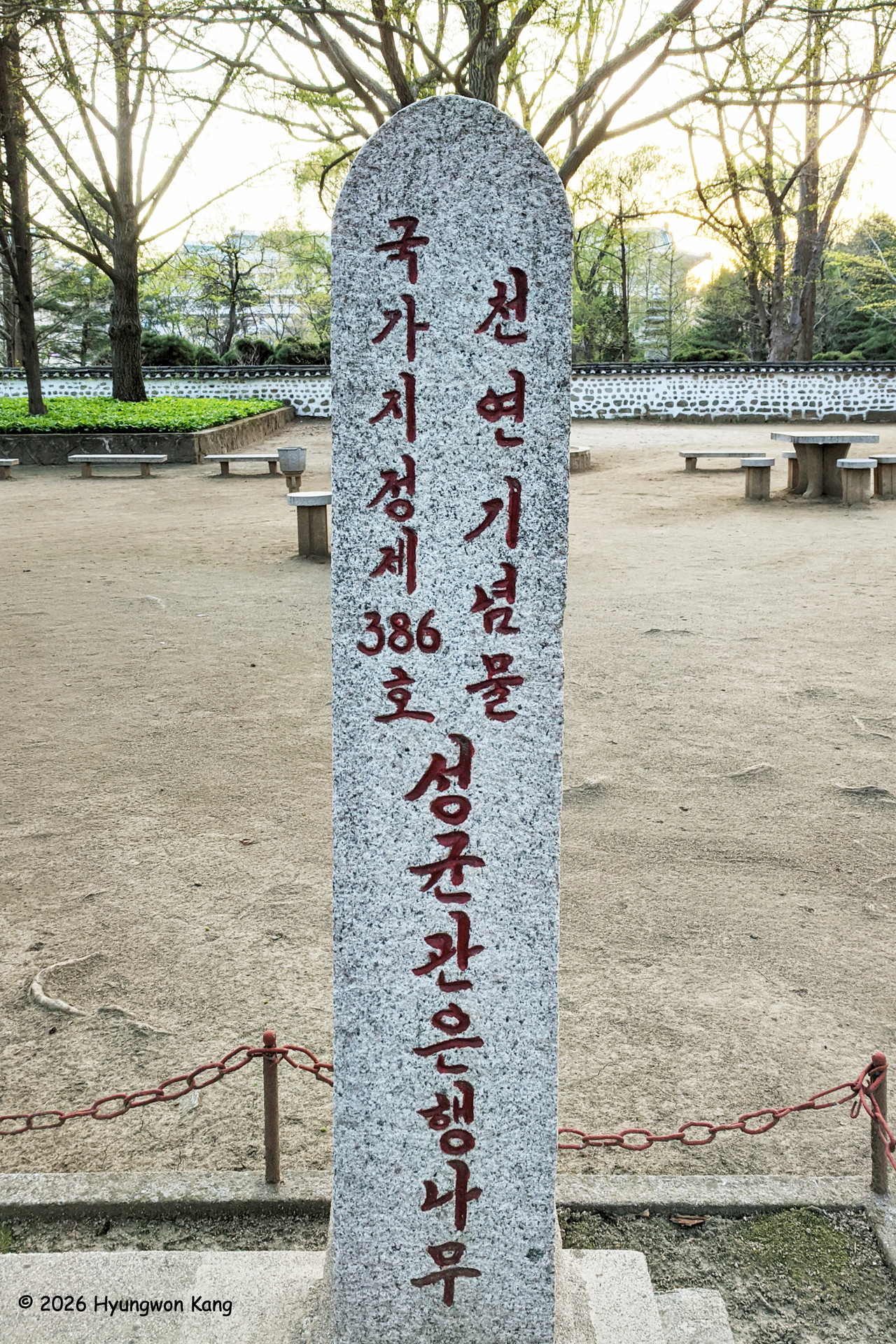
Among the scholars associated with late Koryo Songgyungwan was Poeun Jong Mong-ju, one of Goryeo’s leading neo-Confucian thinkers. He served as a scholar and senior official there, helping spread neo-Confucian learning and educate a new generation of scholars.
Today, Koryo Songgyungwan remains part of UNESCO’s Historic Monuments and Sites in Kaesong. Its old buildings and towering ginkgo trees create an atmosphere entirely different from the ruined foundations of Manwoldae.
Manwoldae tells us that even an imperial palace can burn.
Suchanggung tells us that political power can pass from one dynasty to another.
But Songgyungwan reminds us that ideas can survive both.
Standing there, looking at those fierce stone dragons emerging from the earth, I found myself thinking that perhaps they had become guardians of something more lasting than the palace for which they were carved.
The royal house they once guarded disappeared more than six centuries ago.
The Korean belief in learning did not.
The dragons survived the fall of an empire.
So did the classroom.
By Hyungwon Kang
Hyungwon Kang is a Korean American photojournalist, columnist, author and two-time Pulitzer Prize winner. He reported on North Korea in 1995, 1997 and 2026. Kang is the author of “Visual History of Korea” and “Seonbi Country Korea, Seeking Sagehood.” His ongoing Visual History of Korea project documents Korean history and culture across all of Korea for global audiences.
The views expressed in this article are the writer’s own. — Ed.