
 KB News Desk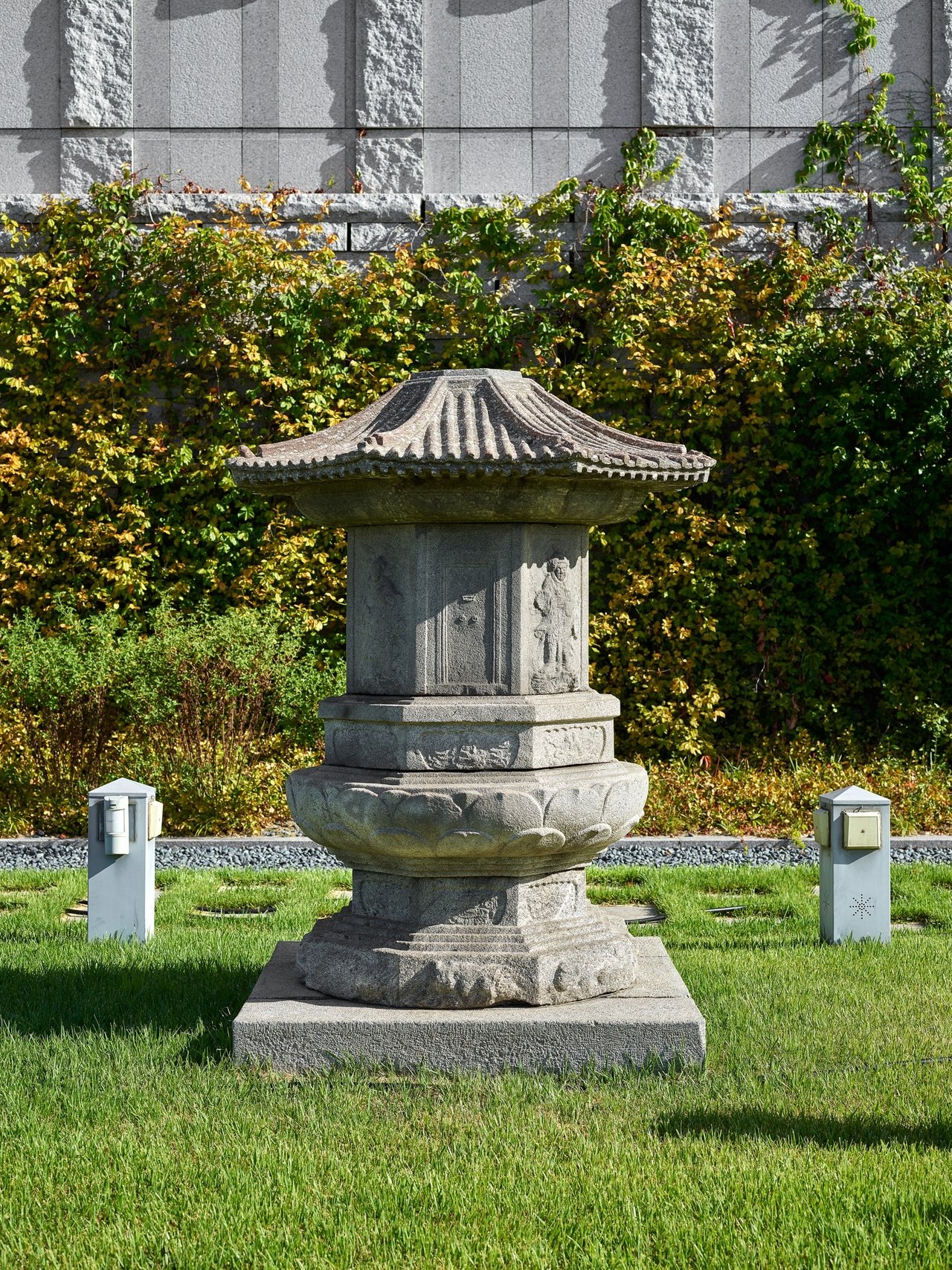
Period: Unified Silla Period
Materials: Stone
Dimensions: H. 170.0cm, W. 92.0cm
Designation: National Treasure 104
Unlike stone pagodas built to enshrine the Buddha’s relics, stupas containing the remains of eminent monks are generally smaller and more varied in design. Such stupas began to be built in earnest during the late Unified Silla period (676–935), as the nine major monasteries of the Seon, or Zen, school were established.
The Seon school emphasized personal enlightenment. Stupas were erected to honor enlightened Seon masters and eminent monks who carried on their teachings. The monks’ relics were enshrined in the stupas, while accompanying steles recorded their lives, achievements and teachings.
This stupa is particularly significant because a written record identifying its date and dedicatee was discovered inside it. According to the document, it was built in 844 for the Unified Silla monk Yeomgeo (d. 844), the second Seon master of the Gajisan School, one of the period’s leading Seon schools.
Designed in an octagonal shape, the stupa features relief carvings of the Four Heavenly Kings and other intricately carved decorations. It is the oldest surviving monk stupa in Korea and established a model for later examples, many of which adopted richly ornamented octagonal bodies.