
 KB News Desk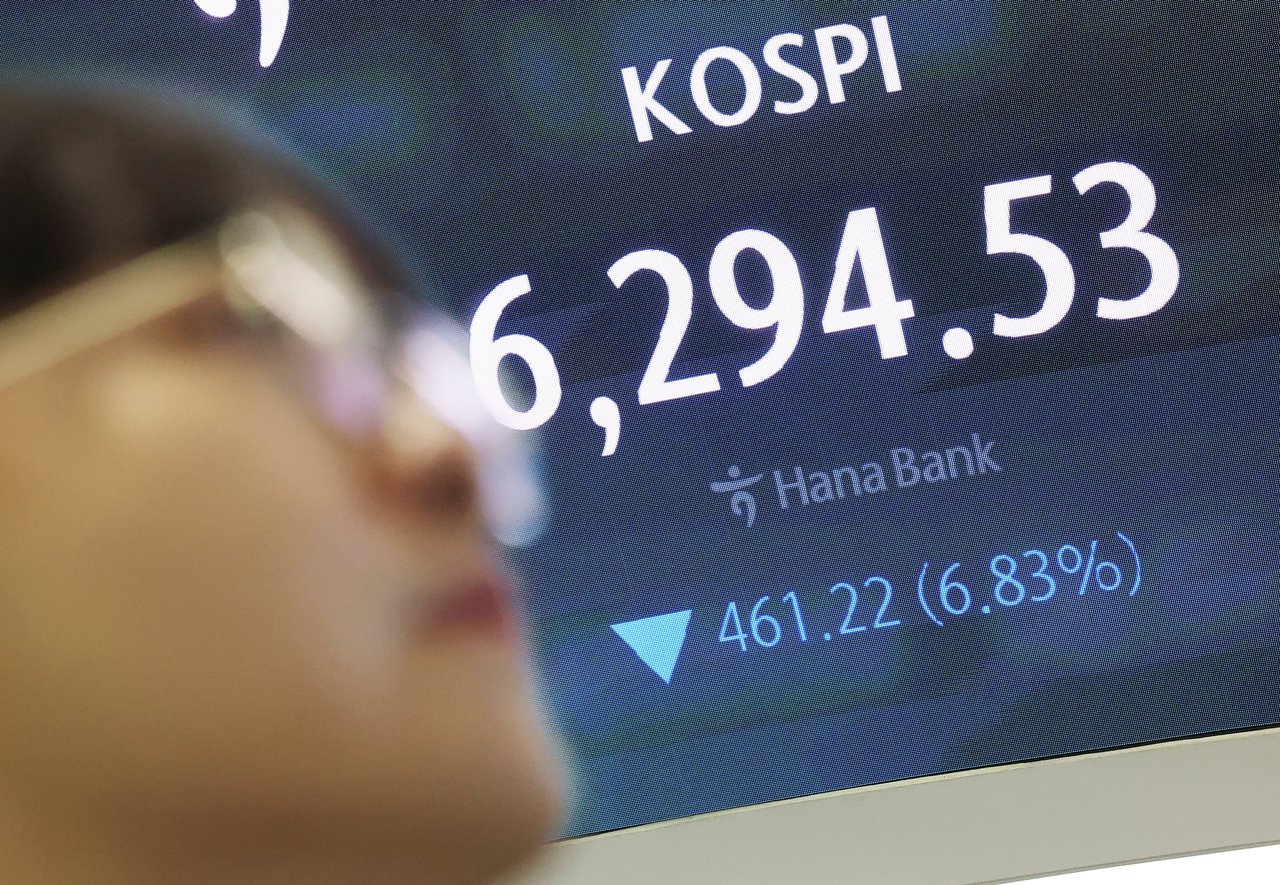
Seoul authorities tighten leveraged-ETF rules; Fitch sees limited spillover to broader economy
South Korea’s stock-market turmoil has shaken investor confidence but has yet to spill into the broader economy or financial system, highlighting a widening gap between the country’s resilient fundamentals and unusually volatile equity trading.
The Korean economy expanded 3.8 percent on-year in the first half, accelerating from 1.8 percent in the second half of last year. Domestic demand has remained resilient, while gains in shipbuilding, biohealth and cosmetics have joined strong semiconductor exports.
Korea’s current-account surplus reached $191 billion in the first half, surpassing last year’s record full-year surplus of $123.1 billion. Earnings expectations have also risen sharply, with projected 2026 operating profits of Kospi-listed companies climbing from 564 trillion won ($399 billion) at the end of January to 975 trillion won at the end of July.
The government has raised its 2026 growth forecast to 3 percent, while major investment banks, including J.P. Morgan and Citi, have lifted their projections from around 2 percent at the beginning of the year into the 3 percent range.
Fitch Ratings also sees little evidence that the recent equity volatility has spread to household borrowing, financial-sector liquidity or institutional balance sheets.
Households have not materially increased bank borrowing to invest in stocks, while margin-financing risks at securities firms remain contained. Fitch has found no evidence of excessive leverage, funding stress or material credit losses tied to repo exposures or leveraged-product trades, assessing the near-term credit risks as limited.
“Market concentration does amplify sensitivity to sentiment-driven swings, and this warrants monitoring,” Rowena Chen, director of APAC non-bank financial institutions ratings at Fitch, told The Korea Herald.
That concentration has been central to the recent turmoil.
The Kospi closed at around 6,300 on Monday, remaining roughly a third below its June peak after suffering its biggest monthly loss since the 2008 global financial crisis in July.
Samsung Electronics and SK hynix accounted for 76 percent of the market-value loss from the peak through early August. Heavy trading in single-stock leveraged exchange-traded funds intensified swings in the two index heavyweights. Authorities have consequently focused their response on leveraged ETFs tied to Samsung Electronics and SK hynix.
Introduced domestically in late May, the products quickly attracted retail money and drove heavy trading in the two index heavyweights. To maintain their targeted leverage, the funds must rebalance their holdings daily, creating large buy or sell orders that can amplify movements in the underlying shares.
The Korea Capital Market Institute said the volatility of daily Kospi returns more than doubled to 3.6 percent in the first half from 1.4 percent in 2025.
The institute attributed the increase to the Kospi’s greater concentration in Samsung Electronics and SK hynix, heightened volatility in global semiconductor stocks and widening differences in investor behavior. It warned that daily ETF rebalancing could magnify those swings.
As concerns mounted, authorities tightened restrictions in stages. They temporarily halted new listings and raised the minimum cash deposit required of retail investors to 30 million won from 10 million won.
Additional curbs announced after the late-July rout include a ceiling that could limit an investor’s exposure to single-stock leveraged products to 20 percent of total investment assets.
The measures have sharply cooled trading. Turnover in the products fell to 1.3 trillion won on Aug. 4 from 12.4 trillion won on July 30 and a peak of 19.4 trillion won in late June.
But the decline in leveraged-ETF trading has yet to restore normal market conditions.
The Kospi surged 17.9 percent on July 31 before falling 5.1 percent on Aug. 3. Sidecars were triggered on either the Kospi or Kosdaq in five of the six trading sessions from Aug. 3 through Monday. Foreign investors have also remained cautious, selling a net 1.48 trillion won of Korean shares Monday even as the Kospi gained 0.65 percent.
For policymakers, the challenge now extends beyond curbing speculative trading. They must demonstrate that market stability can be restored without resorting to intervention that reduces liquidity or makes market rules less predictable.
Fitch does not expect the volatility to derail Korea’s broader efforts to narrow the Korea Discount and attract long-term capital. Chen said continued capital-market reform would matter more to global investors than short-term price movements.