
 KB News Desk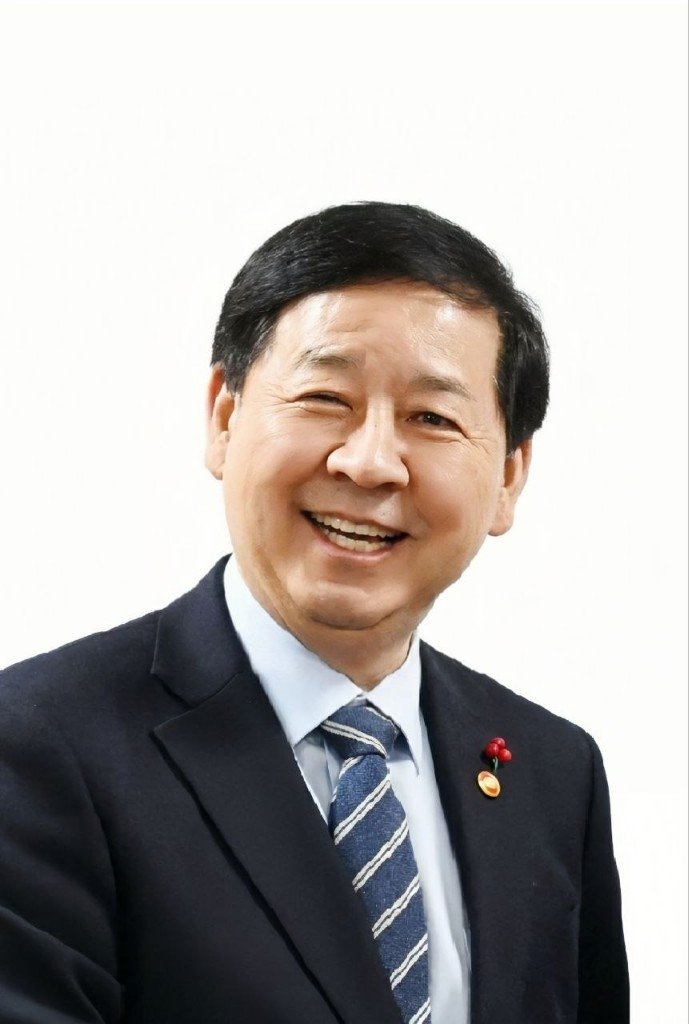
Benjamin Graham, widely regarded as the father of securities analysis, famously observed, “In the short run, the market is a voting machine, but in the long run, it is a weighing machine.”
His words underscore a fundamental truth: While market valuations may be swayed in the short term by investor sentiment and popularity, over time they tend to converge toward intrinsic value. Some have voiced concerns about the recent short-term volatility in Korea’s stock market. Yet in the long run, it is the strength of Korea’s economic performance and its national brand that will carry the most weight.
This year, the Korean economy has delivered exceptionally strong results, with each new economic indicator significantly outperforming market expectations. Growth is the clearest example. Compared with early last year, when the economy was recovering from the shock of martial law, the Korean economy now appears to be operating in a higher weight class.
Following robust quarter-on-quarter growth of 1.8 percent in the first quarter, the economy expanded by another 0.6 percent in the second quarter, sustaining its strong growth momentum. Looking beyond the quarterly figures, year-on-year growth accelerated sharply from 0.4 percent in the first half of last year to 1.8 percent in the second half, and further to 3.8 percent in the first half of this year.
The quality of growth has also been solid. Domestic demand remains robust, with both consumption and investment supported by government policies as well as improving household incomes and corporate earnings. Exports have been strong not only in the IT sector, buoyed by the semiconductor boom, but also across non-IT sectors, including shipbuilding, biohealth and cosmetics. The Consumer Sentiment Index has remained above the benchmark level of 100 despite the war in the Middle East, while the Composite Business Sentiment Index is on track to rise above 100 for the first time in four years.
Korea’s current-account surplus, a key gauge of the economy’s external performance, reached $191 billion in the first half of the year, already surpassing last year’s record full-year surplus of $123.1 billion. Against this backdrop, the exchange rate has also been gradually stabilizing. Foreign exchange reserves, which serve as an important buffer against external shocks, have increased for two consecutive months.
The outlook for the Korean economy remains positive. Forecasts for the semiconductor industry, which has been driving this strong momentum, have been revised upward steadily with each new update. Buoyed by this, projected operating profits of Kospi-listed companies for 2026 have been revised sharply upward, from 564 trillion won ($400 billion) at the end of January to 975 trillion won at the end of July.
The government has raised its 2026 growth forecast for the Korean economy to 3 percent. Major investment banks, including JPMorgan and Citi, have also significantly revised up their growth forecasts, pushing the consensus from around 2 percent at the beginning of the year into the 3 percent range.
In addition, the government is pursuing structural reforms aimed at reducing the Korean economy’s heavy reliance on semiconductors and strengthening its underlying fundamentals. We will fundamentally strengthen the competitiveness of our industries to foster innovative sectors that can become the next engines of growth alongside semiconductors. We will also transform key industries, including steel, petrochemicals, shipbuilding and automobiles, through AI-driven innovation in manufacturing processes and a shift toward higher-value-added production.
Throughout this process, the government will make every effort to maintain macroeconomic stability through effective risk management. A comprehensive risk management framework covering the stock, bond, foreign exchange and real estate markets will be put in place to safeguard stability.
In particular, in response to the recent increase in financial market volatility, the government has swiftly introduced measures to address risks associated with single-stock leveraged products, helping to curb the excessive concentration of investment in these products. At the same time, we will continue to pursue structural reforms in the capital market to enhance its resilience and growth potential.
Building on these efforts, the government will steadily implement its growth strategy to build a stronger Korean economy. We will mobilize a whole-of-government support system to swiftly advance three mega-projects — semiconductors, AI data centers and physical AI — while expanding and restructuring the Korea Investment Corp. into a comprehensive sovereign wealth fund to scale up investment in strategic industries.
We will also strengthen policy support for future growth engines by introducing domestic production tax credits for sectors such as solar power and secondary batteries, and by adding small modular reactors and micro modular reactors to the list of national strategic technologies. To make regional economies another pillar of Korea’s growth, we will identify and foster growth engines under the “Five Growth Hubs and Three Special Zones” initiative, while also pursuing tax reforms that provide greater support for regional areas.
If these policies are implemented as planned, Korea will be able to achieve its “3-4-5 Vision” — a potential growth rate of 3 percent, a place among the world’s top four exporters and a per capita income of $50,000 — and move its economy up another weight class into the global top tier. Beyond that, the government is committed to making Korea an indispensable and irreplaceable partner for success in the international community, as well as a trusted destination for global investors.
Koo Yun-cheol is South Korea’s deputy prime minister and minister of finance and economy. The views expressed in this column are his own. — Ed.