
 KB News Desk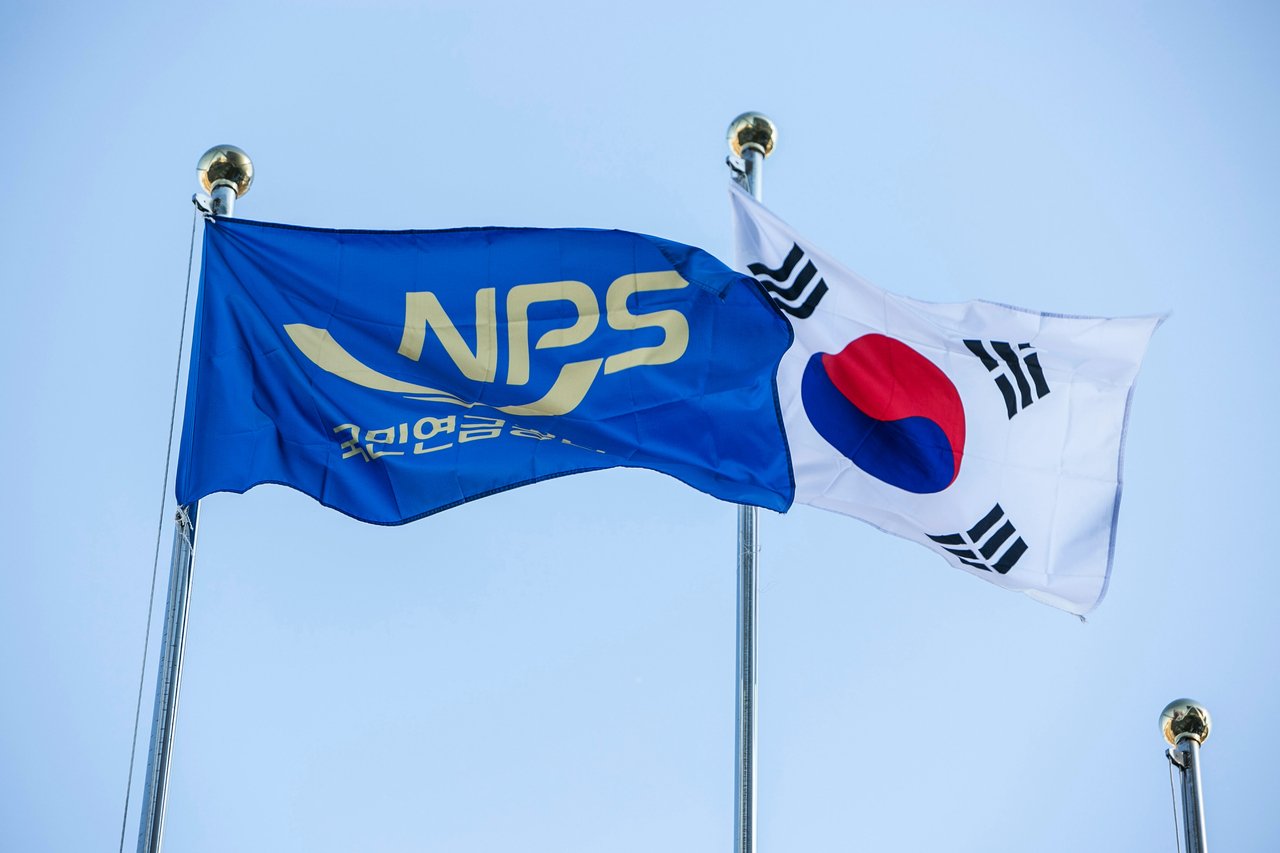
Unlike global peers, Korea’s pension fund delayed stock sales during rally, potentially leaving less room to cushion reversal
The National Pension Service rode the Kospi above 9,000 to record returns. Its decision not to rebalance aggressively during the rally, however, is now under scrutiny for potentially amplifying the market’s violent reversal.
The world’s third-largest pension fund posted a 26.18 percent return through May, surpassing its previous full-year record of 18.82 percent in just five months. Assets under management jumped by more than 340 trillion won from the end of last year to a record 1,848.7 trillion won.
Then the market turned.
The Kospi lost nearly one-third of its value within two months of breaking 9,000 and recently traded around 5,500. The NPS’ assets are estimated to have retreated to roughly 1,600 trillion won, about 300 trillion won ($211.8 billion) below their peak.
The estimated decline is equivalent to roughly five years of annual contributions to the fund.
The NPS did not cause the selloff. But market participants are questioning whether its decision to suspend domestic equity rebalancing through June — and resume it in July at only one-quarter of the previous pace — allowed imbalances to build during the rally.
A missing brake
Rebalancing normally acts as an automatic stabilizer.
When Korean stocks rise faster than other assets, their weight in the NPS portfolio exceeds its target. The fund then sells shares, realizing gains and gradually returning the portfolio to its intended allocation.
Those sales can restrain an overheated market and reduce the need for more abrupt adjustments later.
This year, however, the NPS prioritized maintaining its domestic equity exposure as the Kospi surged. By delaying sales, it retained more of the rally’s upside — but also remained heavily exposed when the market reversed.
Its Korean equity portfolio stood at 543 trillion won at the end of May. It is now estimated at around 350 trillion won.
The delay may also have reduced the fund’s capacity to support the market after the downturn began.
Cindy Park, an analyst at Nomura Securities, said in a recent report that additional institutional buying power had weakened as the NPS’ domestic equity allocation approached its practical limit.
In other words, the fund that might ordinarily buy into a selloff had less room to do so because it had not sold as much during the rally.
Stability or distortion?
The controversy highlights the conflicting roles assigned to the NPS. It must maximize long-term returns for pensioners, but its enormous presence in Korean equities means its allocation decisions can also move the market.
Japan’s Government Pension Investment Fund applies a more mechanical approach, targeting 25 percent each in domestic bonds, domestic equities, foreign bonds and foreign equities.
It remained a net seller of Japanese stocks from 2022 through 2025 as the Nikkei repeatedly set records. Analysts say the steady rebalancing helped absorb excesses during the rally without stopping the market’s longer-term advance.
Norway’s Government Pension Fund Global largely avoids the conflict altogether by investing almost entirely outside its home market.
The NPS has no such luxury. It must manage retirement assets while navigating expectations that it support Korea’s capital market. The two objectives do not always align.
“The NPS’ asset-allocation principles should be applied consistently, regardless of market conditions or policy objectives,” a financial industry official said.
“If investors conclude that rebalancing was delayed to support the market, confidence in the fund’s management could suffer. Any perception that the NPS is being used as a market-stabilization tool could also revive concerns about government intervention.”
Another industry official said postponing rebalancing can suppress selling during a rally only to leave the pressure concentrated when conditions deteriorate.
“If policy goals are seen as taking precedence over investment principles, confidence in the NPS’ independence and predictability could be damaged,” the official said.
The NPS captured extraordinary gains as the Kospi climbed. The question now is whether delaying its exit from an overheated market made the eventual correction harder to absorb.