
 KB News Desk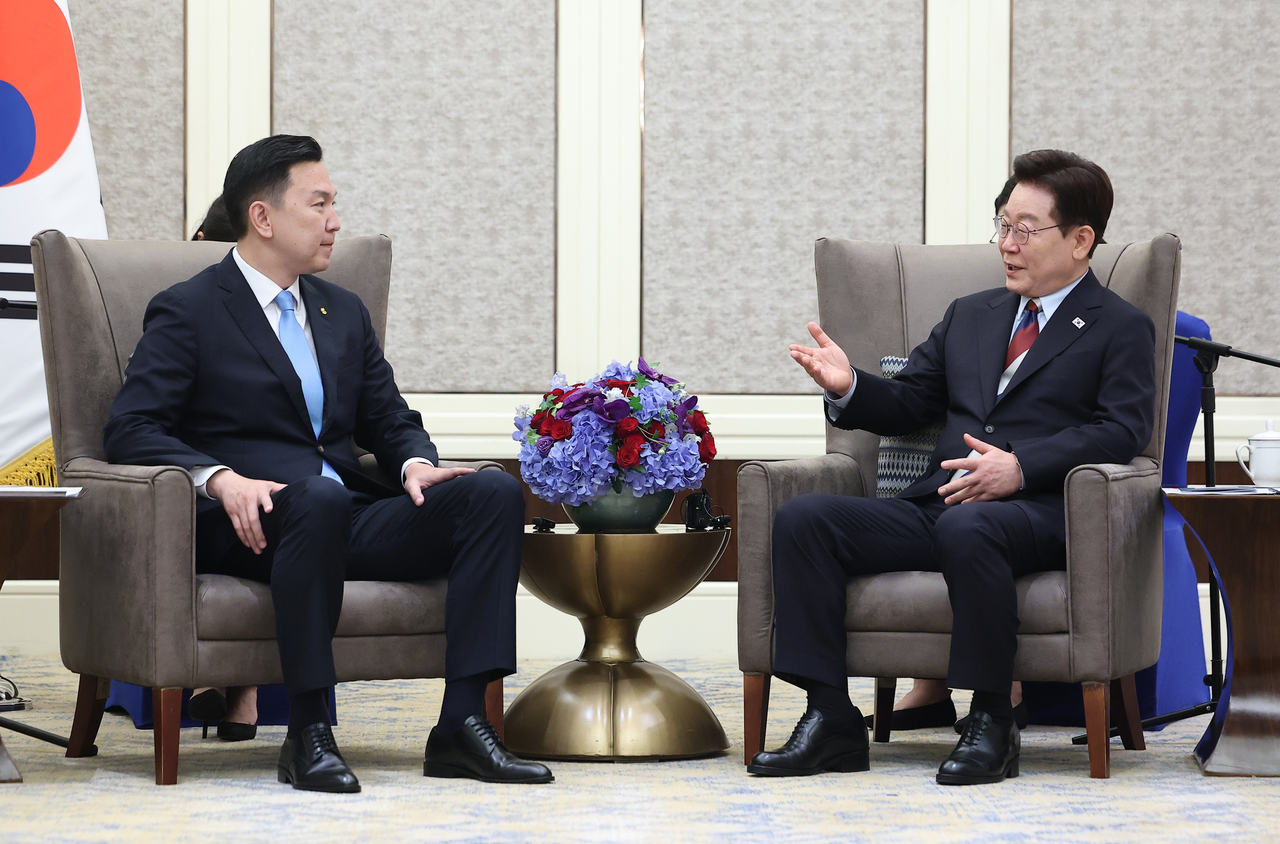
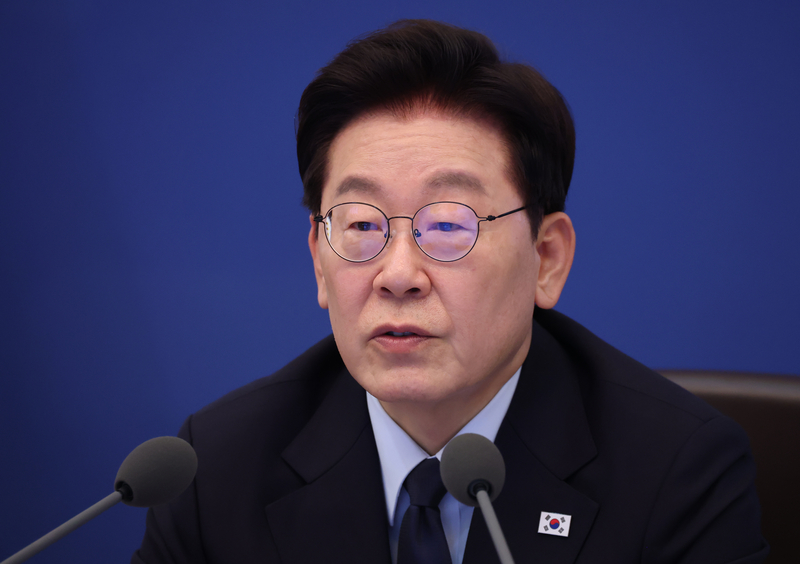
ULAANBAATAR, Mongolia — President Lee Jae Myung on Friday met Mongolia’s second- and third-highest-ranking officials, seeking their support to turn a summit vision for a new “golden age” in bilateral relations into tangible results.
Lee held separate meetings with Prime Minister Nyam-Osoryn Uchral and Parliament Speaker Sandag Byambatsogt in Ulaanbaatar, Mongolia, a day after he and Mongolian President Ukhnaagiin Khurelsukh adopted a joint declaration to usher in a “golden age” in bilateral ties.
During his meeting with Uchral, Lee urged the prime minister to help follow through on agreements reached at Thursday’s summit.
“As prime minister, you are also in charge of overseeing practical affairs, so I hope you will pay close attention to the various agenda items we agreed on yesterday, particularly economic exchanges, cooperation on critical minerals and cooperation in the defense industry,” Lee said.
“I ask that you play a major role in building a new Korea-Mongolia relationship and ushering in a golden age of Korea-Mongolia relations,” he added.
Uchral said he would direct the relevant ministers to follow through on the agreements and produce tangible results.
“Going forward, I believe it is important to create opportunities for Mongolia to process and produce its mineral resources by leveraging Korean technology,” Uchral said through an interpreter.
The prime minister recalled that, while serving as deputy prime minister, he had been involved in discussions between Mongolia’s state-owned mining company Erdenes Mongol and South Korean steelmaker Posco regarding cooperation and the establishment of a processing facility in Mongolia.
Uchral welcomed what he described as progress made during Lee’s summit with Khurelsukh on issues the two countries had discussed for years.
The prime minister also highlighted the significance of negotiations on a Comprehensive Economic Partnership Agreement, or CEPA, noting that he had previously led the Mongolian delegation in the talks.
The large Mongolian community in South Korea was cited by Uchral as evidence of the close people-to-people ties between the two countries.
“Mongolia has 21 aimags. Because around 60,000 Mongolians — roughly equivalent to the population of one aimag — reside in South Korea, we often say that Korea is home to Mongolia’s 22nd aimag,” he said. An aimag is Mongolia’s first-level administrative division, roughly equivalent to a province.
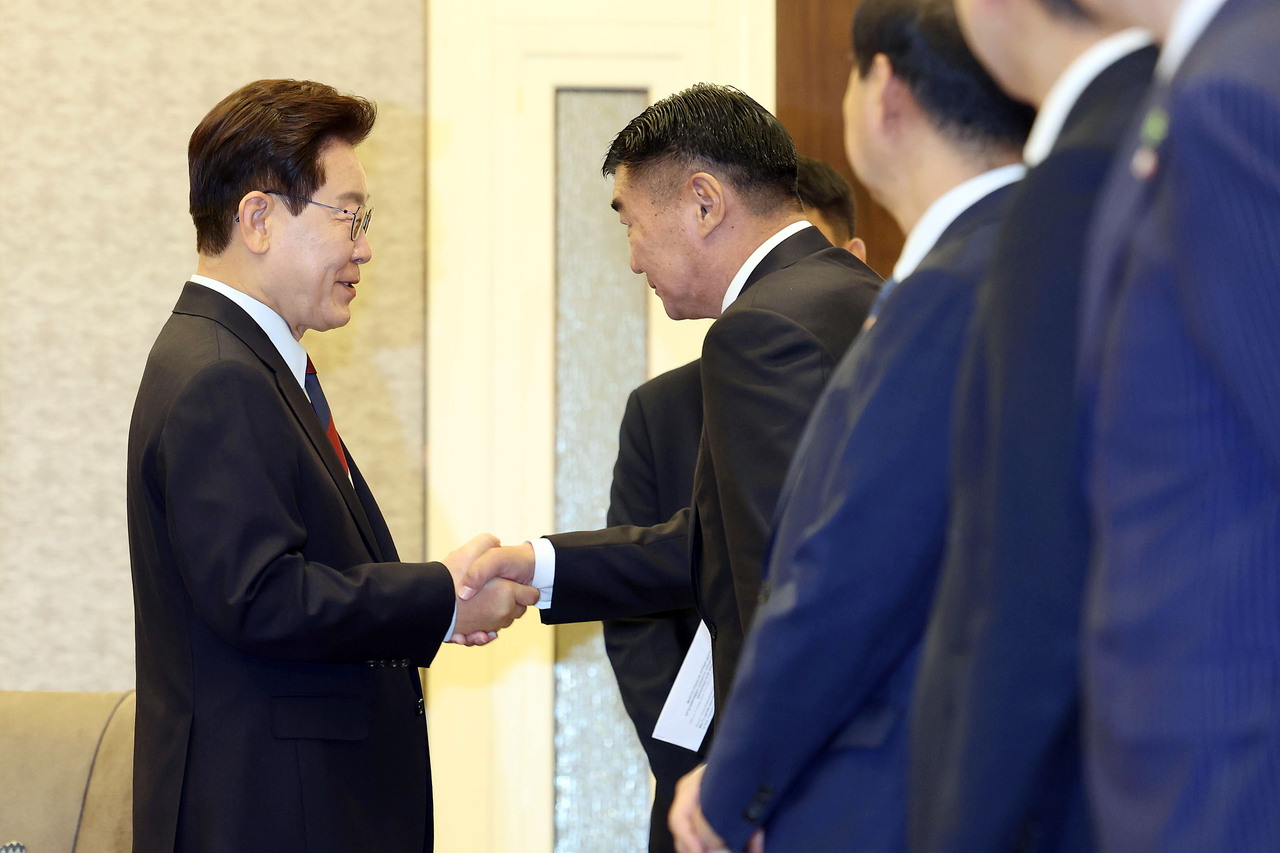
In a separate meeting with Byambatsogt, Lee called for strong parliamentary backing to deepen bilateral cooperation and expressed “very high expectations” for the future development of Korea-Mongolia relations.
“Particularly, the role of parliament is very important. I hope that you, Mr. Speaker, will take a special interest in and provide strong support for the development of Korea-Mongolia relations,” Lee said in his opening remarks.
“I hope that this summit will serve as an opportunity to build a truly new and deeper relationship between Korea and Mongolia,” he said.
Byambatsogt said Lee’s state visit — the first by a South Korean president in 15 years — marked “a highly significant milestone in opening a golden age in bilateral relations.”
He noted that South Korea is home to the largest Mongolian community overseas.
Byambatsogt also highlighted cooperation in healthcare, noting that bilateral relations “have expanded dynamically across a wide range of fields,” including the economy, culture and education, since the two countries established diplomatic ties in 1990.
Referring to the bilateral agreement signed Thursday for the construction of Mongolia’s second National Cancer Center, Byambatsogt said the project would help improve the country’s healthcare services while expanding bilateral cooperation in healthcare.
The meeting was attended by Sukhee Sukhbold, Mongolia’s ambassador to South Korea; Gombojav Zandanshatar, former prime minister; Badmaanyambuu Bat-Erdene, member of parliament and chair of the Mongolia-Korea Parliamentary Friendship Group; members of parliament Ravdan Batbold, Munkh-Soyol and Duger Regdel; and Deputy Foreign Minister Amartuvshin.