
 KB News Desk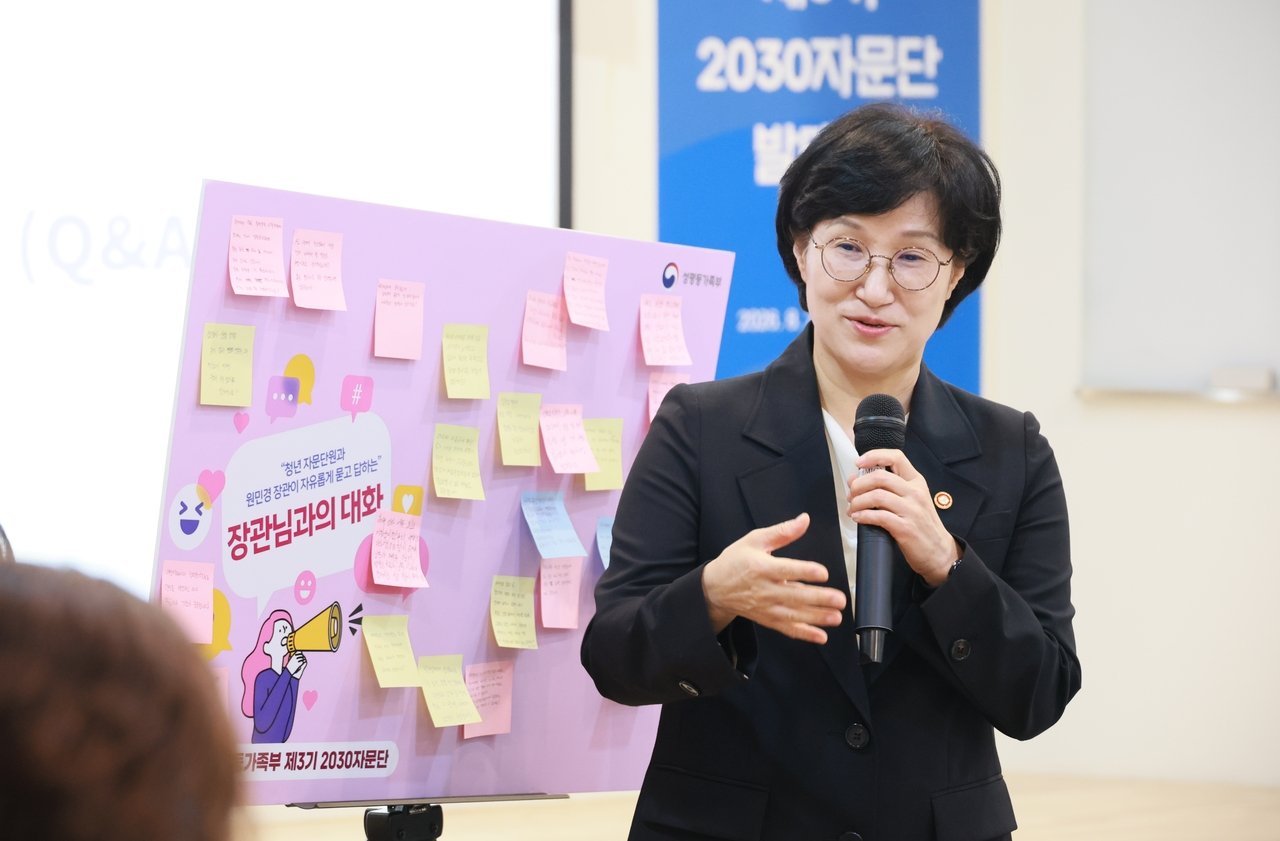
One hundred young Koreans will gather in Seoul on Sunday to discuss gender-based expectations and propose new standards not defined by biological sex, the Ministry of Gender Equality and Family said Friday.
The first edition of the four-hour forum, open to people aged 19 to 39, will be held at Hanyang University under the theme “Between Teto Women and Egen Men: Today’s Ideas of Masculinity and Femininity.”
The trending terms “teto woman” and “egen man” are derived from testosterone and estrogen, respectively, and are commonly used to describe assertive, independent women and sensitive, emotionally expressive men. The labels have no scientific basis.
Participants will discuss whether the terms challenge traditional ideas of masculinity and femininity or simply repackage gender stereotypes. They will also share their experiences of gender-based expectations.
The forum was launched amid growing concern over gender conflict in South Korea. Gender tensions in the country have increasingly surfaced online, where derogatory labels targeting both women and men are widely used.
According to a survey conducted by Korea Research 2026, 61 percent of respondents said gender conflict in Korean society was serious, up 4 percentage points from 2025.
Across the four-session forum, participants will examine images associated with masculinity and femininity and share thoughts on gender-based expectations surrounding work, family responsibilities, emotional expression and romantic relationships
They will then vote on the three gender expectations discussed during the forum they most want to change, develop alternative standards that can apply regardless of gender, and discuss how to put them into practice in everyday life and at work.
“I hope young people will examine the expectations surrounding masculinity and femininity that persist and freely propose new standards to replace them,” said Minister of Gender Equality and Family Won Min-kyung.
“We will carefully consider their ideas and proposed actions when reviewing future gender-balance policies.”