
 KB News Desk
Weight, cost and uncertain demand keep Korean makers cautious
“Many companies can make AI glasses. Making something people want to wear every day is a different problem.”
Choi Jae-in, head of Samsung Electronics’ extended reality research and development team, was briefing reporters in London on July 23, a day after the company showed its first Intelligent Eyewear at Galaxy Unpacked. Most of what he emphasized was weight and comfort.
Samsung’s engineers argued over tenths of a gram. For example, the battery sits near one temple and the sensors and speakers in the other, an asymmetric layout the team tuned until the two sides felt the same.
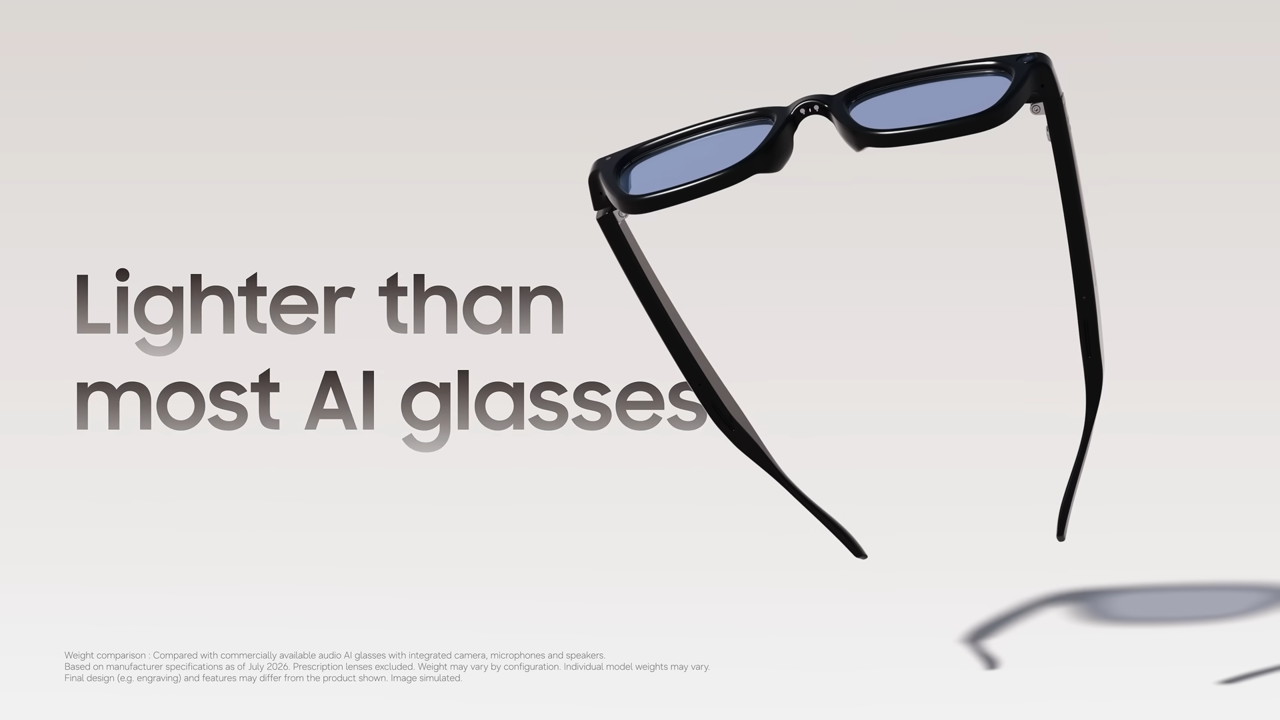
Samsung has not specified a weight or a price, saying only that the glasses are “lighter than most (audio) AI glasses” on sale and that they arrive this fall.
But the largest reason they could be kept that light went mostly unmentioned in official announcements: they have no display.
This means the built-in camera gives Google’s Gemini access to whatever the wearer is looking at, but its responses are not displayed on a screen, they are played as a sound.
Samsung is not alone in making that choice. Meta and others have sold displayless smart glasses for years. What makes Samsung’s decision notable is that a company with its own phones, chips, displays and consumer electronics ecosystem still chose the simpler design for its first entry.
No screen, no problem — for now
Counterpoint Research sorts intelligent eyewear into three groups: immersive vitural reality headsets, augmented reality glasses that lay digital content over real-world views, and smart glasses that have no display at all.
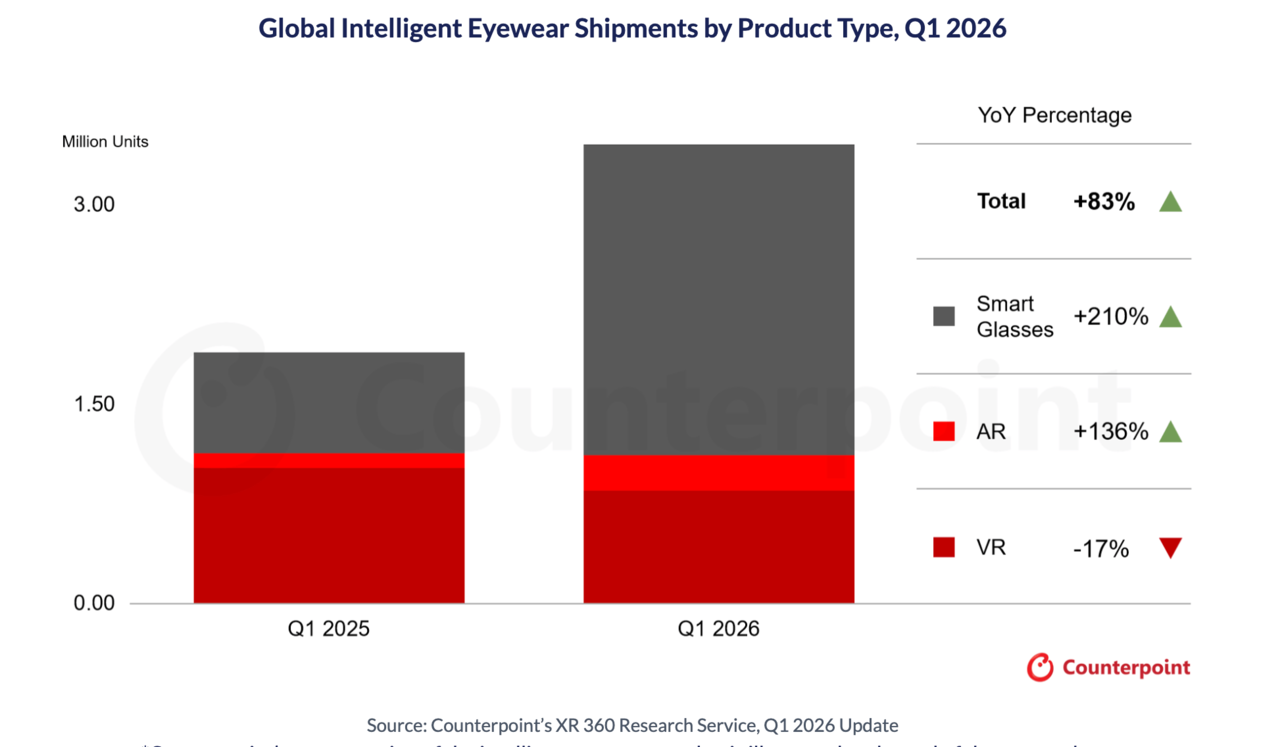
Shipments of displayless smart glasses rose 210 percent on-year in the first quarter of 2026, making them both the fastest-growing category and the largest by volume, according to Counterpoint. AR glasses grew 136 percent, while VR fell 17 percent.
Meta held close to 84 percent of the displayless market.
“Audio AI smart glasses (without displays) will remain the largest subcategory through 2030,” said Linda Sui, founder of Smart Analytics Global and formerly head of mobile device markets at TechInsights — a firm known for component-cost analysis. “Samsung’s decision to begin with audio AI smart glasses is a practical and commercially sensible approach,” she said.
SAG expects audio models to account for 81 percent of AI smart-glasses shipments in 2030 but only 67 percent of the category’s sales revenue. Display-equipped glasses are forecast to take 19 percent of shipments yet 33 percent of revenue, because they sell for two to three times as much.

That split explains why Samsung followed an established path rather than pushing straight into visual AR. It also shows what the company chose to give up.
“Many AI-generated responses are still inherently visual,” Sui said. “A translation, a route or a notification is far easier to glance at than to listen to word-for-word.”
What one tiny screen really costs
Putting a display into glasses goes far beyond a simple matter of finding room for one more part.
“Once you commit to a display, the weight, cost and battery penalties compound quickly,” said Kwon Tae-woo, a future-industries analyst at Hana Securities who tracks the smart-glasses supply chain. “That’s why even a company with Samsung’s supply chain likely concluded that, for a first product, staying light beat putting visual information in the lens.”
The penalty compounds because each fix creates the next. A microdisplay needs optics to steer its image into the eye, and making it bright enough for outdoors draws more power. So the frame needs a bigger battery, adding back the weight the design was fighting to lose.
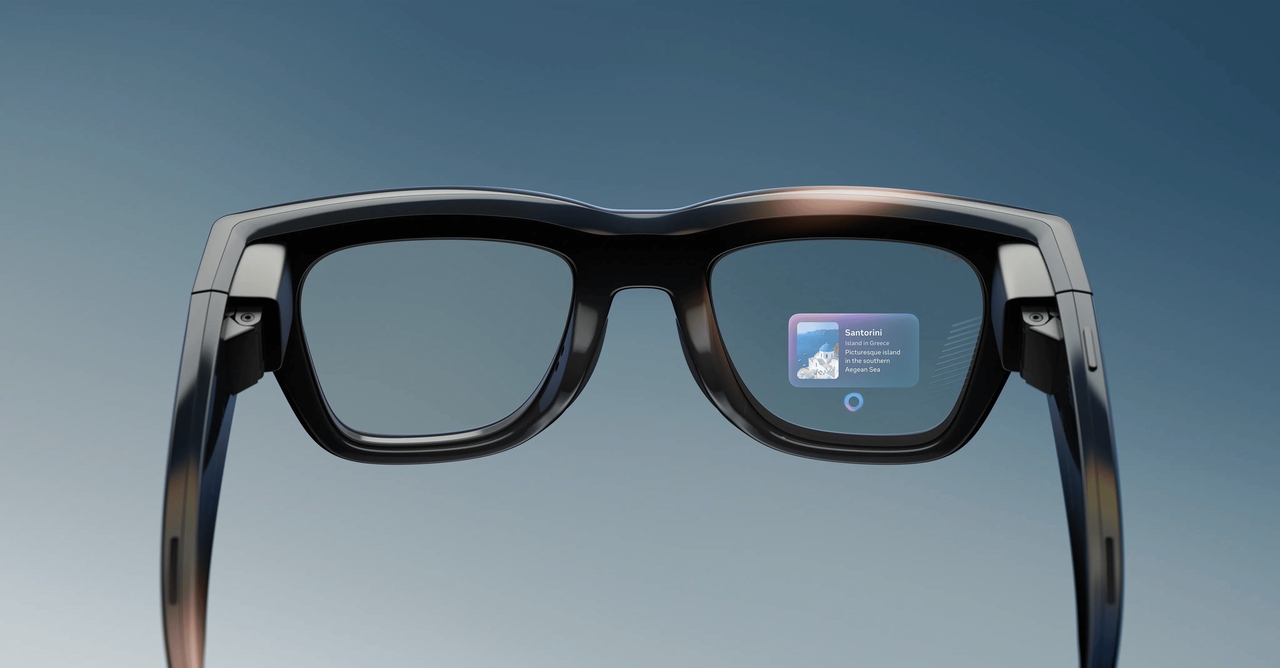
Existing products have already clearly shown the trade-offs. Meta’s $799 Ray-Ban Display keeps something close to a normal silhouette, but only with a small, low-res screen in one lens meant for quick glances. It weighs about 69 grams, against roughly 48 to 52 grams for Meta’s displayless models.
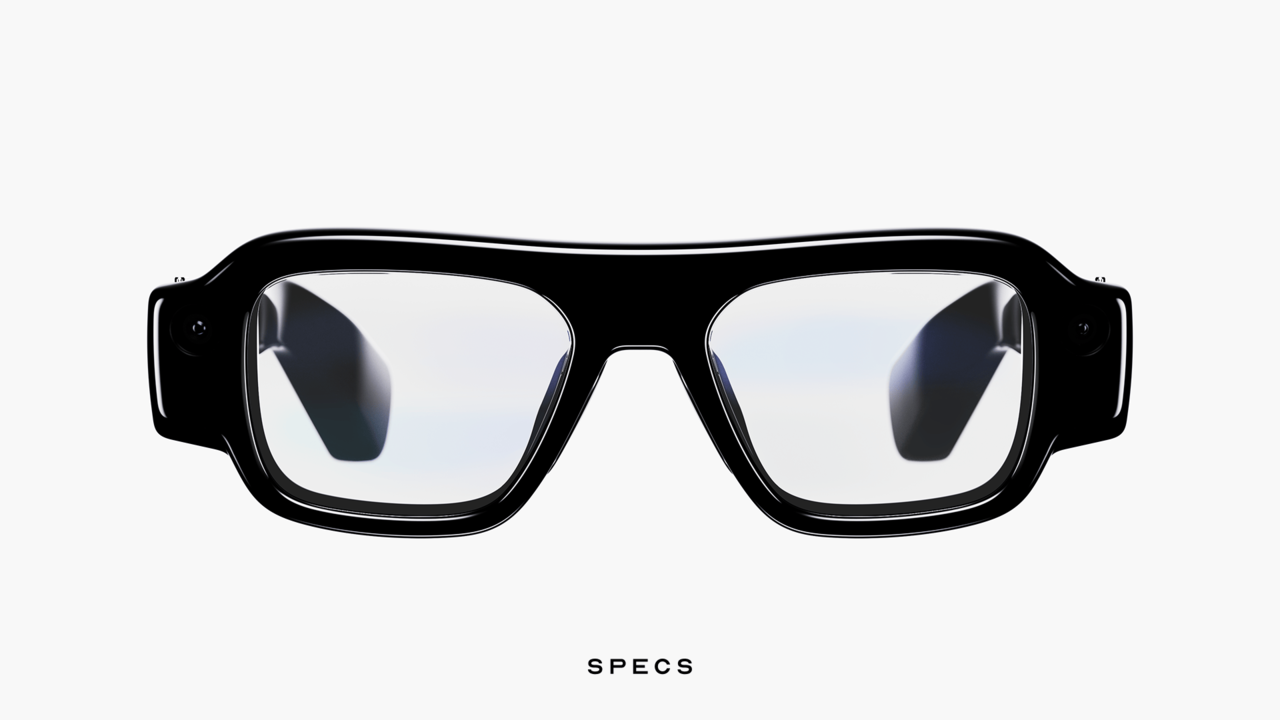
Snap’s upcoming Specs glasses provide binocular, full-color AR, but cost $2,195 and weigh more than 130 grams.
Korea has the tech, but who goes first?
Korean companies, including Samsung’s own, are preparing several of the technologies needed to make display-equipped glasses smaller and more efficient.
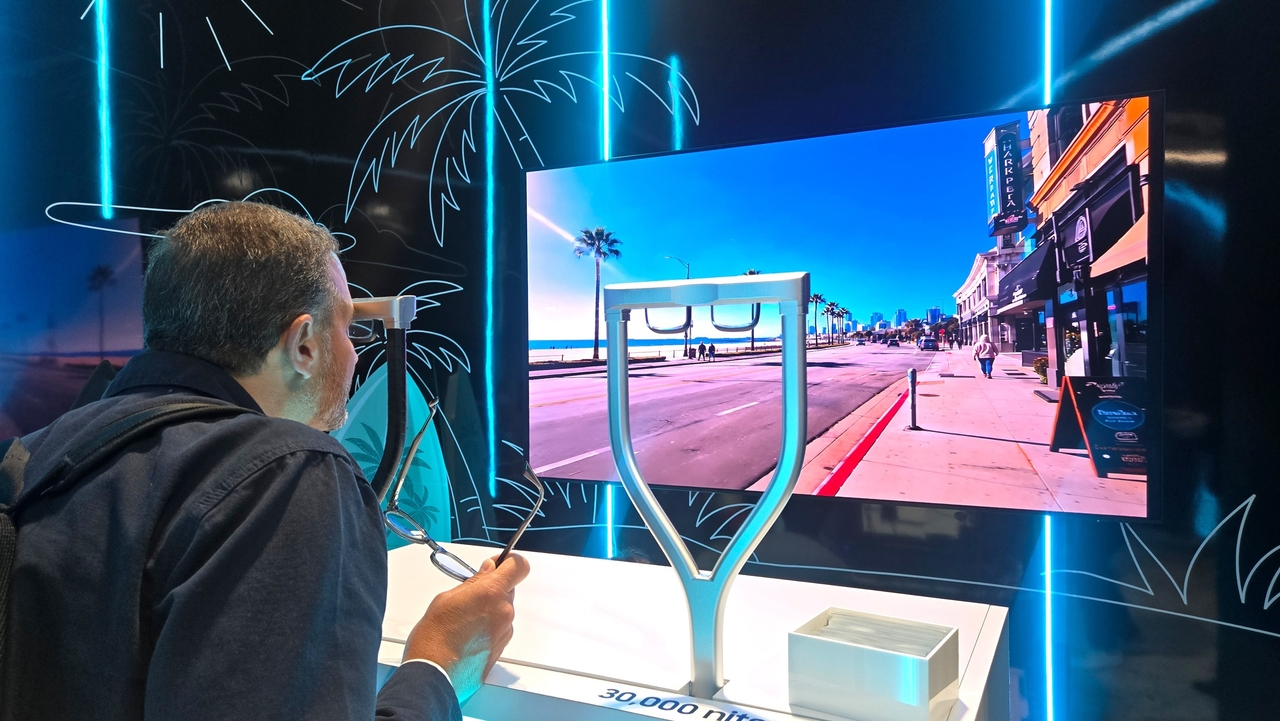
Samsung Display demonstrated one approach at AWE USA in June, the world’s largest augmented-reality trade show. Its prototype used a 0.62-inch RGB OLED-on-silicon, or OLEDoS, panel to show translation, navigation and weather information. The technology places full-color OLED pixels on silicon, producing bright images from a tiny panel.
“RGB OLEDoS offers significant advantages in mass production and cost competitiveness,” a Samsung Display official said.
LG Electronics is also reportedly developing display-equipped AI glasses, targeting a weight below 49 grams and more than eight hours of use. It is working with domestic suppliers on the ultrathin lens optics needed to project images into the wearer’s eye.
The remaining question is whether demand will grow enough to justify the investment required for mass production.
“Whatever you call them, consumers picture ‘smart glasses’ as ones that can put information in front of their eyes, and the industry has to get there eventually,” said an official at a major Korean display company.
“But it’s a chicken-and-egg problem. Component makers won’t invest aggressively in high-end displays until someone like Apple proves the demand. But after watching Vision Pro’s costly Sony OLEDoS panels sell so badly that production was cut, no one here wants to move first. Samsung made the safer, but arguably the right business choice this time.”