
 KB News Desk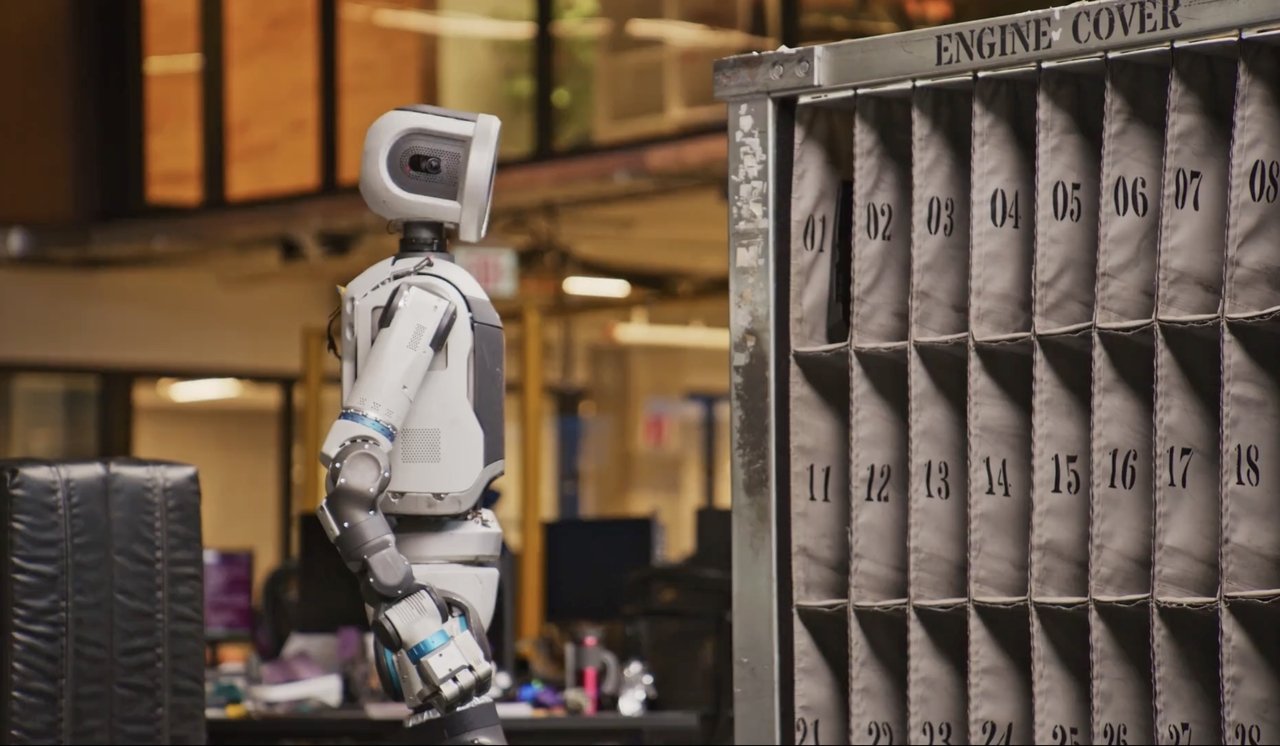
Nonunion workforce and rising employment temper US concerns over 2028 robot rollout, but risks remain, experts say
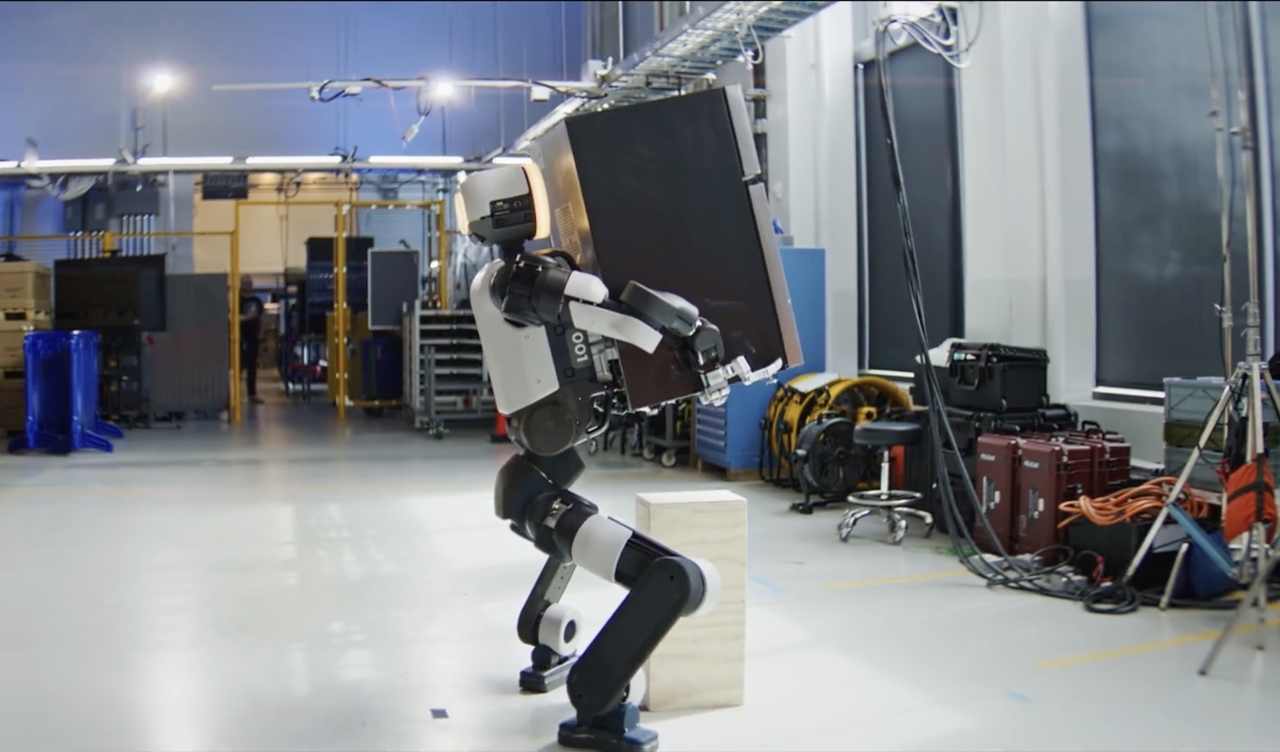
Hyundai Motor Group’s plan to begin deploying Atlas humanoid robots at its Georgia plant in 2028 is exposing a trans-Pacific divide over automation.
Korean union workers are demanding job protections, while organized resistance has yet to emerge at Hyundai’s nonunion US factories.
Hyundai has not announced plans to deploy Atlas at its Korean plants. Still, its Korean union raised the potential impact of physical artificial intelligence and robotics during this year’s labor negotiations, seeking greater transparency and safeguards against job losses.
The union stopped short of rejecting the technology outright. In a tentative labor agreement, management and labor recognized physical AI and robotics as necessary for Hyundai’s long-term competitiveness and agreed to share information on new technologies while jointly managing the manufacturing transition.
No comparable collective response has emerged from Hyundai workers in the US, where Atlas will first enter production operations.
Labor experts say the contrast reflects the weak presence of organized labor in the US South, Hyundai’s expanding local workforce and the company’s message that automation is needed to remain competitive.
The question is whether that relative calm can last as humanoid robots move from demonstration videos onto factory floors.
A nonunion auto belt
Hyundai Motor Group operates its newly built Metaplant America, known as HMGMA, in Bryan County, Georgia, alongside Hyundai’s assembly plant in Montgomery, Alabama, and Kia’s factory in West Point, Georgia. All three are nonunion.
Jake Rosenfeld, professor and chair of sociology at Washington University in St. Louis, said the lack of an organized response reflects both the absence of unions and the locations of Hyundai’s plants.
The US union membership rate averaged 10 percent in 2025, according to the US Bureau of Labor Statistics. Michigan, the historic center of the Detroit automakers, recorded a rate of 13 percent, while Georgia stood at just 3.8 percent.
“The major Hyundai plants are located in areas with little union presence or recent organizing experience,” Rosenfeld said.
John Logan, professor and director of labor and employment studies at San Francisco State University, said workers seeking to organize in the South face weak legal protections and strong opposition from employers and political and business groups.
Georgia reinforced that environment in 2024 by passing Senate Bill 362. The law makes companies ineligible for state economic incentives if they voluntarily recognize a union based solely on signed authorization cards. A formal secret-ballot election is required instead.
Supporters said the measure protects workers’ privacy and right to vote. Labor groups argued that it makes organizing more difficult by removing the faster card-check route to union recognition.
United Auto Workers President Shawn Fain warned in June that AI-powered humanoid robots could pose a “profound threat” to manufacturing jobs.
But that warning has had limited influence at Southern plants operated by foreign and US automakers, Logan said. Hyundai, Tesla, BMW and Mercedes-Benz are among the companies pursuing advanced automation while running nonunion facilities in the region.
Expansion tempers immediate fears
The absence of organized opposition does not necessarily mean Hyundai’s US employees are unconcerned about automation. But the company’s continued hiring may have reduced the immediate sense of threat.
“The major Hyundai plant in Georgia where the Atlas humanoid robots will be deployed has been steadily increasing its employment levels,” Rosenfeld said.
HMGMA employed 1,623 direct workers, called “Meta Pros,” as of this year, according to a May report by MotorTrend. That was up from around 1,200 when the plant officially opened in March 2025.
Hyundai has said the broader site will support 8,500 jobs by 2031. It is also expanding the plant’s production capacity as it shifts more manufacturing to the US.
The automaker aims to increase the share of vehicles sold in the US that are produced locally from about 40 percent in 2024 to more than 80 percent by 2029.
That expansion allows management to present robotics as part of a growing manufacturing operation rather than a tool for immediate workforce reduction.
“Management’s claim that without these technological changes Hyundai could fall behind its competitors, lose market share and possibly be forced to downsize seems to have quieted demands for worker representation,” Rosenfeld said.
“Combined with the fact that Hyundai’s US footprint has been growing, workers aren’t primed to worry too much about technological change or to organize over feared job losses.”
Hyundai also describes Atlas as a tool that will initially take on repetitive or physically demanding work alongside human employees.
Still, employment gains made before deployment begins do not guarantee that future automation will leave staffing levels unchanged. Much will depend on how quickly the robots become capable of handling more complex tasks and whether production growth continues to create enough new work.
The 2028 test
Hyundai plans to establish a US robot manufacturing facility with annual production capacity of up to 30,000 units by 2028.
That figure covers the group’s broader robot portfolio and does not mean 30,000 Atlas humanoids will immediately enter Hyundai factories.
Atlas deployment will begin gradually at HMGMA in 2028 with parts sequencing, in which components are sorted and prepared in the order needed for production. Hyundai plans to expand the robots’ role to component assembly by 2030 after further validation.
The timing could still bring automation to the center of US labor discussions.
The UAW’s contracts with General Motors, Ford and Stellantis expire April 30, 2028, putting negotiations with the Detroit automakers on a similar timeline to Hyundai’s initial Atlas deployment.
Although the Detroit Three have not announced humanoid deployments on Hyundai’s scale, Logan expects job security and robotics to become more prominent issues in the next bargaining round.
The debate also comes as workers across industries face growing anxiety over the effect of AI on employment. Discussion has focused largely on entry-level office and technology jobs, but attention is increasingly shifting toward factories as humanoid robots become more capable.
“More recently, we have seen an increasing number of stories in the media about the impact of humanoid robots on employment in manufacturing, including in the auto industry,” Logan said.
The UAW has sought to extend its reach beyond Detroit, winning a landmark organizing vote at Volkswagen’s plant in Chattanooga, Tennessee, in 2024. Efforts at other Southern auto factories, however, have met greater resistance.
For organizers, the arrival of humanoid robots could strengthen the argument that workers need collective bargaining rights to negotiate how new technology is introduced, whether employees are retrained and how productivity gains are shared.
That could eventually bring the automation debate to Hyundai’s factories.
“Job security and the impact of automation on employment will likely be an increasingly important issue in efforts to organize nonunion auto plants in the US, including at Hyundai,” Logan said.