

 KB News Desk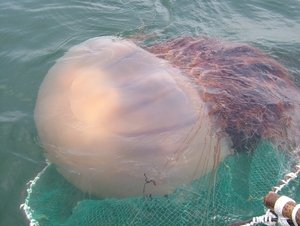
Sightings of giant Nomura’s jellyfish in Korean waters have increased fivefold from a year earlier and spread across a wider area, the National Institute of Fisheries Science said Thursday.
The institute said it has not yet determined the exact cause of the surge.
Nomura’s jellyfish can grow up to 2 meters in diameter and deliver painful stings that may cause swelling, fever and numbness, or even shock in severe cases. The species typically drifts into Korean waters from the East China Sea during the summer, often prompting warnings during the peak beach season.
In the institute’s latest survey of waters around Jeju Island and the southern coast, an average of 10 jellyfish were detected per hectare, compared with two per hectare during the same period last year.
The jellyfish had previously been found mainly in the East Sea, but earlier surveys this year also detected them in the West and South Seas.
Their arrival also came about two weeks earlier than usual, raising concerns about a possible increase in sting injuries.
“The occurrence of jellyfish is influenced by a combination of environmental factors, including water temperature, food availability and ocean currents,” an institute official told local media. “However, because we cannot directly investigate conditions in Chinese waters where the jellyfish originate, we can only make estimates.”
“The annual fluctuation is significant, so we cannot say whether this year’s increase will continue next year,” the official added.
The institute advised beachgoers to minimize skin exposure while swimming and to rinse stings with seawater or saline after leaving the water. Anyone experiencing severe symptoms should seek medical attention.