
 KB News Desk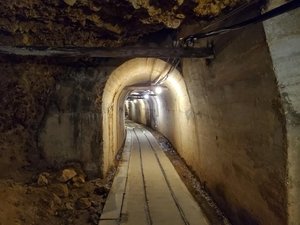
UNESCO’s World Heritage Committee on Thursday adopted a decision urging Japan to better present the history of the Sado Gold Mine, saying Tokyo has yet to fully honor its commitment to reflect the wartime mobilization of Korean laborers at the site.
The decision, adopted without amendment or debate during the committee’s 48th session in Busan, calls on Japan to further develop its interpretation and exhibition strategy to ensure it reflects the site’s “whole history,” including the forced mobilization of Koreans during Japan’s 1910-45 colonial rule of the Korean Peninsula.
It also requests Japan to regularly report its progress to the UNESCO World Heritage Center and recommends that Tokyo “have close consultation with the States Parties concerned” to ensure the site’s full history is comprehensively presented.
It calls on Japan to submit another State of Conservation report by Dec. 1, 2027, for review at the 50th session of the World Heritage Committee in 2028.
The decision stems from commitments Japan made when the Sado Gold Mine was inscribed on UNESCO’s World Heritage List in 2024. To secure the site’s inscription, Tokyo pledged to present the mine’s full history, including the experiences of Korean laborers who were mobilized to work there during World War II.
During Japan’s occupation of Korea, more than 1,500 Koreans were forced to work at the Sado mine, according to the Seoul government. The mine was a major gold producer used to support Japan’s wartime industry.
The adopted decision carries institutional weight within UNESCO’s World Heritage follow-up framework, but the organization has limited enforcement powers, making it uncertain how fully Japan will implement the recommendations.
The issue has remained a source of friction between Seoul and Tokyo since the site’s inscription. South Korea has repeatedly argued that Japan has failed to adequately inform visitors about the forced mobilization of Korean workers despite the commitments it made during the listing process.