
 KB News Desk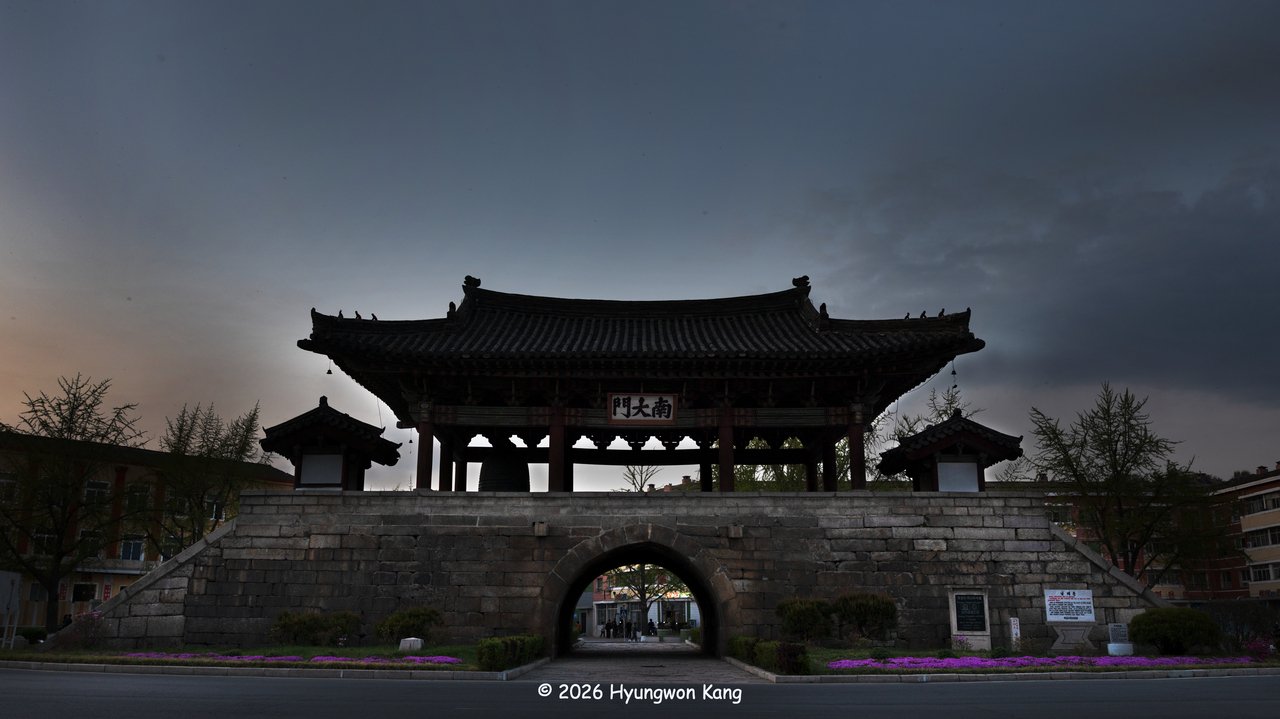
At its height, all roads led to Kaegyong, the imperial capital of the Goryeo empire, or Koryo, as it is known in North Korea. Protected by a vast fortress system with no fewer than 25 gates, the city welcomed officials, merchants, pilgrims, diplomats and foreign envoys from across Asia on their way to the imperial palace.
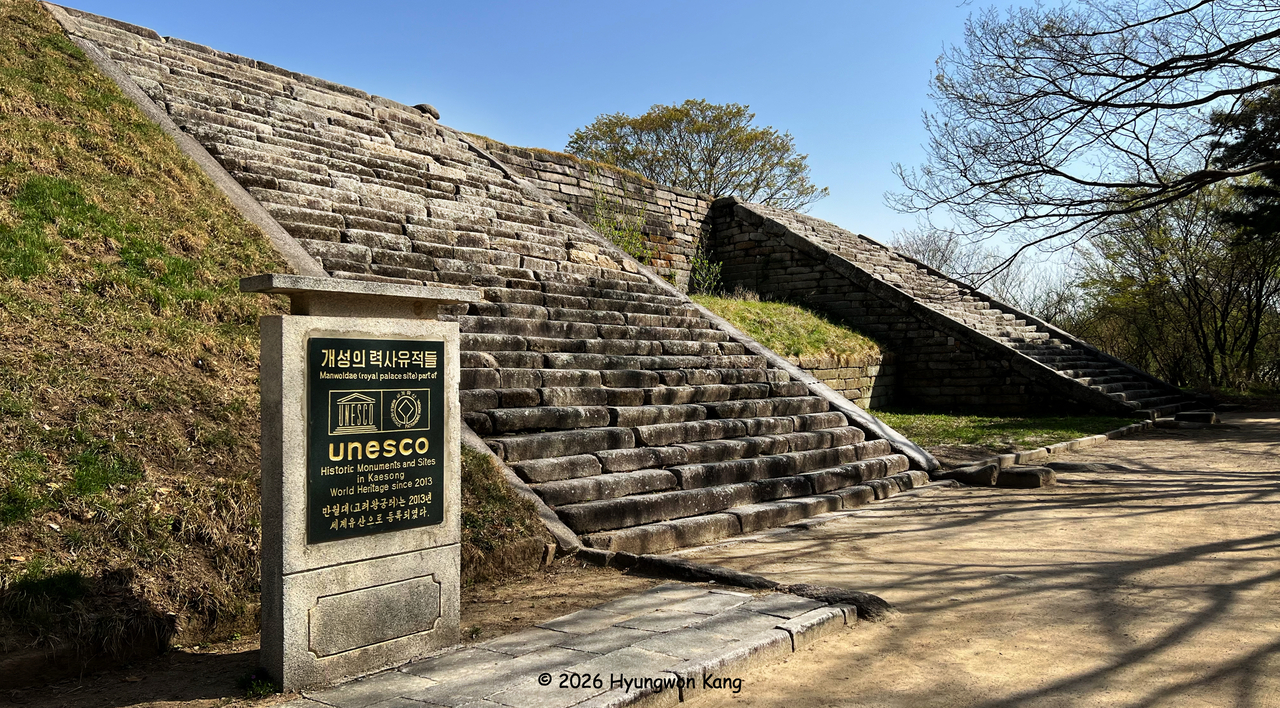
On April 18, 2026, I stood before the monumental granite staircases of Manwoldae, the imperial palace of the Goryeo empire in present-day Kaesong. Although the timber halls had vanished centuries ago, the massive granite foundations remained. As I climbed from one terrace to the next, I realized I was walking through the physical remains of what Goryeo regarded as its imperial capital.
King Wang Geon founded the Goryeo state in 918 and established his capital at Kaegyong the following year. At its center stood the palace city, surrounded by the imperial city, forming the political and ceremonial heart of the empire. Following the Khitan invasions, the capital was further protected by a 23-kilometer outer fortress, completed in 1029 under the direction of the celebrated statesman and military commander Gang Gamchan. During the late Goryeo period, an inner fortress was constructed between the palace city and the outer fortress, creating one of the most sophisticated multilayered fortress capitals in medieval East Asia.
Kaegyong, present-day Kaesong, was also an important commercial center connected to the wider world. Through its river port and maritime trade, merchant ships reached Goryeo from across East Asia and beyond. Muslim merchants from the Middle East were among the international traders who visited the capital during the height of the Goryeo empire, making Kaegyong one of the cosmopolitan cities of medieval Northeast Asia.
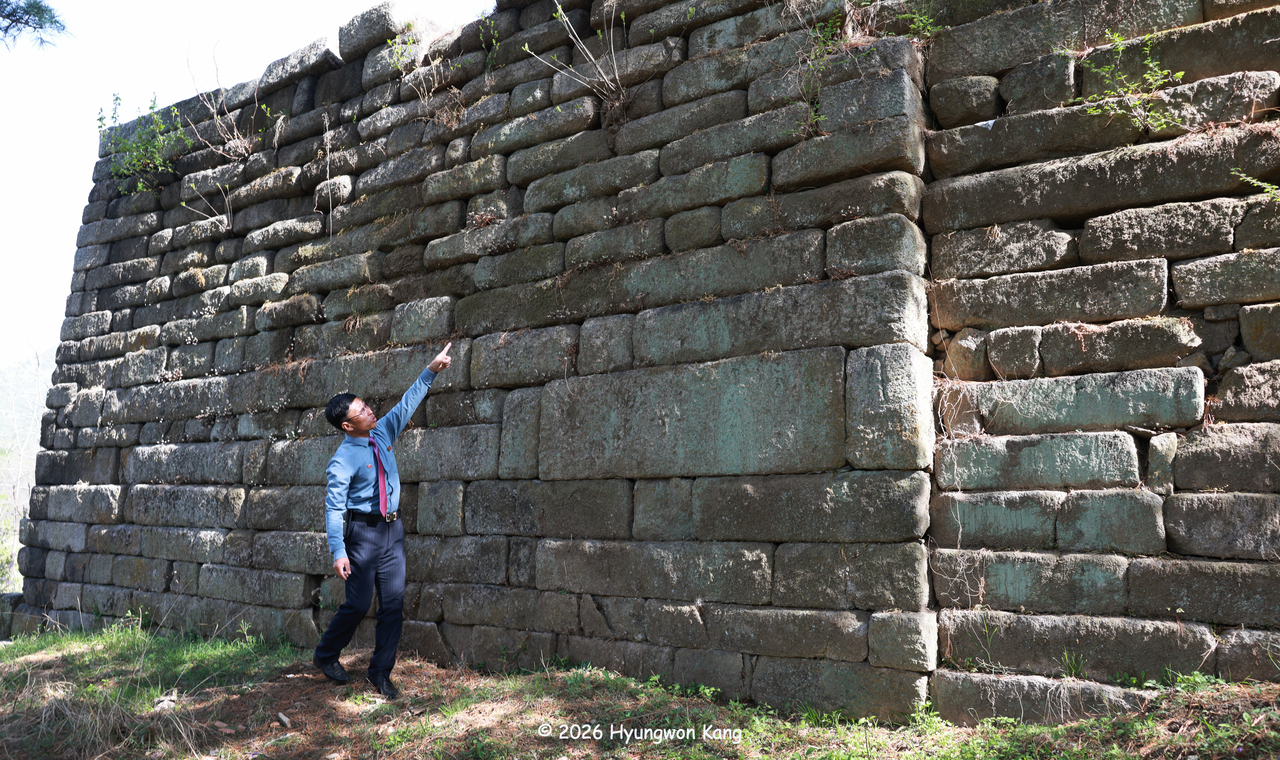
Kaesong Namdaemun, designated North Korean National Treasure No. 124, stands at a central crossroads as the last surviving gate of the city’s ancient fortress. Originally built between 1391 and 1394, its upper wooden pavilion was destroyed by fire during the Korean War and faithfully reconstructed in 1954. Archaeological excavations have identified four occupation layers surrounding the protected structure. Centuries of accumulated soil raised the surrounding ground level by approximately three meters, making the gate appear significantly shorter today than when it originally anchored the fortress.
The transition from Goguryeo to Goryeo did not begin with Wang Geon. Archaeological evidence shows that the empire itself officially adopted the abbreviated name during the fifth century. The Gwanggaeto Stele, built in 414, preserves the formal state name Goguryeo. A few decades later, the Goguryeo Stele of Chungju, erected during the reign of King Jangsu, records the empire as Goryeo, demonstrating that the shorter name had already entered official use.
When Goguryeo fell in 668, Dae Jo-yeong established Balhae in 698, preserving Goguryeo’s political and cultural legacy across much of Manchuria, the Maritime Province (Primorsky Krai) and northern Korea. When Wang Geon founded Goryeo in 918, he deliberately revived that historic name to proclaim his state as the legitimate successor to Goguryeo.
The physical design of Kaegyong reflected that historical ambition. Rather than leveling the steep slopes of Songaksan mountain, Goryeo’s builders transformed the mountainside into a sequence of monumental terraces connected by broad granite stairways. Palace halls, ceremonial courtyards and fortress gates rose one above another, compelling every visitor to ascend toward the imperial palace. The architecture itself reinforced hierarchy and imperial authority.
In 960, during the reign of King Gwangjong (r. 949–975), Kaegyong was officially designated as Hwangdo, the imperial capital. Gwangjong also proclaimed the independent era name Junpung, reinforcing Goryeo’s assertion of sovereign imperial authority.
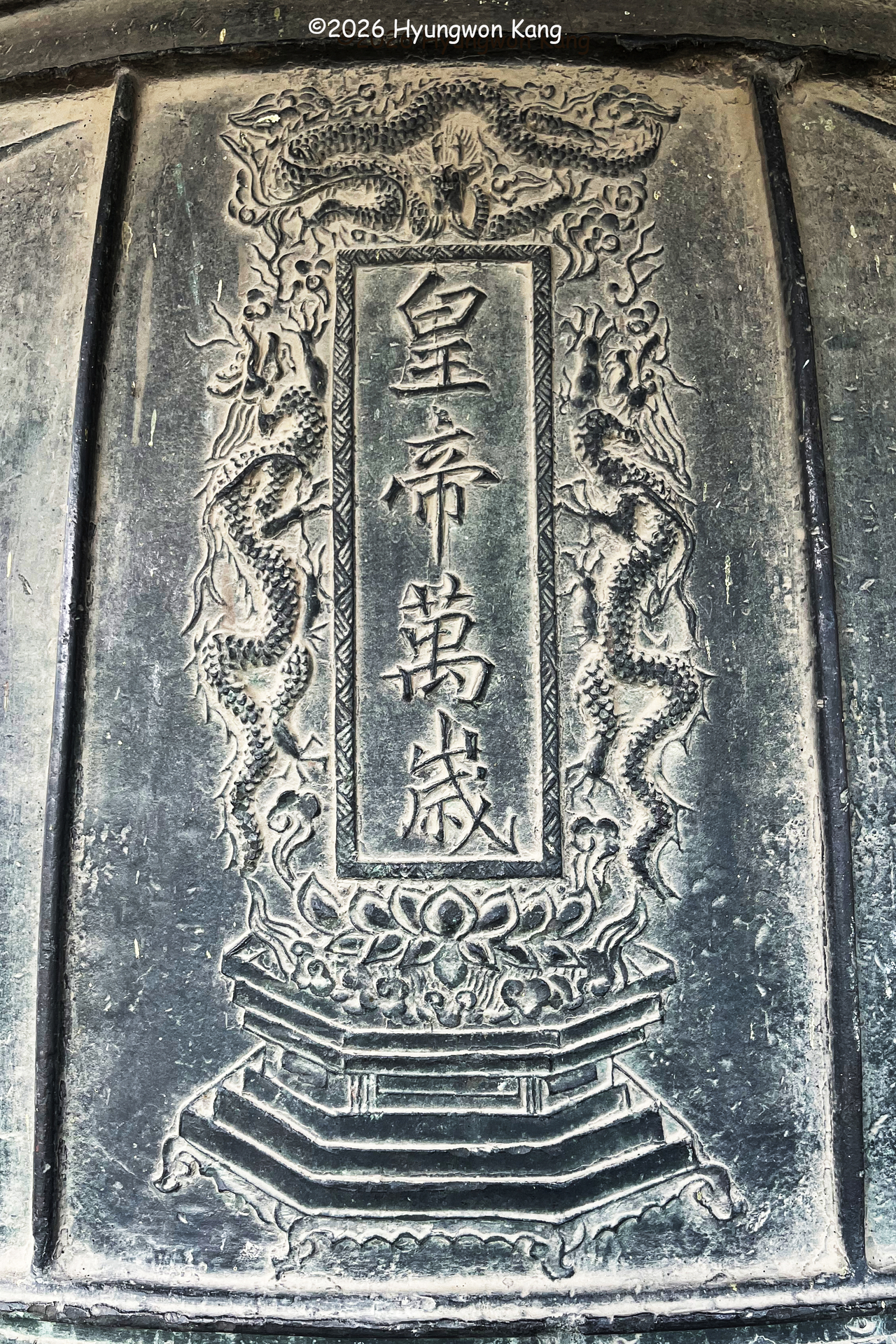
Among the clearest surviving expressions of that imperial identity is the great Bronze Bell of Yeonboksa temple, cast in 1346. Prominently inscribed on its surface are the words “Hwangje Manse” (“Long Live the Emperor”). Few surviving artifacts express Goryeo’s understanding of itself more clearly.
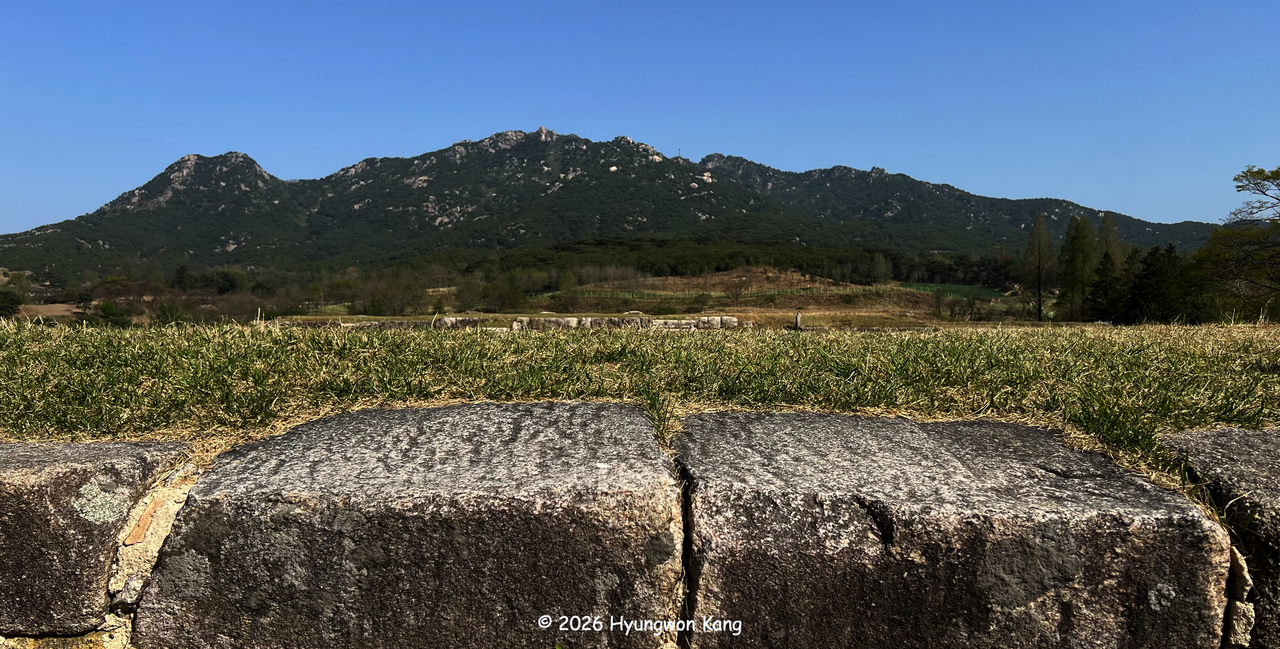
From the granite stairways of Manwoldae, visitors can still see the northern perimeter of the imperial palace merging into the ridges of Songaksan. For centuries, Koreans envisioned the mountain as the figure of a reclining woman gazing toward the sky. The imperial palace was deliberately built below the figure’s breast, symbolically drawing upon the mountain goddess’s life-giving energy, reflecting how earlier Koreans understood the sacred landscape surrounding their capital.
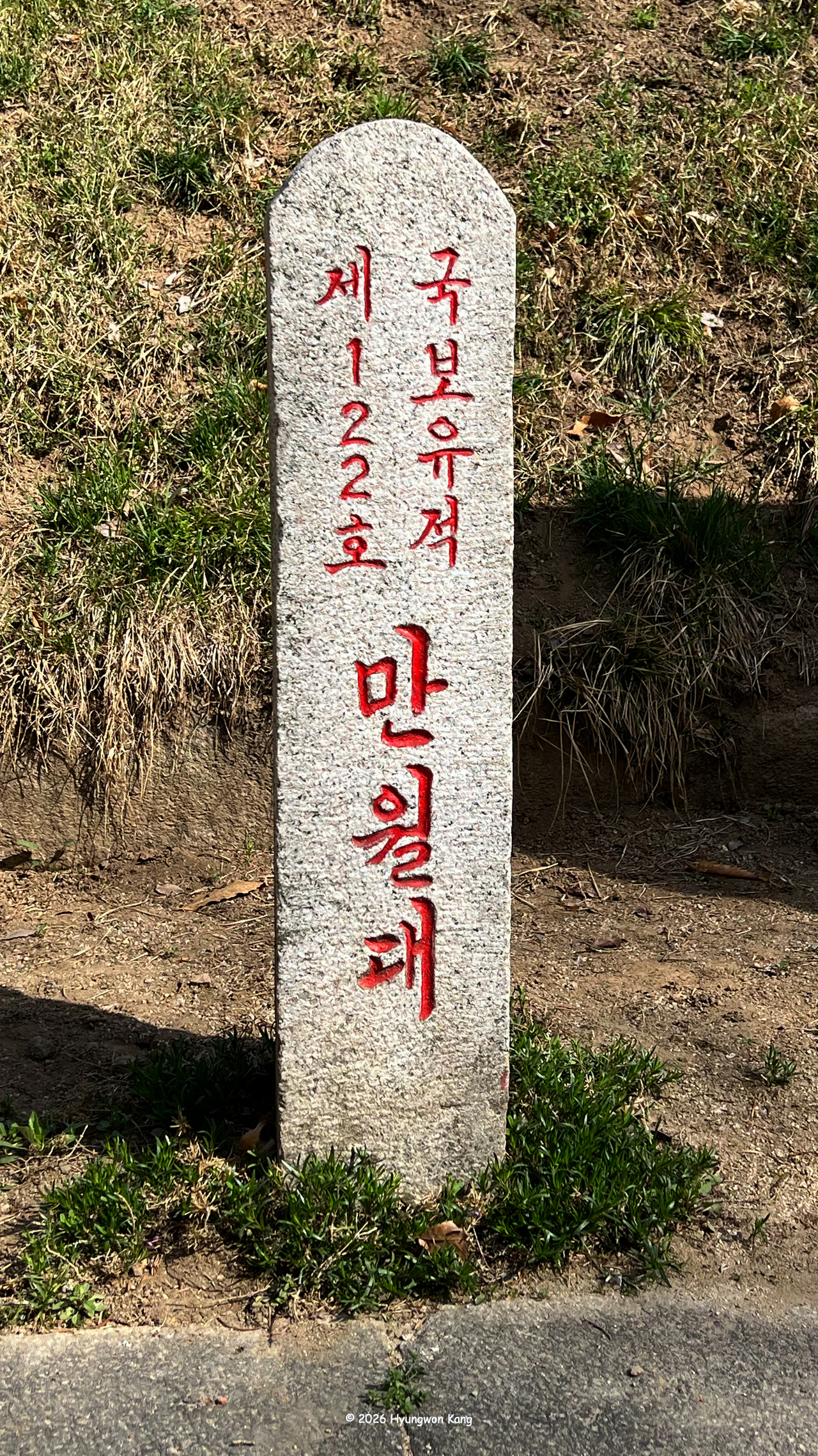
As I descended the granite stairways of Manwoldae, I realized that Goryeo’s imperial legacy survives not only in chronicles but in stone. The granite foundations of Manwoldae, the fortress system of Kaegyong, Namdaemun, and the great Bronze Bell of Yeonboksa continue to bear witness to an empire that consciously claimed the legacy of Goguryeo and created one of the greatest imperial capitals of medieval East Asia.
By Hyungwon Kang
Hyungwon Kang is a Korean American photojournalist, columnist, author and two-time Pulitzer Prize winner. He reported on North Korea in 1995, 1997 and 2026. Kang is the author of “Visual History of Korea” and “Seonbi Country Korea, Seeking Sagehood,” and his ongoing Visual History of Korea project documents Korean history and culture across all of Korea for global audiences.
The views expressed in this article are the writer’s own. — Ed.