

 KB News Desk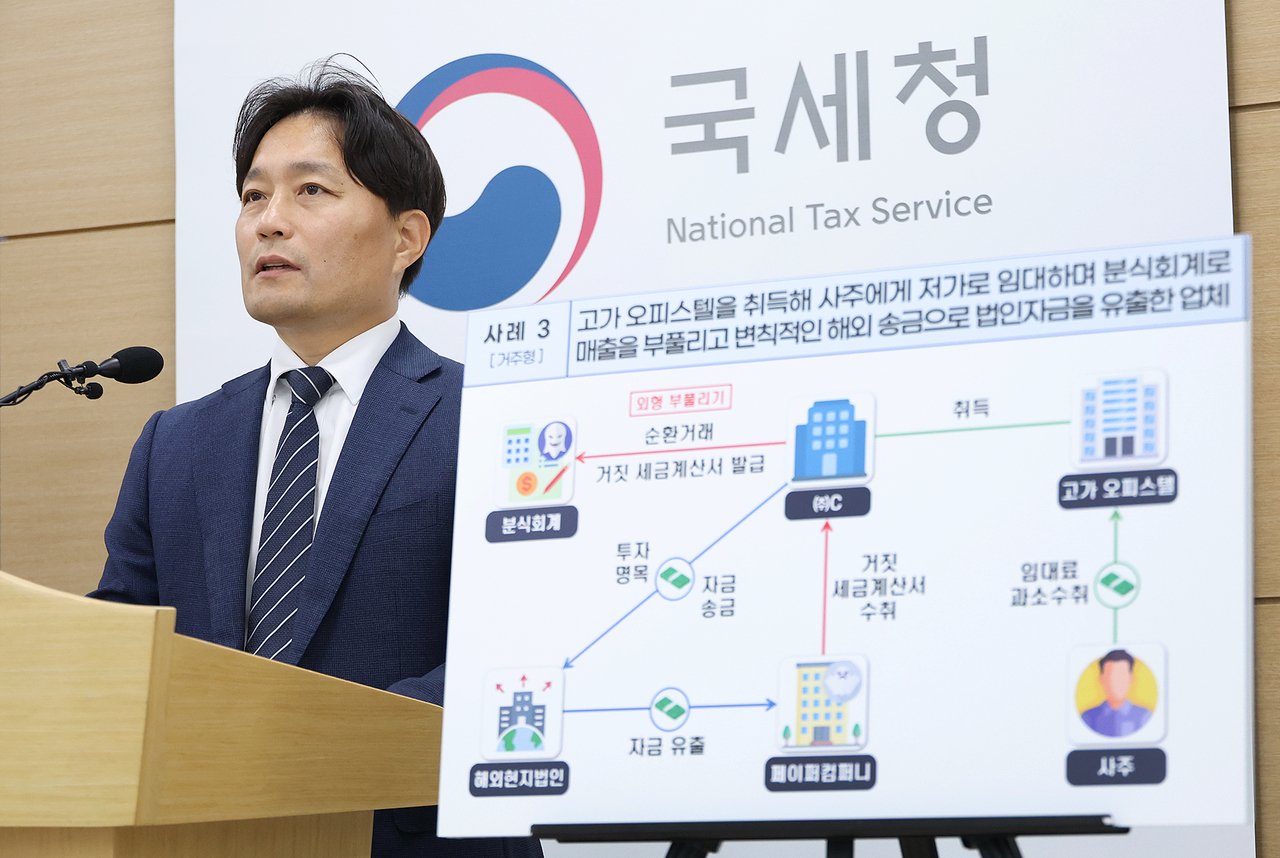
South Korea’s tax authority is cracking down on companies that turn corporate-owned homes into private perks for their controlling families, including a 20 billion won ($14.4 million) mansion in Hannam-dong, Seoul, and luxury retreats disguised as employee welfare facilities.
The National Tax Service said Tuesday it has launched audits into 50 companies over suspected tax irregularities totaling about 1.9 trillion won, following a review of 2,639 high-value homes owned by corporations nationwide.
Of those properties, 1,157 were rental homes and 385 were used for legitimate business purposes, including employee housing. The remaining 1,097, or about 42 percent, were found to have been occupied or otherwise used privately by company owners and their families, according to the agency.
The 50 companies selected for audits include five large corporations, four Kospi-listed firms and two Kosdaq-listed firms.
The most common cases involved companies providing expensive homes to owners’ families for free or at below-market rates. Twenty-eight of the companies fell into that category, while five were suspected of using corporate ownership to help owners sidestep taxes or restrictions on multiple-home ownership. Another 17 allegedly operated luxury villas and resort properties as private retreats.
In one case, a large company in the food and lodging industry bought the Hannam-dong home for more than 20 billion won and spent over 10 billion won on extensions and luxury renovations before allowing the owner’s family to use it.
The owner and his children used the property despite already owning another nearby home worth about 30 billion won, the NTS said. The company also paid the owner about 15 billion won, roughly 10 times the industry average, and booked around 5 billion won in wages for family members who did not actually work for the company.
Tax authorities also found cases in which corporate ownership was used to avoid housing regulations.
One controlling shareholder who became a two-home owner after buying a redevelopment apartment in Banpo transferred an existing apartment worth about 4 billion won to his company. He continued living in the property while retaining tax benefits available to single-home owners, according to the NTS.
Other companies allegedly disguised luxury vacation properties as employee welfare facilities.
A foreign-invested company reserved a detached-house-style condominium worth about 6 billion won, where a one-night stay costs around 3 million won, for the owner’s family. Another manufacturer bought a 3 billion won condominium at a members-only golf course in Pyeongchang and allegedly falsified internal records to claim value-added tax credits.
The NTS said it will examine corporate accounts and use measures including account inquiries and digital forensics to determine whether company funds were diverted to build the personal wealth of owners and their families.
Any private benefits identified will be taxed, while tax evasion, false invoicing or other criminal violations could lead to prosecution, the agency said.
The tax authority is also reviewing companies that were not included in the first round of audits and plans to expand the investigation where suspected violations are serious.