
 KB News Desk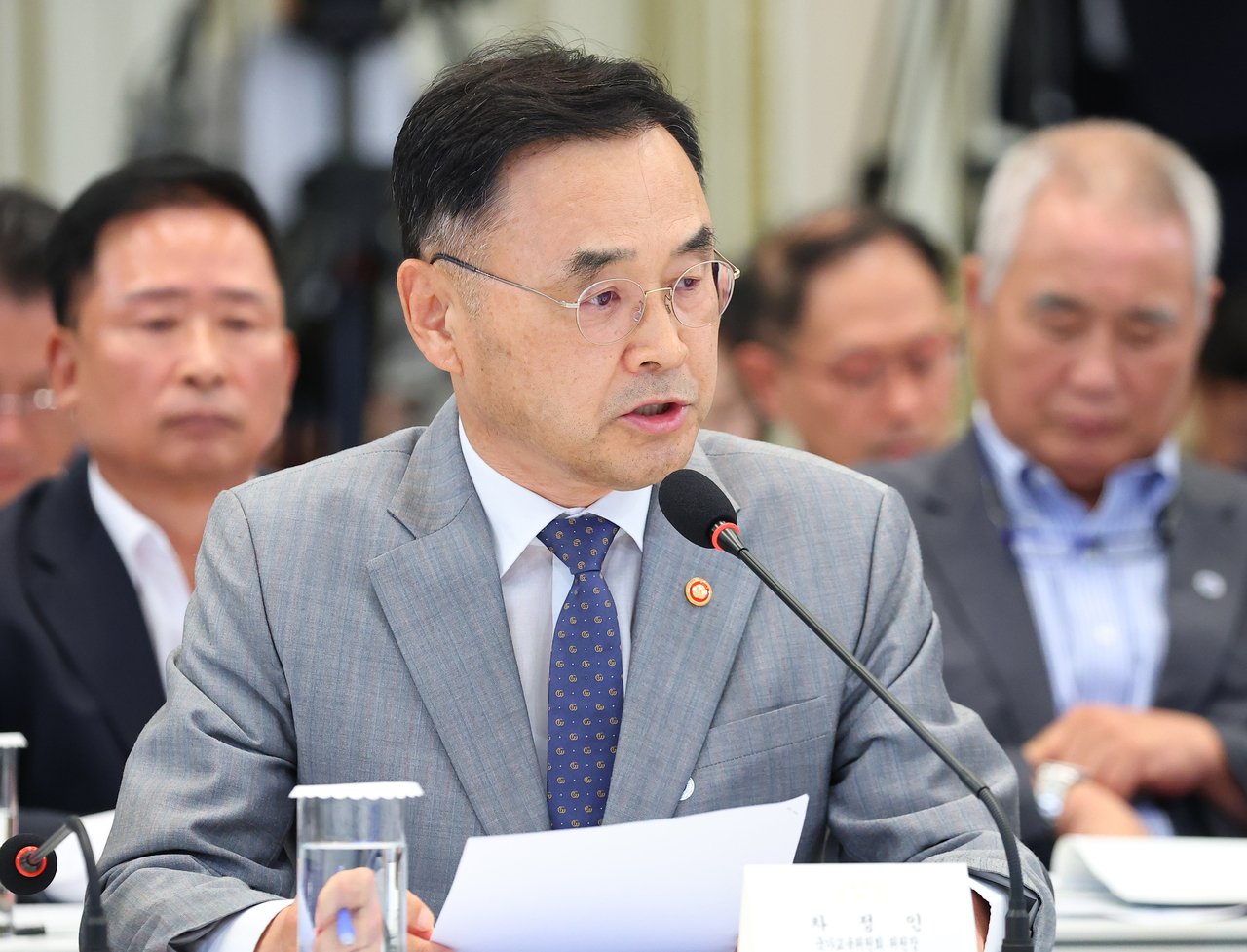
South Korea is considering major changes to the College Scholastic Ability Test, commonly known as Suneung, amid concerns that the college entrance exam is ill-suited to the age of artificial intelligence.
The National Education Commission, a presidential advisory and policymaking body on long-term education issues, said the proposals were under review.
“After 32 years of administering the Suneung, we are reaching the limits of producing valid new questions while avoiding those used in previous exams,” commission Chair Cha Jeong-in said during a presidential policy briefing Wednesday. Education- and culture-related ministries and agencies updated President Lee Jae Myung on the progress of their policy agendas.
“Multiple-choice questions only allow students to select answers written by someone else. We must make students write their own answers,” Cha said.
He added that written-response and essay questions should be introduced into the Suneung so that schools would follow suit.
Cha’s remarks came as Lee criticized South Korea’s college admissions system for fueling demand for private education and producing students ill-suited to the age of AI.
“I believe an education system that produces standardized talent is ruining our students,” Lee said, adding that even basic computer systems could solve conventional multiple-choice and short-answer questions.
Lee stressed that cultivating creative minds capable of “asking the right questions” was becoming increasingly important.
The commission’s special committee on college admissions is considering applying absolute grading to all Suneung subjects, according to local reports. It is also reviewing the introduction of written-response and essay questions, with their weighting varying by subject.
The Suneung is currently dominated by multiple-choice questions, although some mathematics questions require students to enter numerical answers. Most subjects are graded on a relative scale. English, Korean history, second foreign language and classical Chinese use absolute grading.
The committee is also considering introducing absolute grading for high school academic records and substantially increasing the share of written-response and essay questions, which currently account for around 30 to 40 percent of school assessments.
The proposals are expected to be included in a draft of the commission’s 2028-2037 National Education Development Plan, scheduled to be unveiled at the end of October. The plan will set the direction of national education policy for the next decade.
A final version is expected to be adopted in March 2027 following regional forums and a nationwide public deliberation process.
Lee also said Wednesday that the school system was excessively focused on college admissions, forcing students pursuing other paths to follow a curriculum designed primarily to prepare them for higher education.
He asked Education Minister Choi Kyo-jin whether the ministry was considering allowing special administrative regions, including the newly launched Gwangju-South Jeolla region, to operate their own admissions systems.
Choi said the ministry would examine the possibility.