

 KB News Desk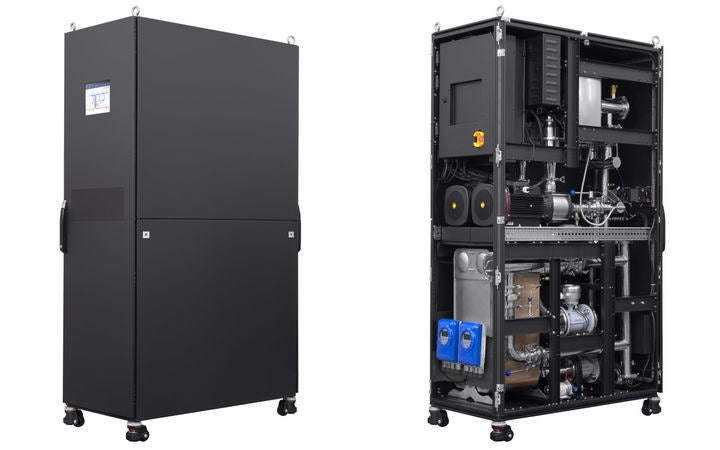
Crosstown rivals expand overseas production as liquid cooling becomes critical to data-center growth
Samsung Electronics and LG Electronics are scaling up their data-center cooling businesses as power-hungry AI chips turn heat management into a critical infrastructure bottleneck.
Data centers have traditionally relied on air cooling. But advanced artificial intelligence accelerators and increasingly dense server racks are pushing those systems toward their practical limits. Nvidia’s B200 and other next-generation chips consume more than 1,000 watts each, accelerating the shift toward liquid cooling.
In direct-to-chip systems, cold plates draw heat from processors and coolant carries it through a coolant distribution unit, or CDU, to a chiller.
Liquid cooling was used with an estimated 33 percent of AI chips in 2025, with the share projected to rise to 53 percent this year and nearly 60 percent in 2027, according to TrendForce.
LG eyes US production
LG is considering sites for its first US chiller plant as it seeks closer access to hyperscalers and other major technology companies building AI infrastructure across the country.
Virginia is among the locations under review, though LG said it is evaluating multiple options.
A US plant would complement LG’s existing heating, ventilation and air conditioning production operations in Pyeongtaek, Gyeonggi Province, and China while shortening supply lines to North American customers.
LG’s data-center chiller orders tripled in 2025 from the previous year. The company is expected to reach its target of 1 trillion won ($730 million) in annual chiller revenue next year, earlier than initially planned.
During its second-quarter earnings call, LG said it was strengthening ties with hyperscalers, colocation operators and major distributors in North America. It is also pursuing orders for integrated thermal-management systems combining chillers, CDUs and other liquid-cooling components.
“We are targeting new orders worth several trillion won this year,” LG said. “Over the medium to long term, we plan to accelerate order and revenue growth by securing certifications from major global customers, entering their supply chains and establishing overseas production bases.”
LG recently became the first Korean company to receive Nvidia’s final quality certification for a 600-kilowatt CDU.
The unit connects a data center’s chillers with cold plates attached directly to servers. It controls the coolant’s temperature and pressure, removes impurities and circulates the fluid through the servers before returning it to the chiller.
Kyobo Securities forecasts that LG could secure 2.5 trillion won in new orders by October, led by its AI data-center HVAC business. LG has not confirmed the estimate.
Samsung builds global HVAC network
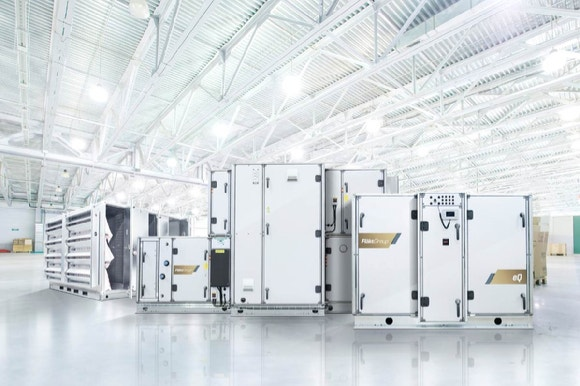
Samsung is expanding its HVAC business through FlaktGroup, the Swedish climate solutions company it acquired last year.
On Aug. 12, Samsung completed a new FlaktGroup production line in Pune, India, to supply HVAC equipment across India and the wider Asia-Pacific region.
Construction and equipment installation began early this year, with the line reaching mass-production readiness in about six months. At full capacity, it will be able to produce up to 6,500 units annually.
Samsung is separately investing about 240 billion won in an HVAC production line at the third campus of its Gwangju plant.
Spanning 21,800 square meters, roughly the size of three soccer fields, the project represents the plant’s largest investment since it opened in 1989.
Production is scheduled to begin in 2028, initially focusing on FlaktGroup CDUs.
Samsung plans to turn the Gwangju plant into a global manufacturing hub for AI appliances and HVAC equipment. The company said it will combine Samsung’s manufacturing capabilities with FlaktGroup’s cooling technology and production expertise to expand its global footprint.
Founded in 1918, FlaktGroup operates 14 production facilities and eight research centers across the US, Europe and Asia. The Gwangju line will become its 15th manufacturing base, giving Samsung a new foothold in the rapidly expanding market for AI data-center cooling.