
 KB News Desk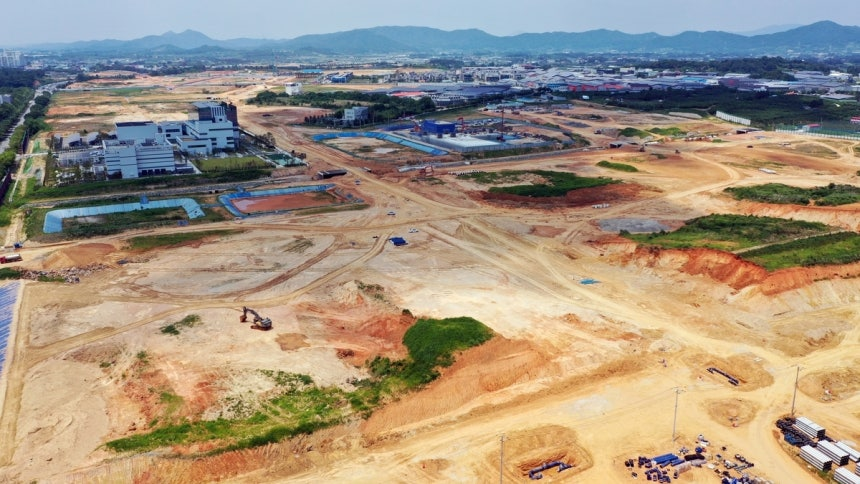
Samsung Electronics and SK hynix are reviewing potential chip fab sites in Gwangju and South Jeolla Province as the government moves to back an 800 trillion won ($514.7 billion) semiconductor investment plan aimed at expanding chip production beyond the Seoul metropolitan area.
Cheomdan District 3 in Gwangju Innopolis, a research and development zone, and the site of the city’s military airport have emerged as key candidates because of their access to power, water, roads and nearby research facilities, according to industry and local government officials on Thursday.
Cheomdan District 3 spans 3.63 million square meters across Gwangju’s Buk-gu and Gwangsan-gu districts and Jangseong County in South Jeolla Province. The area is being developed as a mixed research and industrial hub, with plans for a national artificial intelligence data center, startup facilities, the National Cardiovascular Center and companies in optics, batteries and components.
The district is close to Gwangju Institute of Science and Technology, which is working with Samsung on semiconductor talent development, as well as Amkor Technology, a major outsourced chip packaging and test company that has announced a 1 trillion won investment in the region.
But land supply is limited. Industrial land accounts for about 1.04 million square meters, or roughly 30 percent of the district. A single advanced chip fab is estimated to require about 660,000 square meters of land, 1 gigawatt of power and around 200,000 tons of water a day, making infrastructure a key factor in the final decision.
The military airport site in Gwangsan-gu offers more space. It covers about 8.2 million square meters, more than twice the size of Cheomdan District 3, while a nearby ammunition depot site linked to the relocation plan adds another 2.08 million square meters.
Because the area has been used as a military facility, it already has basic power, water and flat land, making it suitable for industrial construction. But development depends on the relocation of the military airport to Muan County, a project that still faces local disputes and regulatory hurdles.
Haenam’s Solaseado project in South Jeolla Province is also under discussion, supported by its large land reserves, renewable power resources and capacity to supply about 670,000 tons of water a day. Its access to one of the country’s largest renewable power bases could help chipmakers meet RE100 requirements.
Local authorities plan to form a semiconductor investment support team to coordinate with Samsung, SK hynix and relevant ministries.
An industry official said site selection must come before the companies can finalize investment plans.
“For companies to make an investment plan of this scale concrete, the land has to come first,” the official said.