
 KB News Desk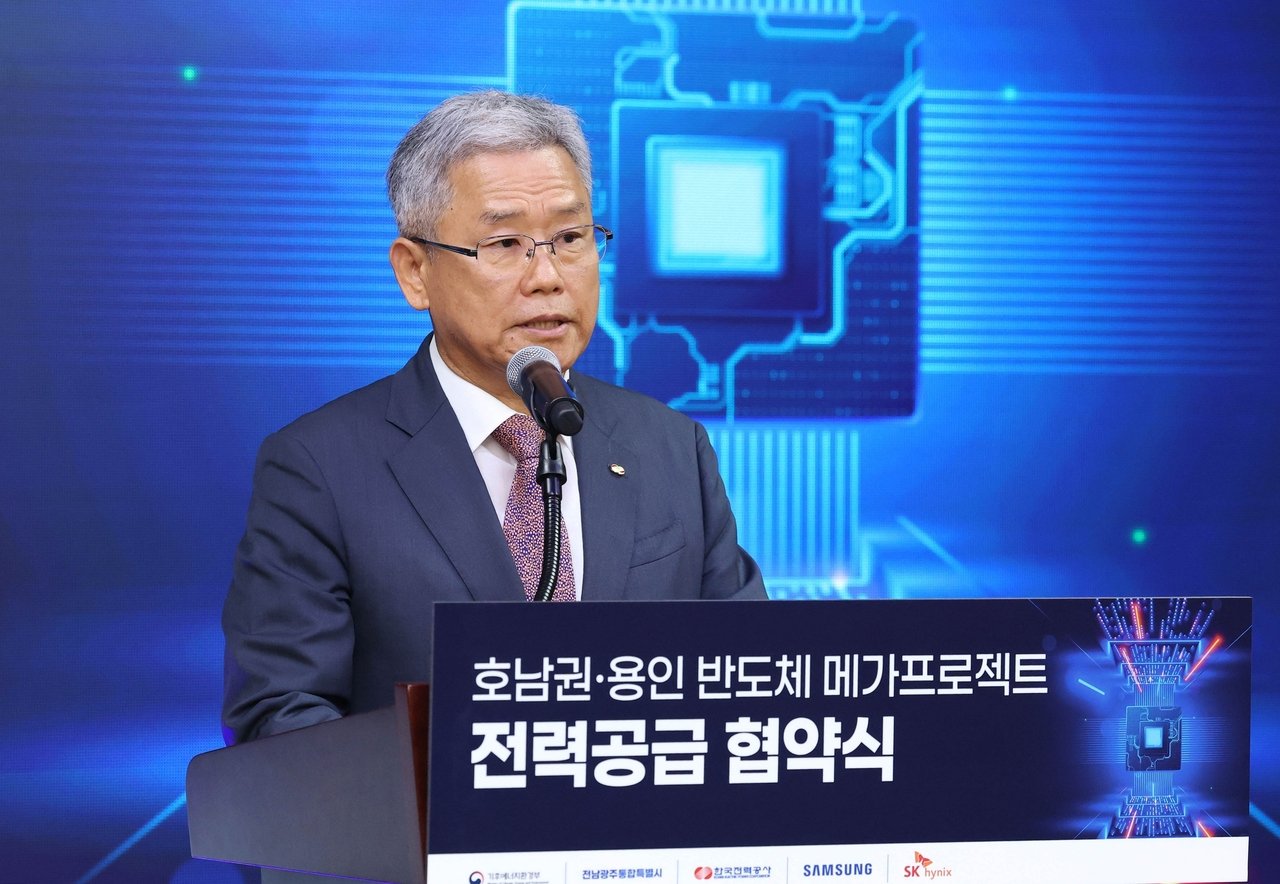
Honam complex to receive initial 3 GW for 2029 fab operations; Yongin clusters to require over 14 GW by 2041
South Korea laid out a new power supply road map Wednesday for planned semiconductor clusters involving Samsung Electronics and SK hynix, as the government seeks to ensure electricity shortages do not delay the scheme.
The southwestern Honam semiconductor complex will initially receive about 3 gigawatts of power to support the start of fab operations in 2029, with capacity later expanding to more than 6 GW, according to the Ministry of Climate, Energy and Environment.
Two semiconductor complexes in Yongin, Gyeonggi Province, are expected to require more than 14 GW by 2041, with electricity to be supplied in phases as new transmission lines and power generation facilities come online.
The government, Jeonnam-Gwangju Special Metropolitan City, Samsung Electronics, SK hynix and state-run Korea Electric Power Corp. signed three agreements Wednesday covering power supplies for the Honam and Yongin projects.
“The key to the success of the semiconductor megaprojects is ensuring a swift power supply,” Climate Minister Kim Sung-hwan said in a statement.
“The government, businesses and local authorities will work as one team to drastically shorten administrative procedures and ensure electricity is supplied in time for the construction of the new industrial complexes.”
The Honam complex, announced June 29 as part of the government’s push to establish a major semiconductor production base outside the Seoul metropolitan area, is expected to eventually require more than 6 GW of electricity.
Power infrastructure capable of supplying about 3 GW will be built first to allow initial fabs to begin operations in 2029, with additional facilities to raise capacity above 6 GW as the complex expands.
In Yongin, the government plans to use nearby transmission lines and three 1-GW liquefied natural gas power plants to provide initial electricity to the national semiconductor complex, which is planned to house six fabs.
The approach is intended to secure power before longer-distance transmission infrastructure is completed, amid difficulties in building new transmission lines.
The separate Yongin general industrial complex began receiving electricity in July through a new line connecting the Sinanseong and Dongyongin substations. Additional transmission lines are planned for 2031 and 2032.