
 KB News Desk
Daegu sizzles past 40 C as Seoul sees 12th straight tropical night
The relentless heat, which shattered South Korea’s all-time temperature record in the southeastern city of Yangsan on Sunday, is showing no sign of easing, with the worst of it shifting toward the western and central parts of the country.
As of 1 p.m. Monday, severe heat wave warnings — the highest alert level that calls for an immediate halt of outdoor work — were in effect for the Gyeongsang region and parts of South Jeolla Province, while heat wave warnings were issued for most of the rest of the country.
Although lower than Sunday’s all-time national high of 42.5 degrees Celsius, temperatures remained extreme on Monday, with Daegu reaching 40.9 C, according to the Korea Meteorological Administration. Gwangyang in South Jeolla Province recorded a high of 40.3 C, while Yangsan, where the record was set a day earlier, reached 39 C. Seoul recorded 37.2 C.
With most regions forecast to continue to sizzle under the ongoing heat wave, central and provincial governments are operating in emergency mode to mitigate the impact.
Tropical nights
As of Monday morning, Seoul recorded 12 consecutive tropical nights in a row, while northern Jeju extended its streak to 27 nights, the longest currently recorded nationwide. Busan’s overnight temperature fell no lower than 28.5 C, while Yangsan remained at 28 C. Along the east coast, overnight lows stood at 26.7 C in Gangneung, 26.6 C in Donghae and 26.5 C in Sokcho.
Gangneung, Yangyang and Sokcho have now experienced tropical nights for seven consecutive days. The streak has continued for five days in Donghae, Samcheok and Goseong.
A tropical night is recorded when the temperature remains at or above 25 C between 6:01 p.m. and 9 a.m. the following day.
Dangerously hot
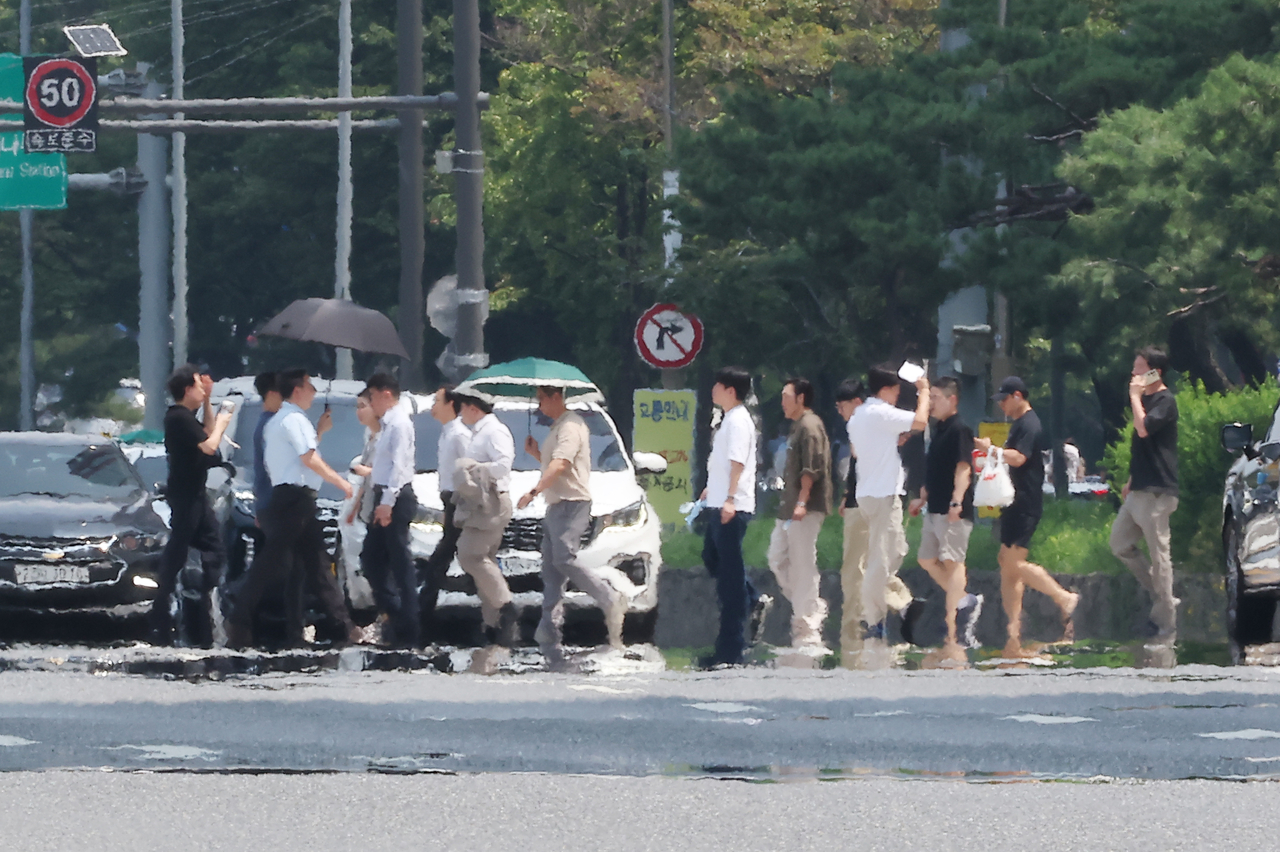
Nationwide, officials are in emergency mode for heat-related casualties.
At 1 p.m. Sunday, the Central Disaster and Safety Countermeasures Headquarters raised the heat response to Level 2, which is activated when more than 108 warning districts are expected to record maximum apparent temperatures above 35 C over the following three days. This is only the second time that the response level has been activated since extreme heat was legally classified as a natural disaster in 2018.
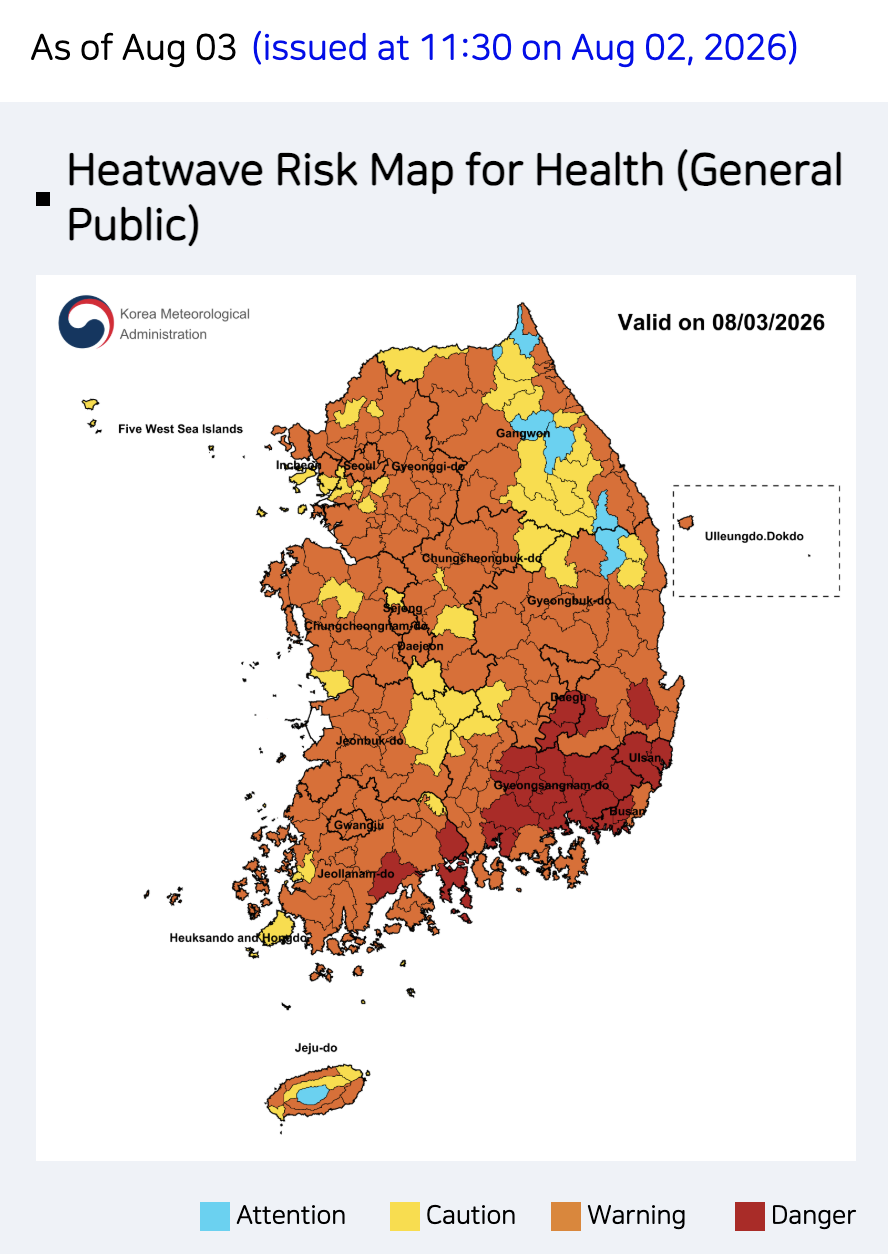
Government figures released Monday showed that 96 patients with heat-related illnesses were reported on Aug. 1 alone, bringing the cumulative total since May 15 to 1,889, including 14 possible heat-related deaths.
The death toll is expected to rise, as additional suspected heat-related deaths were reported Sunday in Busan and other areas.
In Dangjin, South Chungcheong Province, two elderly farmers were found collapsed after going out to work in the fields in separate incidents Sunday afternoon. The deaths, along with other possible cases, have not yet been officially confirmed as heat related.
In Cheongdo, North Gyeongsang Province, the scorching heat is being compounded by a severe drought, with rainfall dropping to just half of last year’s level. As of 10 a.m. Monday, the water storage rate at Unmun Dam stood at 26.5 percent, prompting officials to warn of possible water outages as drought conditions worsen.
Yangsan has rolled out emergency measures, including mobile distribution of iced bottled water, expanded road-spraying operations and public parasols to help residents cope with the extreme temperatures.
Seoul has so far avoided the worst of the heat wave, with 162 heat-related illness cases, including two possible heat-related deaths, reported as of Aug. 1.
But as sweltering conditions are expected to persist across the capital region this week, Seoul Mayor Oh Se-hoon on Monday morning convened a meeting of city officials to review the city’s response.
Officials in other regions are also stepping up measures, including inspections of cooling shelters and efforts to check on vulnerable groups including older adults, outdoor workers and others at greater risk from the heat.