
 KB News Desk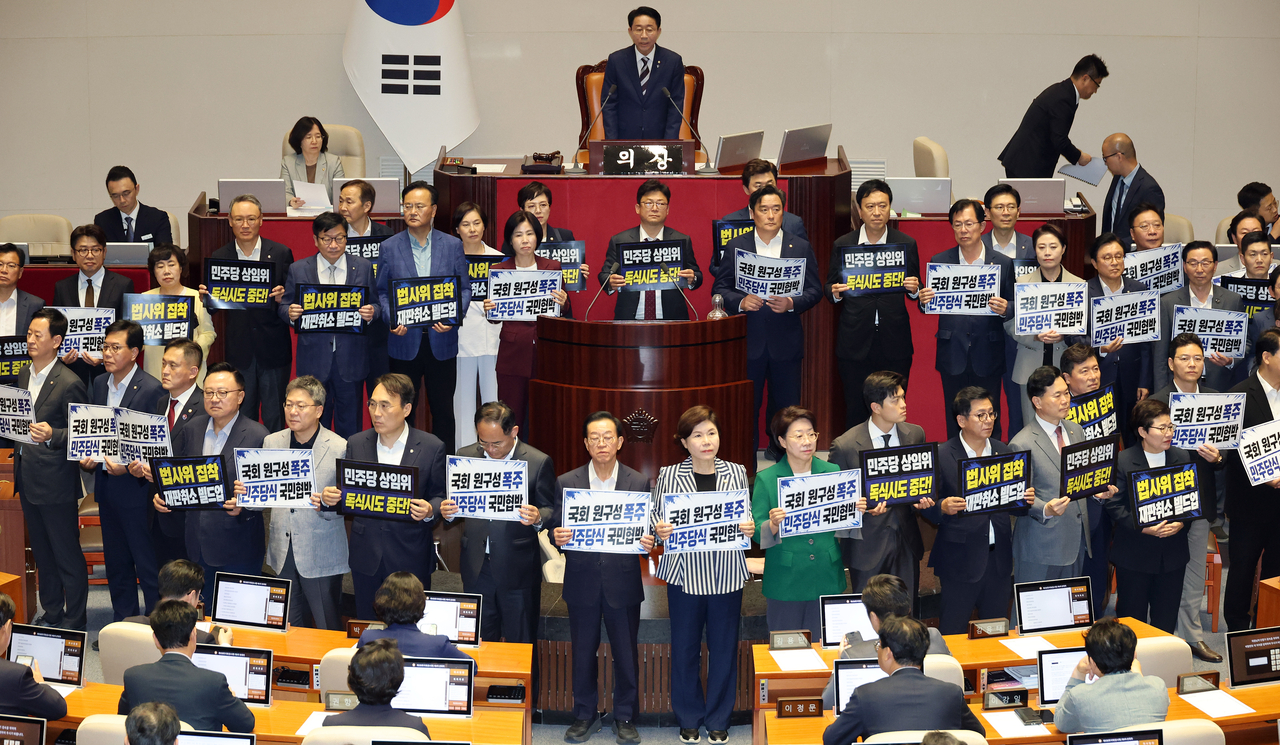
The National Assembly on Tuesday is set to elect 11 lawmakers from the ruling Democratic Party of Korea as chairs of standing committees after weeks of negotiations with the main opposition People Power Party collapsed.
Those put to the vote for election in Tuesday’s session were Rep. Seo Young-kyo, chair of the Legislation and Judiciary Committee; Rep. Yoo Dong-soo, chair of the National Policy Committee; Rep. Jo Seoung-lae, chair of the Economy, Planning and Budget Committee; and Rep. Han Byung-do, chair of the House Steering Committee.
Rep. Song Ki-hun of the Science, ICT, Broadcasting and Communications Committee and Rep. Lee Kwang-jae of the Special Committee on Budget and Accounts were also among those set to be elected.
With the ruling party holding the majority of seats in the 300-member National Assembly, all 11 chairs are likely to be elected.
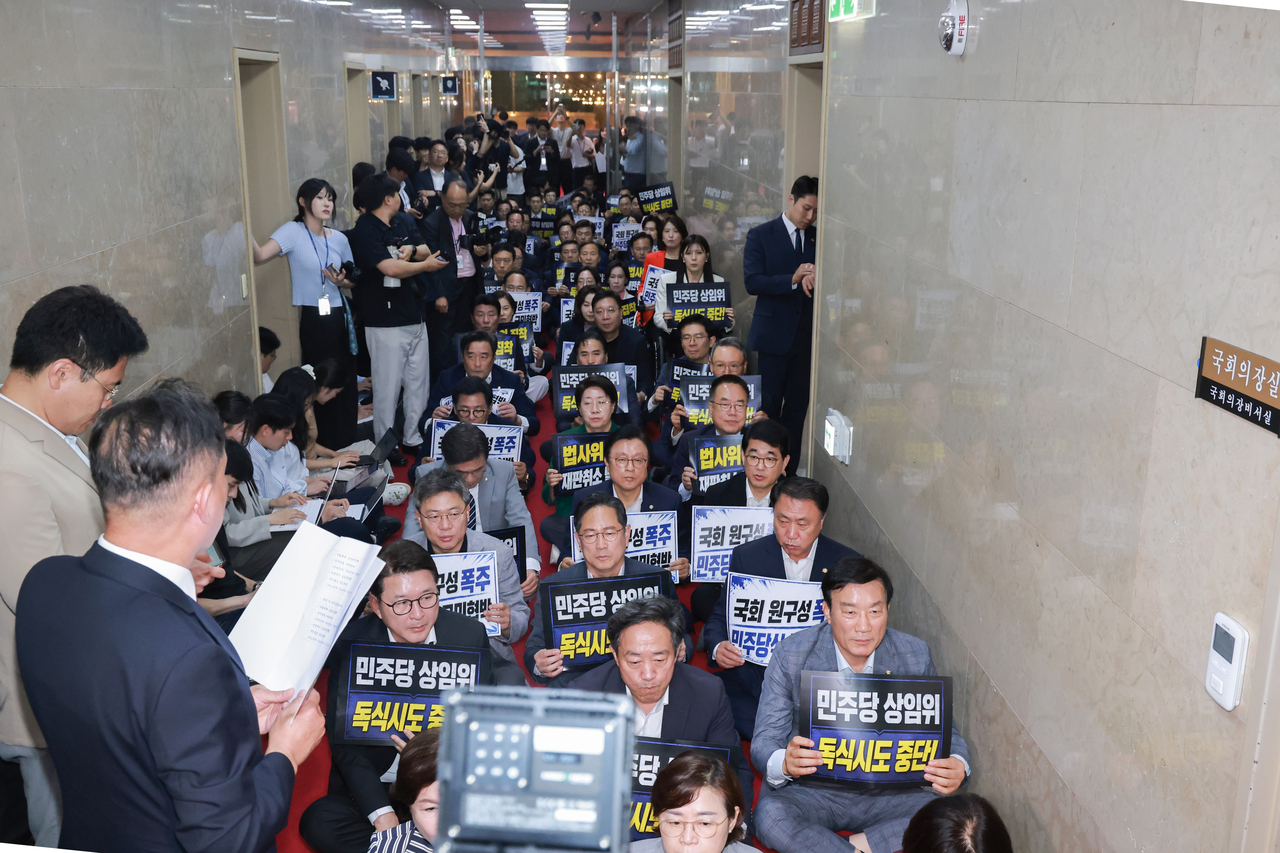
The plenary session was disrupted by a protest launched by the People Power Party. Lawmakers staged a sit-in before National Assembly speaker Rep. Cho Jeong-sik’s office over his decision to arbitrarily assign ruling party lawmakers to committees. The party did not submit its list of committee nominations.
Later, People Power Party lawmakers held placards at the main chamber surrounding the Speaker’s chair in a show of protest, instead of taking part in the vote.
At press time, both the election and boycott were still underway.
Lawmakers at the National Assembly are assigned to serve on standing committees, of which there are currently 18. In the process, the floor leader has the power to nominate fellow party lawmakers to serve on the committees.
This process takes place every two years, in sync with the National Assembly speaker’s two-year term. The current speaker of the National Assembly is liberal lawmaker Rep. Cho Jeong-sik.
Assignment of the committee chair posts follows in turn, depending on negotiations between the floor leaders of rival parties.
Negotiations had stretched for about three weeks, but showed few signs of reaching resolution. This caused a delay — past the deadline stipulated by the National Assembly Act — in the majority party’s move to submit the nominations to the National Assembly speaker.
The primary point of contention throughout the negotiations was whether the chairship of the Legislation and Judiciary Committee should go to the main opposition People Power Party.
In South Korea, the Legislation and Judiciary Committee is considered among the most powerful committees, as it has the authority to examine other committees’ bills to check whether they could contradict existing law or whether the wording is accurate.
The main opposition party has pushed for the National Assembly to follow the precedent in which the committee chair is occupied by an opposition party lawmaker.
However, the ruling party refused, insisting that its lawmaker chair the committee for the next two years, based on claims that People Power Party lawmakers had deliberately impeded the operation of the parliament while chairing committees.
At one point amid the gridlock, the ruling party threatened to unilaterally elect its lawmakers as chairs of all 18 standing committees.
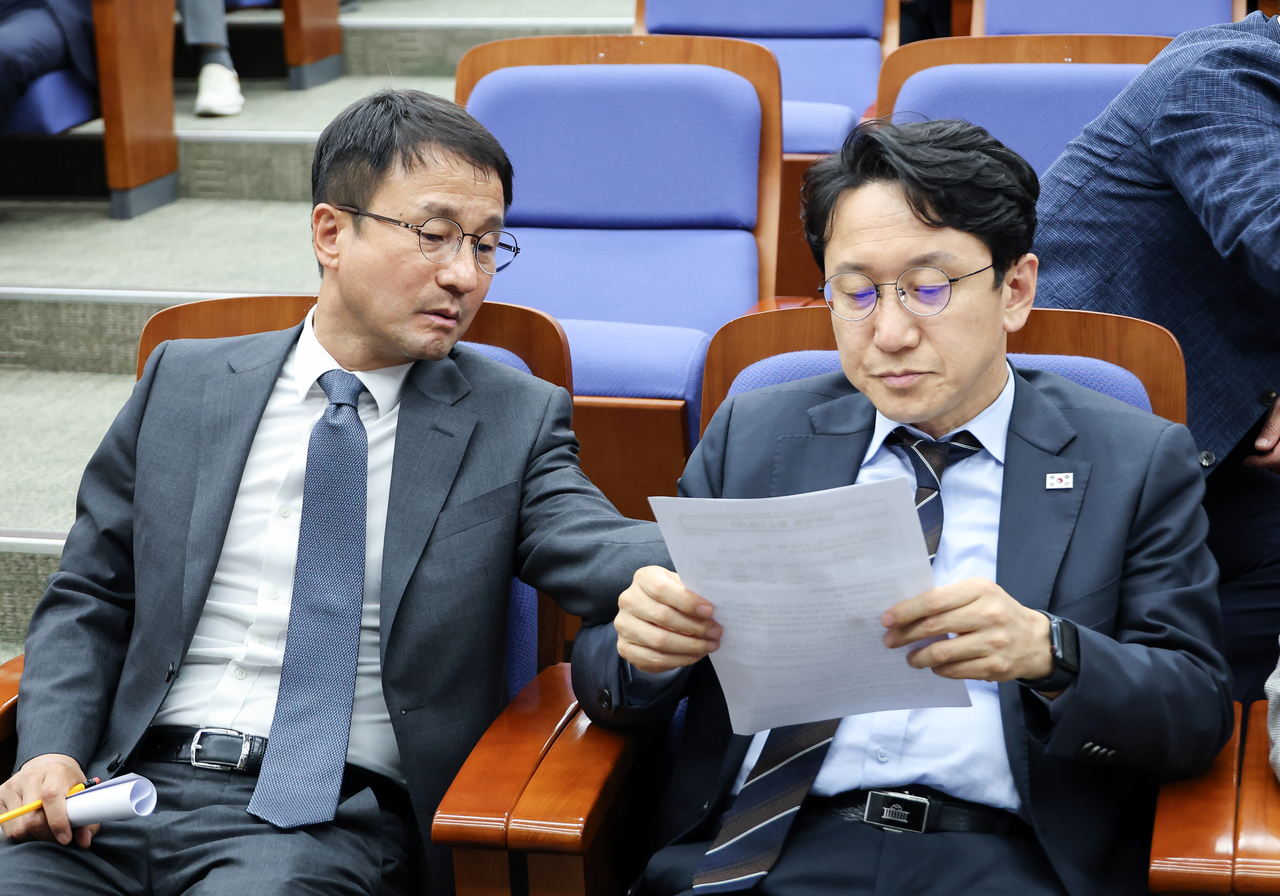
Earlier Tuesday, Democratic Party Floor Leader Rep. Han Byung-do said the number of chair posts his party was to secure would be 11.
The number of committee chairs is based on the number of lawmakers that a bloc has at the National Assembly. The Democratic Party holds 161 seats, while the People Power Party occupies 110 seats.
If a minority party lawmaker does not belong to any of the blocs in parliament, Speaker Cho has the authority to assign them to committees.
Also at the plenary session, the ruling party-dominated parliament is poised to pass the confirmation motion for Prime Minister nominee Han Seong-sook, replacing the incumbent Kim Min-seok, who is rumored to be bidding for the ruling party leadership.