
 KB News Desk
The ruling Democratic Party of Korea approved its contentious change of the national convention rule amid infighting, steering clear of hurdles to adopt the ranked-choice voting to elect its leader in August.
The party’s move ― widely seen as favorable to pro-Lee candidates in the contest for party control ― prompted one of its supreme council members, Rep. Lee Sung-yoon, to quit.
The party’s senior spokesperson, Rep. Kang Jun-hyeon, said Tuesday that the introduction of a new method involving a single transferable vote was confirmed through the party’s revision of internal regulations. The party’s convention preparation body suggested adding the voting method last week, calling it a viable option for the convention scheduled on Aug. 17.
This led to a week of tug-of-war in a series of closed-door supreme council meetings, the last of which ended Tuesday morning.
Supreme council members in favor of Rep. Jung Chung-rae’s second run for chair and supporters of President Lee Jae Myung have been at odds over whether to change the voting method as the convention drew near.
Those in the pro-Jung faction, namely Reps. Lee Sung-yoon, Moon Jeong-bog and Park Ji-won, as well as Park Kyu-hwan, have long expressed disapproval, claiming the preferential voting breaches internal regulations.
Under the current method, if no candidate running for a leadership post wins a majority of votes, the two top candidates go on to hold a runoff election, as stipulated by internal party regulations.
However, under the new voting method, party members would rank candidates for each post in order of their preference.
This would eliminate the need for the party to hold a separate runoff election, according to the liberal president in May, who introduced the method during his term as the Democratic Party leader.
For example, if there are three top candidates in an election and none meet the required majority threshold, votes for eliminated candidates will be transferred to surviving candidates as surplus votes, according to the preferences marked on the ballot.
Even after the internal regulation, pro-Jung faction candidates insisted that the push for the rule change was problematic.
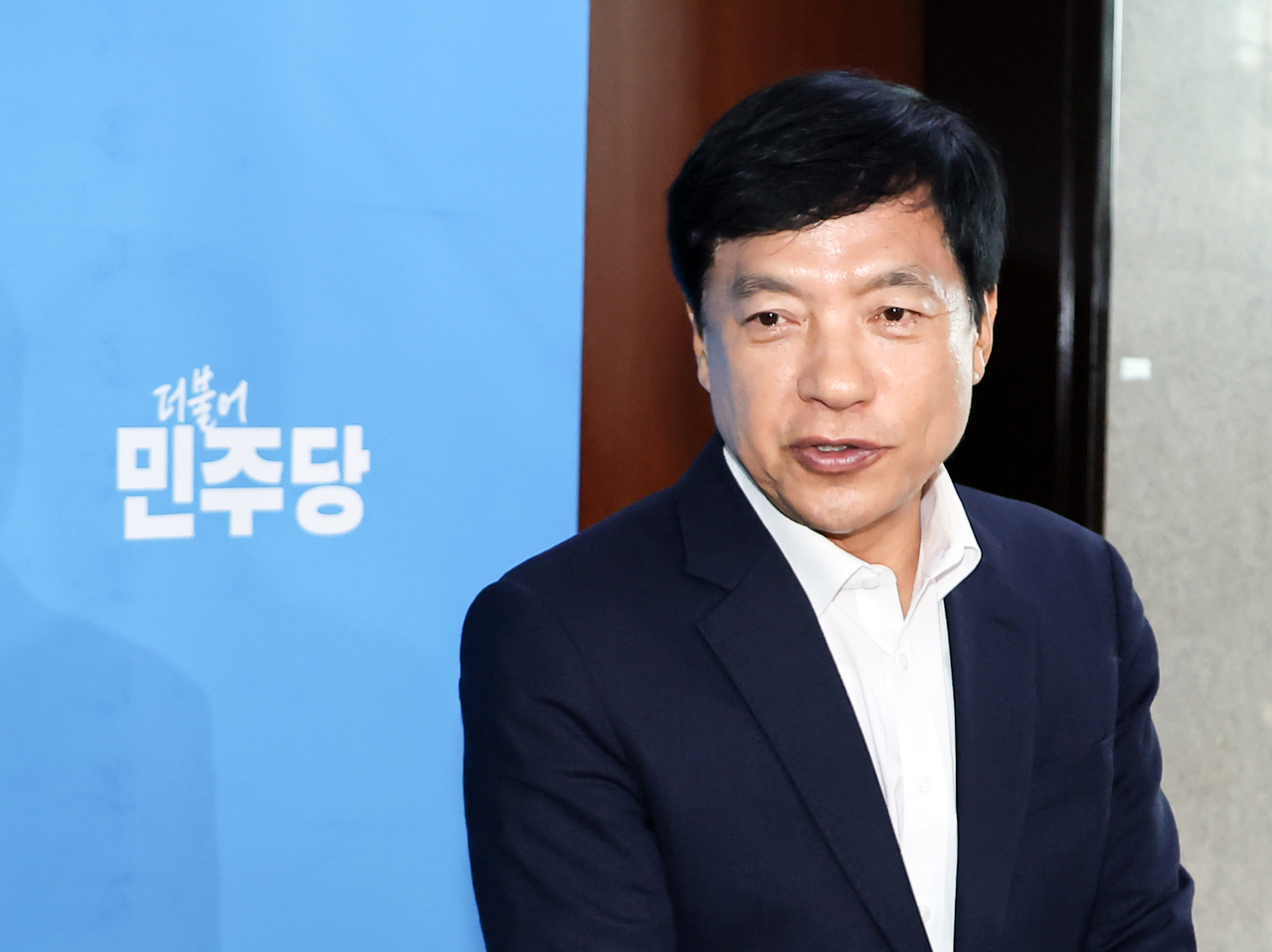
Lee Sung-yoon, who left the venue before the supreme council put the agenda to a vote, offered to resign from his post as council member because he “could not accept the situation” and he felt like he was “trapped in the corner” in a boxing match.
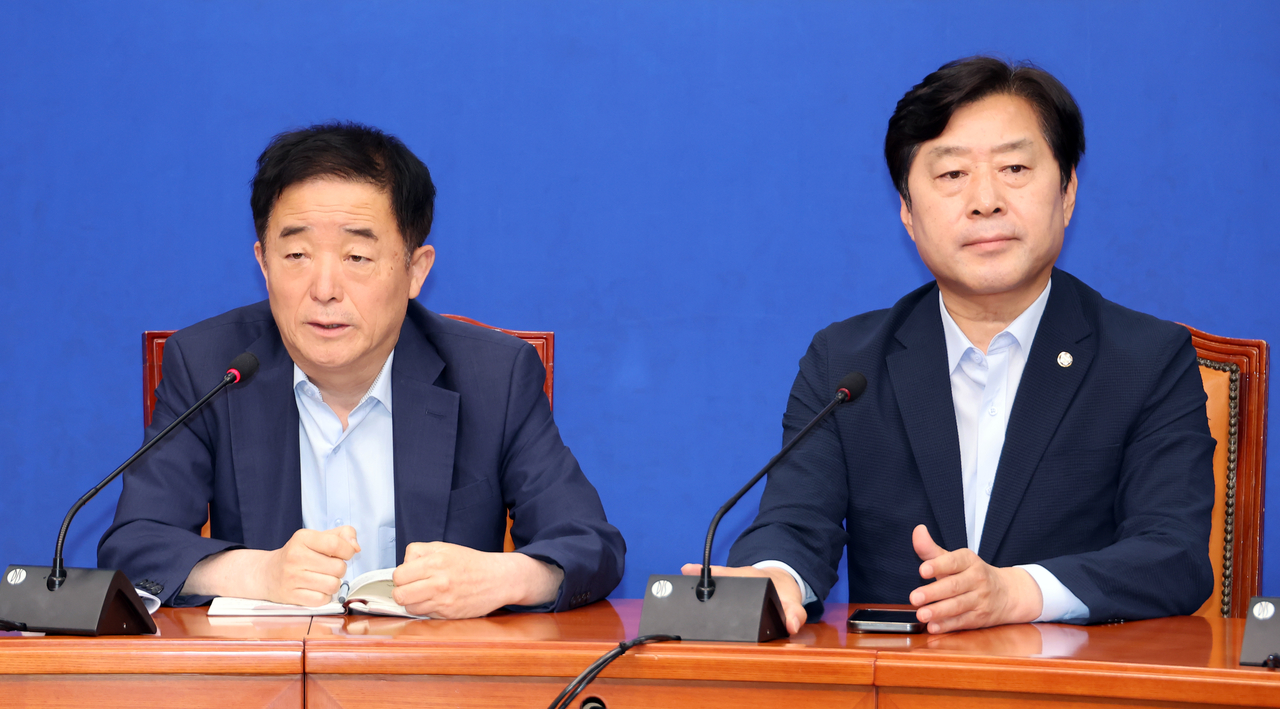
Park Kyu-hwan, a member appointed by Jung, said he conceded to the demand in the spirit of putting the party before oneself despite “absurdity” in the push for the ranked-choice vote.
However, Rep. Kang Deuk-gu, a supreme council member of the pro-Lee faction, said after the meeting that political maneuvering was at play because the party’s convention preparatory committee had already found that the ranked-choice vote would not violate party regulations.
Another pro-Lee member, Rep. Hwang Myeong-seon, said objecting to a voting method already introduced by President Lee is “hardly understandable.”
Among those garnering support from pro-Lee faction politicians are Rep. Kim Min-seok, former prime minister under the Lee administration and a key ally of Lee.
Jung, who has voiced concerns about the new voting method, said on his Facebook on Tuesday that he would respect the party’s decision, adding he “had a lot to say but would stay silent” about the matter.
Meanwhile, the party will kick off its candidate registration process on Thursday and Friday. Up for grabs in the August national convention are the party chair and five supreme council members at the nine-member decision-making body.
For the remaining three in the Democratic Party, one is the floor leader and the other two are chosen at the discretion of the party chair.
According to the party, the supreme council on Tuesday voted down the plan to impose an age cap on one of the five supreme council members to induce young politicians to party leadership.