

 KB News Desk
National Police Agency opens inspection as justice minister calls for review of exemption for relatives
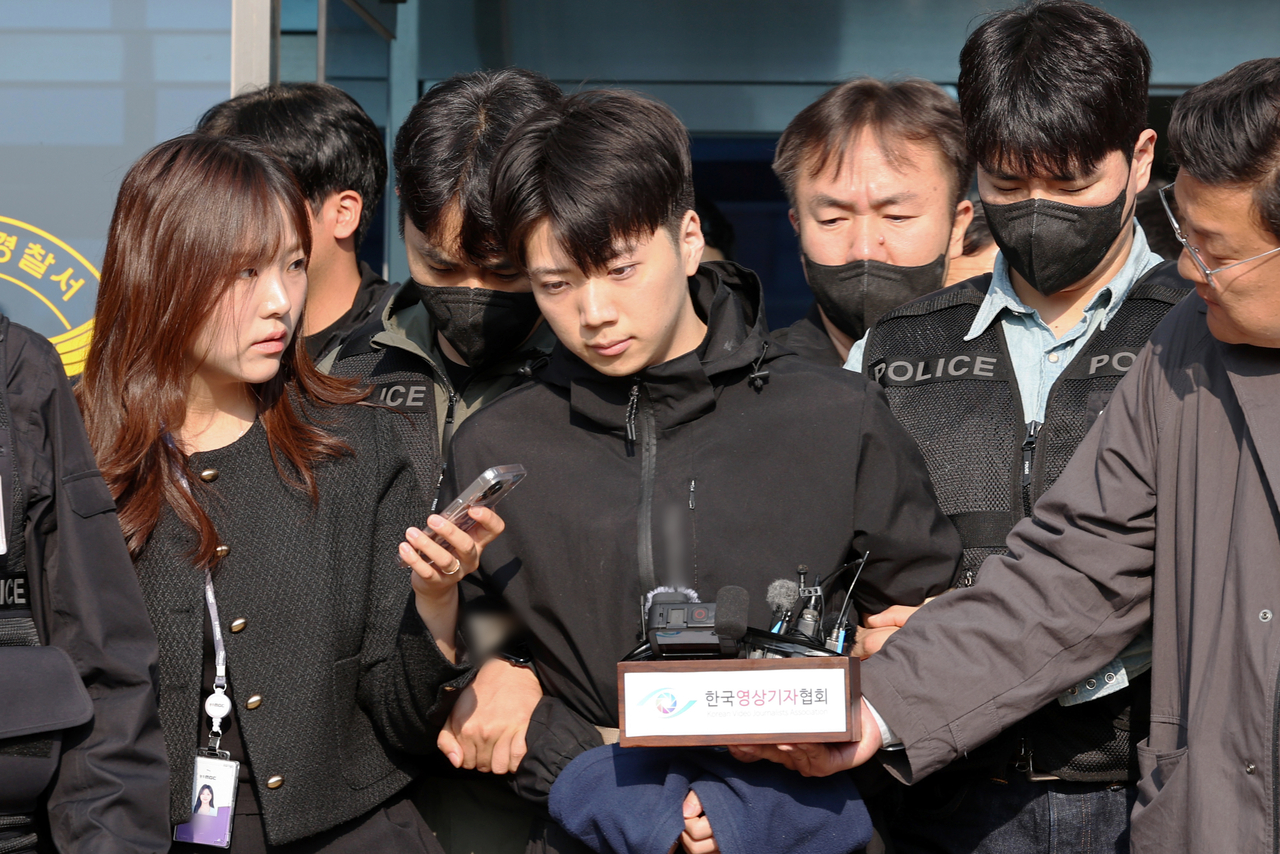
A police officer has been accused of destroying evidence in his son’s murder case, raising questions over a legal exemption that shields relatives from punishment for concealing or destroying evidence on behalf of family members.
The officer is the father of Jang Yoon-gi, the 23-year-old suspect accused of abducting and killing high school student Lee Chae-won in Gwangju on May 5.
According to local media reports Wednesday, Jang’s father allegedly disposed of items that prosecutors later cited as relevant to determining whether the crime had a sexual motive.
Despite the allegations, the father is unlikely to face criminal punishment under the current Criminal Act, which exempts relatives from criminal liability for concealing or destroying evidence on behalf of a family member.
The National Police Agency said Thursday it had launched an internal inspection into whether there were shortcomings in the police investigation of Jang’s case and whether Jang’s father, a serving police officer, destroyed evidence related to the crime.
The inspection was initially being handled by the Gwangju Metropolitan Police Agency, but the national agency reportedly took over the review in light of the seriousness of the case.
Jang was indicted on charges of attempting to abduct Lee for the purpose of sexual assault. Prosecutors also accuse him of killing her with a weapon and injuring another male student after the attempt failed.
Jang was arrested following an 11-hour manhunt after Lee’s death. He has claimed the killing was accidental.
A father’s misguided loyalty
Jang’s father, a mid-ranking police officer, reportedly discarded items including a sex doll and old mobile phones that could have served as evidence in determining whether his son had a possible sexual motive. He is reportedly on leave.
The father entered and cleaned out Jang’s studio apartment in Gwangsan-gu, Gwangju, three days after the crime, according to reports by Yonhap News Agency.
Police had not sealed off the apartment after the initial search and seizure, believing major evidence had already been secured.
Jang’s father reportedly removed all items from the apartment. In the process, he allegedly dismantled a sex doll whose chest and neck areas had been severely damaged and disposed of the pieces in several locations across the city.
He is also said to have burned several old mobile phones that Jang had used during middle and high school.
The phones were allegedly burned at a temporary residence set up by Jang’s parents in a rural village in South Jeolla Province after their son was arrested.
Prosecutors also found that an SUV used in the crime had been handed over to Jang’s family during the early stages of the police investigation.
A memory card from the vehicle’s dashboard camera was hidden inside the SUV, and prosecutors later seized it during a supplementary investigation. The card reportedly contained footage showing Jang’s movements before the crime.
Police initially referred Jang’s case to prosecutors on murder charges without applying sexual crime charges. After taking over the case, prosecutors added a charge of murder for the purpose of rape, citing evidence including the damaged sex doll.
Under South Korean law, ordinary murder carries a minimum sentence of five years in prison, while murder committed for the purpose of rape is punishable only by death or life imprisonment.
Prosecutors, however, did not book the father.
Justice minister calls for review of legal exemption
Justice Minister Jeong Seong-ho said Wednesday that the government should review whether to revise the Criminal Act’s exemption clause for relatives in evidence destruction cases.
“The reality is that it is difficult to immediately sanction the father, a serving police officer, even though he destroyed important evidence,” Jeong wrote in a Facebook post, calling the father’s actions “devastating” and “absurd.”
Jeong also cited the recent abolition of a separate but comparable exemption for certain property crimes committed among relatives.
The so-called relative exemption for certain property crimes, including theft and fraud, was abolished in December.
“There is a need to review whether the special exemption for relatives should be improved,” Jeong wrote.