
 KB News Desk
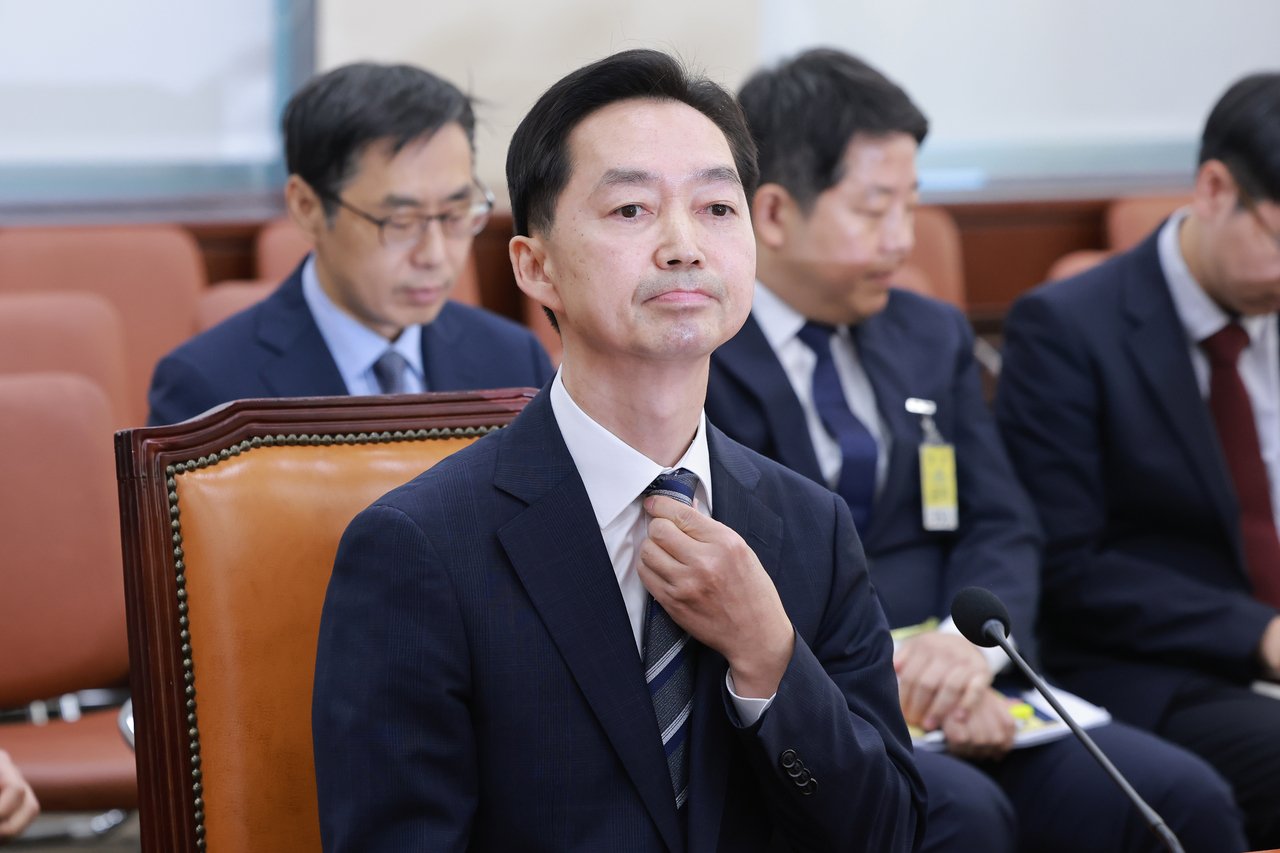
As South Korea moves to tighten a disputed pension back payment rule, the head of the National Pension Service says any new limits should be based on how long people have paid into the system, not their nationality.
“What is important is not nationality, but how much they contribute and how long they contribute,” Kim Sung-joo, chairman and CEO of the NPS, wrote in a social media post Sunday evening.
“Foreign nationals also pay contributions when they work in Korea. When they pay contributions, they acquire the right to receive benefits. That is the basic principle of social insurance,” he added.
Kim said the rules should be changed to prevent cases in which one month of regular contributions can allow an eligible subscriber to make another 119 months of payments retroactively. He proposed requiring a minimum contribution period or limiting back payments according to how long a person had already paid into the system.
His proposal offers an alternative to restrictions based on nationality or residence, as the government considers how to revise the system. President Lee Jae Myung last week called it “inconsistent” that foreign nationals who had lived in Korea only briefly could qualify for retroactive payments and asked the Health Ministry to examine additional eligibility requirements, including their period of residence.
Foreign applications for retroactive contributions rose from 530 in 2023 to 848 in 2024 and 1,517 last year. Another 994 applications were filed in the first half of this year, according to NPS data.
Chinese nationals accounted for 86.1 percent, of this year’s applications. They included 792 ethnic Koreans from China, representing 79.7 percent of the total. US, Japanese and Canadian nationals followed with 47, 30 and 29 applications, respectively.
Under the current system, subscribers need at least 120 months of contributions to qualify for an old-age pension. Eligible subscribers can later pay premiums for periods when they were exempt from contributions for legally recognized reasons, including unemployment, military service or being a spouse without income.
The system was introduced to help people whose contribution records were interrupted because they had no income or were otherwise unable to make regular payments. Up to 119 months can be paid retroactively.
The debate has focused on cases in which foreign nationals worked in Korea and made regular contributions for only a short period before using back payments to meet the 120-month requirement. Some subsequently returned to their home countries while continuing to receive monthly benefits.
The number of foreign old-age pension recipients who had made regular contributions for less than 12 months remains small, but rose from 15 in 2021 to 60 in the first half of this year. They had paid an average of 14.6 million won ($10,600) in premiums and were receiving an average monthly pension of 271,000 won.
The number of foreign recipients who returned previously received lump-sum refunds and used retroactive payments to qualify for an old-age pension also increased from 104 in 2021 to 520 in the first half of this year.
Kim said foreign nationals who work in Korea are generally required to enroll in the pension system and should receive benefits under the same contribution rules as Korean nationals.
He cited Korean nurses and miners who continued to receive German pensions after returning to Korea as an example of Korean nationals benefiting from social security systems in countries where they had worked.
Kim also noted that most of the Chinese nationals using the back-payment system are ethnic Koreans from China. Restricting them based on nationality, he said, could turn the policy discussion into a broader question of whether overseas Koreans should receive the same social security treatment as Korean nationals.
“The large number of Chinese nationals receiving such benefits also reflects the fact that many Chinese nationals live and work in Korea,” Nam Chan-seop, a social welfare professor at Dong-A University, told The Korea Herald.
“Singling out a particular nationality could create problems in relations between the two countries,” he said. “The retroactive contribution system is relatively generous in Korea and has raised concerns over fairness even among Korean subscribers.”
Nam said the system could be scaled back after examining rules in other countries or reformed to provide contribution credits for periods such as child-rearing.
Kim Yong-ha, a professor of IT finance management at Soonchunhyang University, said Korea should take a long-term approach to the issue, focusing on fairness between contributions and benefits as the country becomes increasingly reliant on foreign workers.