
 KB News Desk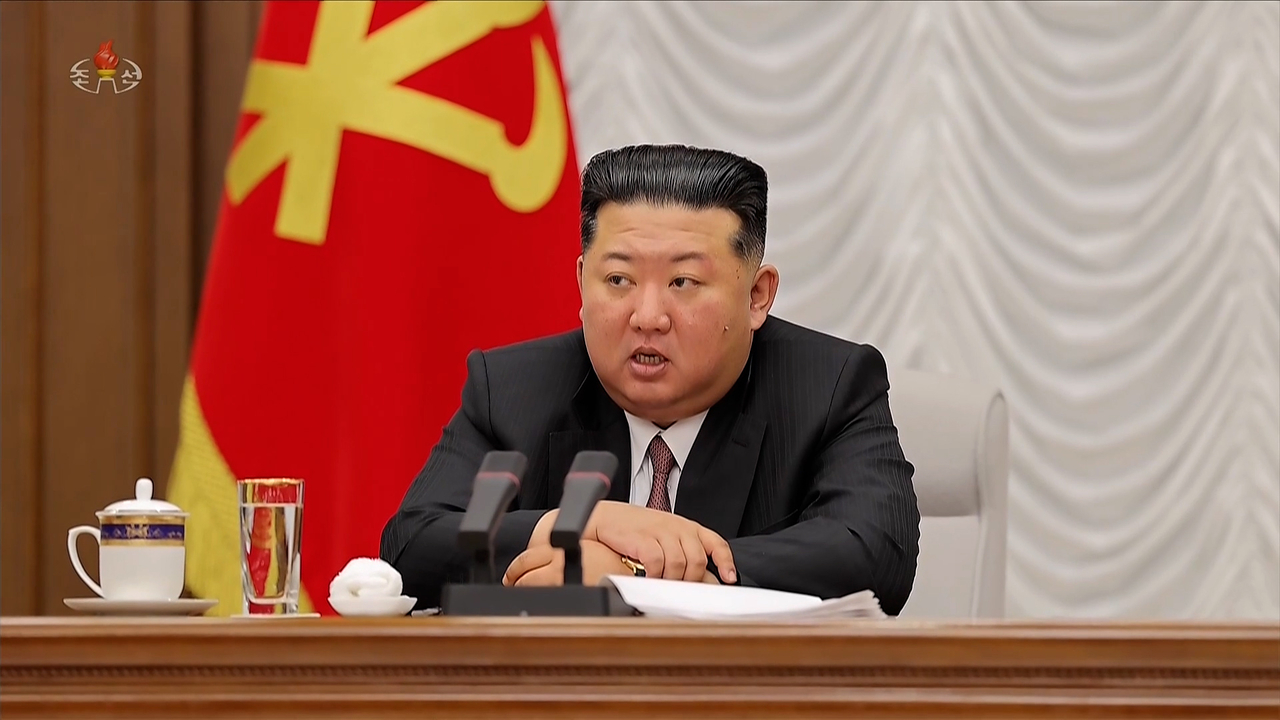
North Korea has ordered its principal military intelligence agency to expand its functions and missions against “potential enemies,” a move analysts say signals Pyongyang’s intent to further broaden its intelligence and covert operations beyond their traditional emphasis on South Korea amid deepening military ties with Russia and growing confrontation with the United States and its allies.
Kim called for broadening the functions and missions of the General Reconnaissance and Intelligence Bureau during the First Enlarged Meeting of the Ninth Central Military Commission held Thursday, according to its state Korean Central News Agency on Friday.
The KCNA described the bureau as playing “a pivotal role in controlling the potential enemies’ threats and gathering key information,” and said the meeting presented measures to enhance its military reconnaissance and intelligence capabilities “in a radical way.”
While the KCNA did not specify how its responsibilities would be expanded, analysts said the decision could lead to greater intelligence collection against South Korea and other countries as well as more sophisticated cyber, electronic warfare and drone operations.
The move follows North Korea’s dismantling or reorganization of most institutions responsible for dialogue and exchanges with South Korea after Kim defined inter-Korean relations in late 2023 as those between “two hostile states.”
Pyongyang has effectively closed its official channels for inter-Korean engagement while strengthening organizations responsible for intelligence collection and covert operations, suggesting a shift from managing ties with Seoul toward treating South Korea primarily as an intelligence and military target.
The GRIB is believed to be an expanded and reorganized version of the former General Reconnaissance Bureau, North Korea’s main military intelligence service responsible for overseas intelligence, operations against South Korea and cyber warfare.
South Korea’s Unification Ministry said Friday that the new name was first publicly identified in September 2025 in a statement issued by Pak Jong-chon, vice chairman of the Workers’ Party’s Central Military Commission.
“We presume that it is an organization created through an expansion and restructuring of the former General Reconnaissance Bureau,” Chang Yoon-jeong, deputy spokesperson for the ministry, said at a regular briefing.
“We will closely monitor, in coordination with the relevant agencies, developments related to the expansion of its functions and missions discussed at the meeting.”
The former General Reconnaissance Bureau has been accused of directing major attacks against South Korea, including the 2010 sinking of the South Korean warship Cheonan, as well as infiltration operations and cyberattacks.
Experts said the latest expansion appears intended to transform the organization from a body centered on conventional covert operations into a more advanced intelligence agency combining satellites, drones, cyber capabilities and electronic warfare.
“The most noteworthy aspect of the meeting was that the General Reconnaissance and Intelligence Bureau was brought to the forefront and its expanded role was emphasized,” said Lim Eul-chul, a professor at Kyungnam University’s Institute for Far Eastern Studies.
Lim said that while the former bureau was known for “analog-style operations” such as infiltration and targeted killings, the reorganized agency could integrate military reconnaissance satellites, unmanned aircraft and cyber and electronic warfare capabilities.
North Korean personnel deployed in support of Russia’s war against Ukraine may also have acquired experience in drone operations, signals intelligence, electronic warfare and linking real-time reconnaissance data to strikes, he said.
Such battlefield experience could be fed back into North Korea’s intelligence structure and used to diversify its capabilities, Lim added.
He also noted that the KCNA referred to “potential enemies” in the plural, suggesting the bureau’s targets extend beyond South Korea.
The wording could indicate that Pyongyang plans to expand surveillance and intelligence collection to cover US forces stationed in South Korea and Japan, the US mainland and NATO members amid closer security coordination among South Korea, the United States and Japan, he said.
Hong Min, a senior research fellow at the Korea Institute for National Unification echoed Lim, saying the North’s use of the phrase “potential enemies” marks a significant departure from its previous focus on South Korea alone.
The wording suggests Pyongyang intends to expand its intelligence collection beyond its current adversaries — South Korea, the United States and Japan — to include countries that could become hostile to North Korea over time.
He added that North Korea’s military support for Russia has effectively made it a participant in the European theater of the Russia-Ukraine war, creating new intelligence requirements regarding Ukraine and NATO countries. In that sense, the expansion of the concept of “potential enemies” reflects the regime’s changing strategic environment and growing intelligence needs.
“The GRIB is likely to strengthen its role as the military’s operational intelligence agency by integrating military reconnaissance satellites, unmanned surveillance aircraft and signals intelligence capabilities with its analytical functions,” he said.
Combined with the military’s planned modernization of its combat-system infrastructure, the bureau could also become responsible for transmitting intelligence collected by satellites and drones directly to strike systems, shortening the time between target detection and attack, he added.