
 KB News Desk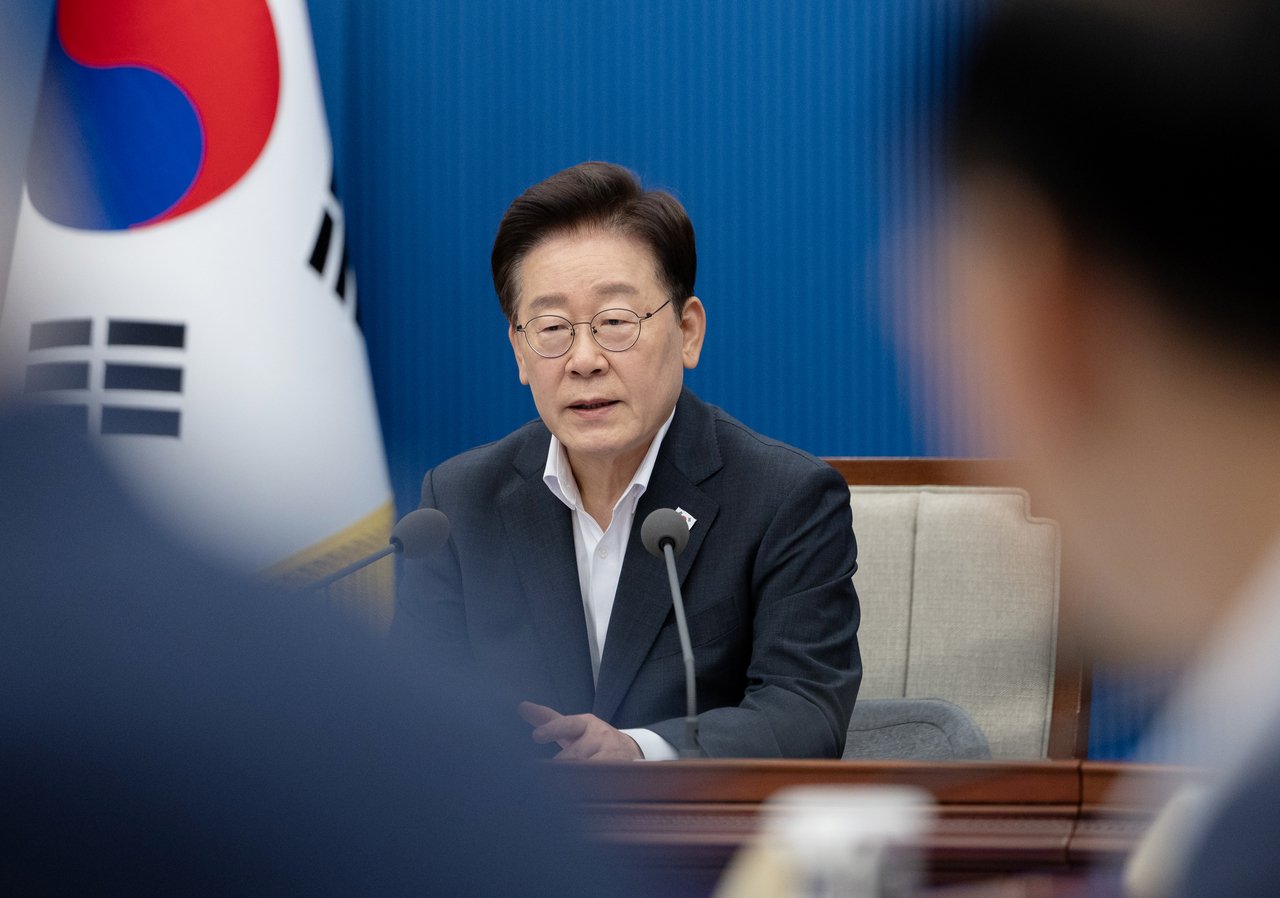
President Lee Jae Myung on Friday called for South Korea’s integrity standards to catch up with its growing economic stature, as he presided over the first anti-corruption policy council meeting under his administration.
Lee pointed to a widening contrast between South Korea’s economic standing and its level of public-sector integrity.
Lee noted that the country’s exports have reached a record high and risen to the fifth-largest in the world, while its current account surplus has also hit an all-time high and its sovereign credit ratings remain stable.
“However, no matter how impressive the economic indicators we achieve may be, if people are struggling with their livelihoods and the government and public sector fail to earn the public’s trust, all these achievements could easily crumble like a castle built on sand,” Lee said in his opening remarks.
“As of 2025, South Korea ranks 31st among 182 countries in terms of integrity. We rank within the top 10 in just about everything else, so it is somewhat embarrassing that we rank only 31st in integrity.”
Lee was referring to Transparency International’s annual Corruption Perceptions Index.
Lee underlined that stronger economic and national power should be accompanied by “increasingly stringent standards for transparency in the public sector and integrity among public officials.”
“As people’s expectations are rising, we need to closely examine whether there are areas we have turned a blind eye to under the excuse that ‘this is how things have always been done’ or that they are simply practices of the past,” Lee said. “If any such practices remain, they should be corrected immediately.”
Lee also broadened the anti-corruption push beyond the public sector, pointing to the intervention of entrenched local interests in securing benefits, deeply rooted corruption in the private sector and lingering corruption in politics.
“We must also closely examine and root out the corruption that still lingers in political circles, although the situation has improved considerably,” Lee said. “When it comes to rooting out corruption, there can be no distinction between the ruling and opposition parties, or between ‘your side’ and ‘mine.’”
Lee underlined that “we need to deal with it fairly and sternly, without exception, based on clear principles.”
Lee called on government agencies to press ahead with the campaign until the public can feel that “things have truly changed.”
The Anti-Corruption Policy Consultation Council is a presidential body tasked with drawing up government-wide anti-corruption measures and reviewing their implementation.
Friday’s meeting was attended by the heads of 18 government ministries and agencies, including the Anti-Corruption and Civil Rights Commission, Office for Government Policy Coordination, Fair Trade Commission, Financial Services Commission, National Tax Service, National Police Agency, Board of Audit and Inspection and National Intelligence Service.
In the first session, the Ministry of Interior and Safety and the National Police Agency reported on measures to root out corruption involving entrenched local interests, while the Anti-Corruption and Civil Rights Commission and the Public Procurement Service presented measures aimed at curbing corruption in public contracts.
The second session focused on the misuse of state finances, including fraudulent claims for government subsidies, with presentations from the Ministry of Planning and Budget, Interior Ministry and Korea Customs Service.
The Justice Ministry and the Ministry of Land, Infrastructure and Transport reported on measures to curb improper ties by which former public officials use their previous positions or connections to secure preferential treatment.