
 KB News Desk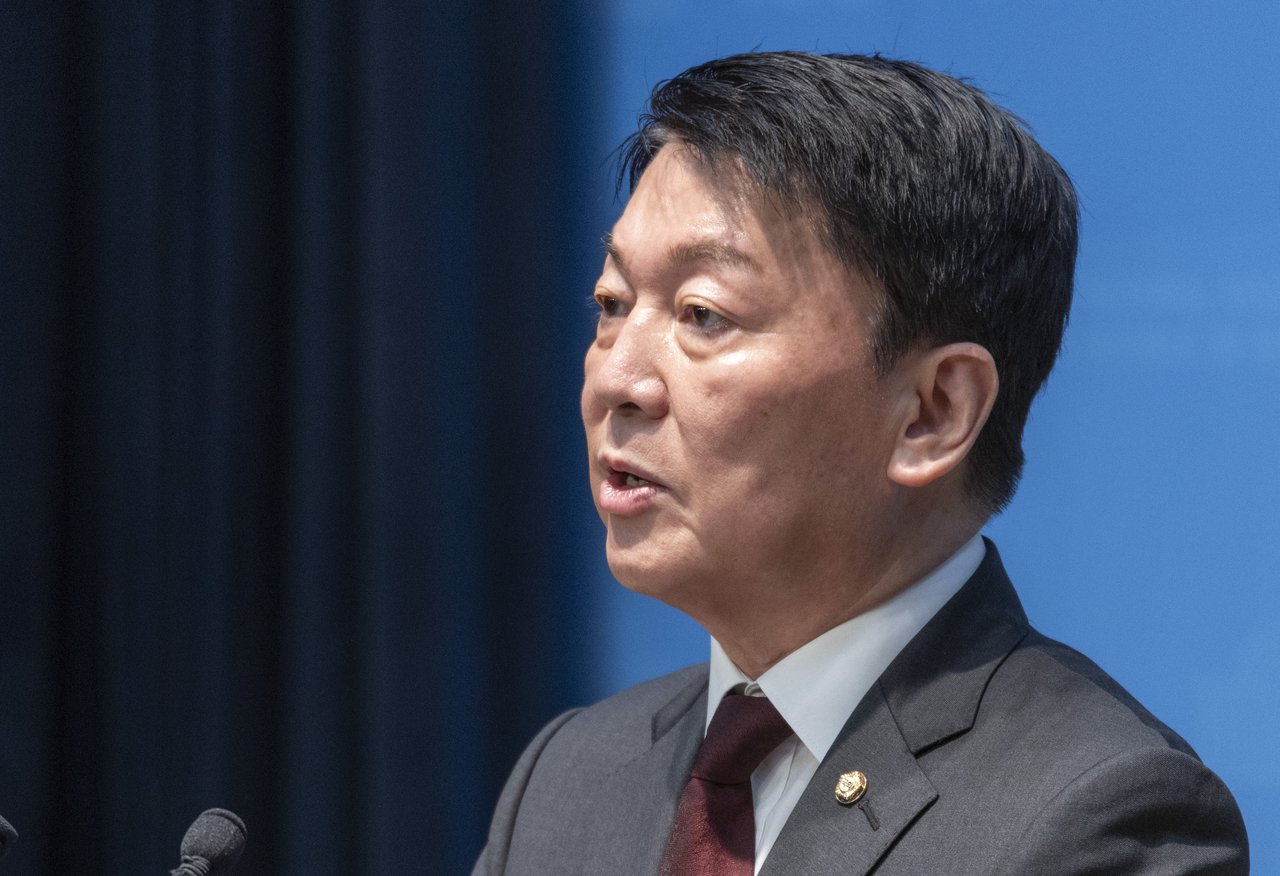
People Power Party Rep. Ahn Cheol-soo proposed a bill revision Tuesday that would exempt investors from certain taxes if they sell shares without making a profit.
Ahn, a four-term lawmaker and former software entrepreneur, jointly introduced a partial revision to the Act on Restriction on Special Cases Concerning Taxation, along with nine other members of the People Power Party.
Under the proposal, both the securities transaction tax and the special rural development tax will be waived when a stock sale generates no profit. A special rural development tax is a levy imposed on certain transactions to fund agricultural development.
Under the current system, taxes are imposed even when stocks are sold at a lower price than when they were purchased. The system has faced criticism for taxing transactions rather than actual income.
“Taxes should be imposed fairly according to a person’s ability to pay, which is the fundamental principle of tax justice,” Ahn said. “The current system flies in the face of that principle.”
“More investors are being pushed to sell their stocks at a loss in today’s increasingly volatile market,” Ahn added. “Charging them double, or even triple, clearly conflicts with the definition of taxation and violates investor protection.”
“The amendment can reduce the burden on investors suffering losses and create a more rational taxation system,” Ahn said. “We will double down on passing the bill during the National Assembly’s discussions.”
Ahn’s proposal follows several previous attempts to reform the taxation of stock transactions.
In December 2018, former Democratic Party lawmaker Choi Woon-youl introduced a package of bills that sought to gradually abolish the securities transaction tax and replace it with taxation based on capital gains.
At that time, Choi also argued that taxing transactions regardless of profitability resulted in investors being taxed even when they suffered losses. The repeal bill expired when the 20th National Assembly ended in May 2020.
Then Liberty Korea Party Rep. Choo Kyung-ho, now mayor of Daegu, proposed a similar package in July 2019.
He sought to phase out the transaction tax while combining gains and losses across stocks, funds, bonds and other financial products so that taxes would be imposed on net investment income. The proposal expired at the end of the 20th National Assembly.
In June 2020, Democratic Party Rep. Yoo Dong-soo proposed the gradual reduction and abolition of the transaction tax by 2025. The central repeal bill was pending before expiring with the end of the 21st National Assembly in May 2024.