
 KB News Desk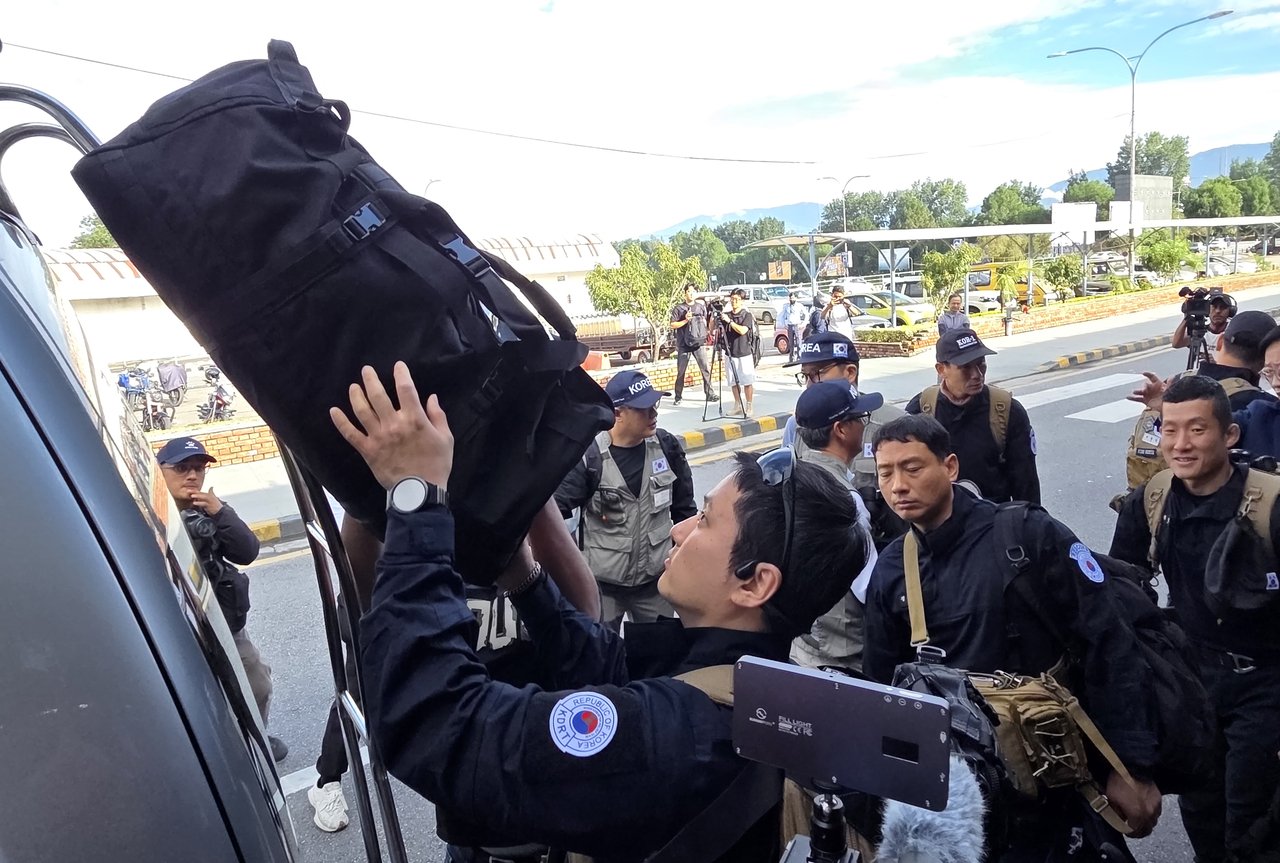
The 44-member Korea Disaster Relief Team arrived in Nepal on Wednesday to support search-and-rescue operations following devastating floods that have left more than 1,000 people dead and thousands missing across Nepal and neighboring Tibet.
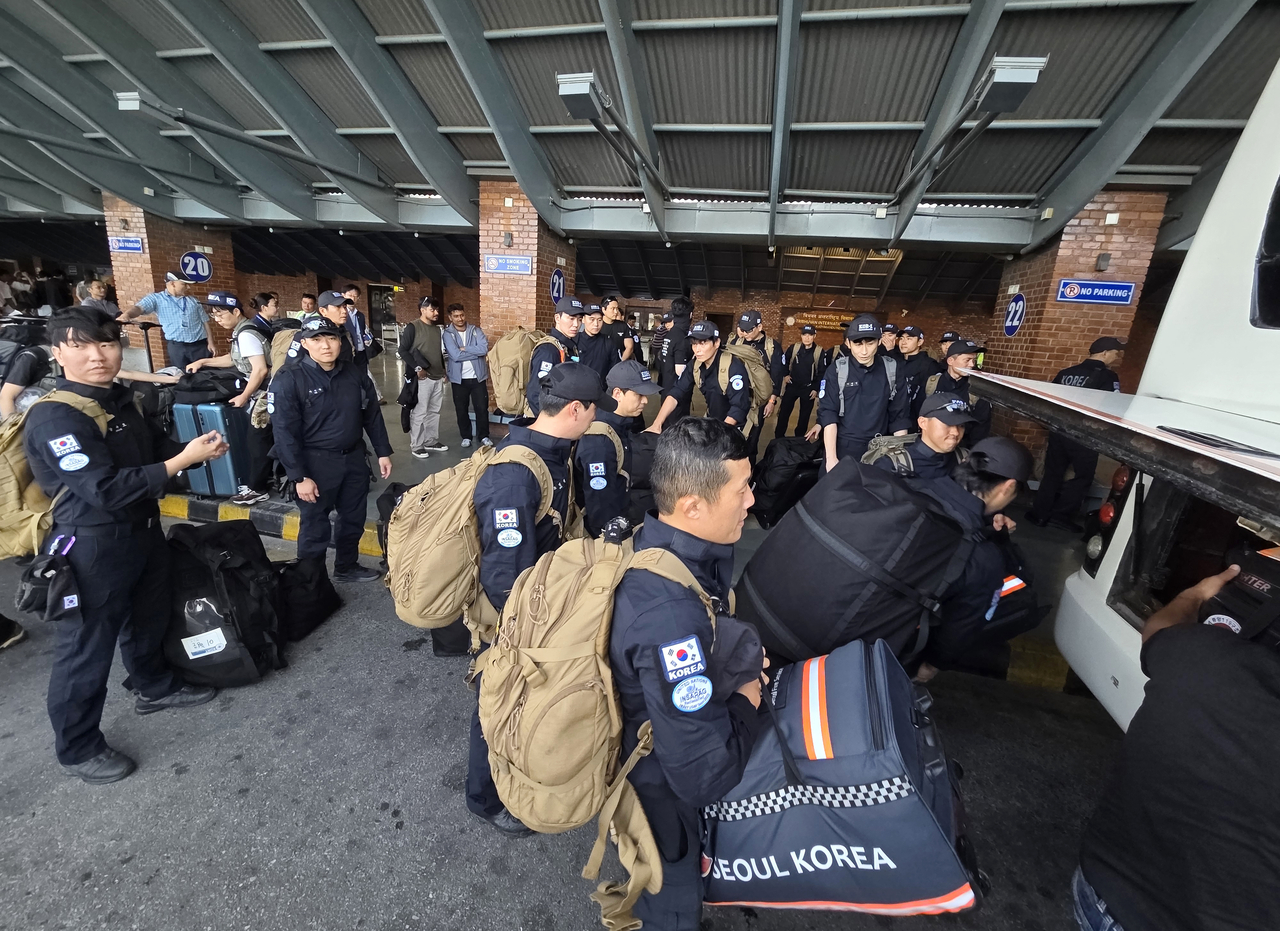
A South Korean Air Force KC-330 Cygnus multirole aerial tanker carrying the team landed at Tribhuvan International Airport in Kathmandu at about 6:27 a.m. local time.
Led by Lee Kyoo-ho, director-general for development cooperation at the Ministry of Foreign Affairs, the KDRT comprises 37 personnel from the National Fire Agency and officials from the Foreign Ministry and Korea International Cooperation Agency.
The team also brought five search-and-rescue dogs and a range of specialized equipment, including high-resolution drones, acoustic and video devices designed to detect people trapped under debris, and thermal imaging equipment.
Working in coordination with Nepalese authorities, the team is expected to search for victims of the massive flooding that struck on Aug. 26, including nine South Koreans who remain missing.
The deployment is initially expected to last about 10 days, although the mission could be extended depending on conditions on the ground.
Lee said the team would not immediately begin rescue operations after its arrival, as it first needed to identify and establish a suitable base camp in coordination with Nepalese authorities.
Lee said the team planned to consult with South Korea’s rapid response team and the South Korean Embassy in Nepal in the morning before inspecting a possible base camp site later in the day.
Bidur in Nuwakot District, Bagmati Province, is being considered as a potential base camp because of its proximity to the area where the nine South Koreans went missing.
The KDRT will not limit its operations to searching for South Korean nationals and is also expected to assist in efforts to locate and rescue missing people of other nationalities.
South Korea previously dispatched two government rapid response teams, totaling 20 personnel, to Nepal on Aug. 27 and Aug. 29. Those teams have used helicopters, drones and ground searches in an effort to locate the nine missing South Koreans, but have yet to report a major breakthrough.
Until now, the rapid response teams have had to obtain approval from Nepalese authorities for individual operations involving aircraft and other resources. The KDRT, however, was deployed at the request of the Nepalese government, potentially allowing it to conduct more extensive search operations.
A ground search unit from the rapid response team has reached Dhunche in Rasuwa District, Bagmati Province, one of the areas hardest hit by the floods.
Dhunche is about 2 kilometers from the upper dam of the Upper Trishuli-1 hydropower project, where the nine missing South Koreans had been working.
The KDRT is an interagency emergency response unit deployed to assist countries affected by major disasters overseas. Its missions can include disaster relief, search and rescue, and medical assistance.
The latest deployment marks the KDRT’s 12th overseas mission. The unit was first activated following the 2008 Sichuan earthquake in China and was deployed to Canada during major wildfires in 2023.
Nepal requested South Korea’s assistance as the scale of the flood disaster continued to grow.