
 KB News Desk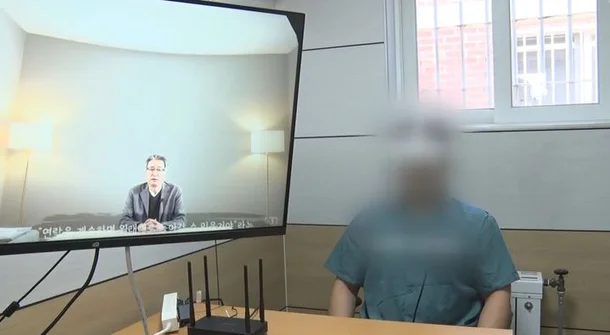
South Korean correctional facilities will now use virtual reality to help inmates confront their crimes from victims’ perspectives, as the Justice Ministry rolls out a VR-based psychotherapy program at 11 correctional facilities across the country, the ministry said Thursday.
The program will begin full operations from late July after a pilot involving 392 inmates showed improvements in cognitive distortions, aggression and empathy, according to the ministry.
The ministry said the program is designed to help participants recognize distorted thinking and better understand the consequences of their actions. It is used alongside existing group psychotherapy rather than as a standalone treatment.
The ministry developed 18 VR scenarios covering four categories of crime: six for sexual violence, four for stalking, four for child abuse and four for domestic violence.
The program was piloted on 392 inmates at nine correctional institutions. Researchers compared inmates who received the VR-assisted treatment with a control group that underwent conventional group psychotherapy only.
According to the ministry, the VR group showed greater improvements across several indicators.
Among inmates convicted of sexual violence, cognitive distortion improved by 18.1 percent in the VR group, compared with 9 percent in the control group. Aggression fell by 14.2 percent in the VR group, compared with 2.4 percent among those receiving conventional treatment alone, while empathy improved by 13.9 percent versus 8.9 percent for the control group.
The ministry said the results suggest that immersive VR experiences can strengthen inmates’ self-awareness and understanding of victims’ perspectives, enhancing the effects of conventional psychotherapy.
Some participants also reported that the simulations prompted them to reflect more deeply on their behavior.
“The scenes were so vivid that it felt like I had gone back to that day,” one inmate said. “It was embarrassing and painful to face who I was back then.”
Another participant said a child abuse scenario reminded him of how his son may have felt during past abuse.
“I felt sorry thinking about how frightened and scared my son must have been,” he said.
Based on the pilot, the ministry plans to begin full operation of the program at 11 correctional facilities nationwide from the end of July.
As the program is officially launched, the ministry said it will continue evaluating the results and refining VR content for different types of crime.
“VR-based psychotherapy is a new treatment method that helps inmates objectively recognize their actions and distorted thinking while realistically experiencing the victim’s perspective,” Justice Minister Jeong Seong-ho said.
The ministry said the program is aimed at supporting inmates’ rehabilitation and reducing recidivism.