
 KB News Desk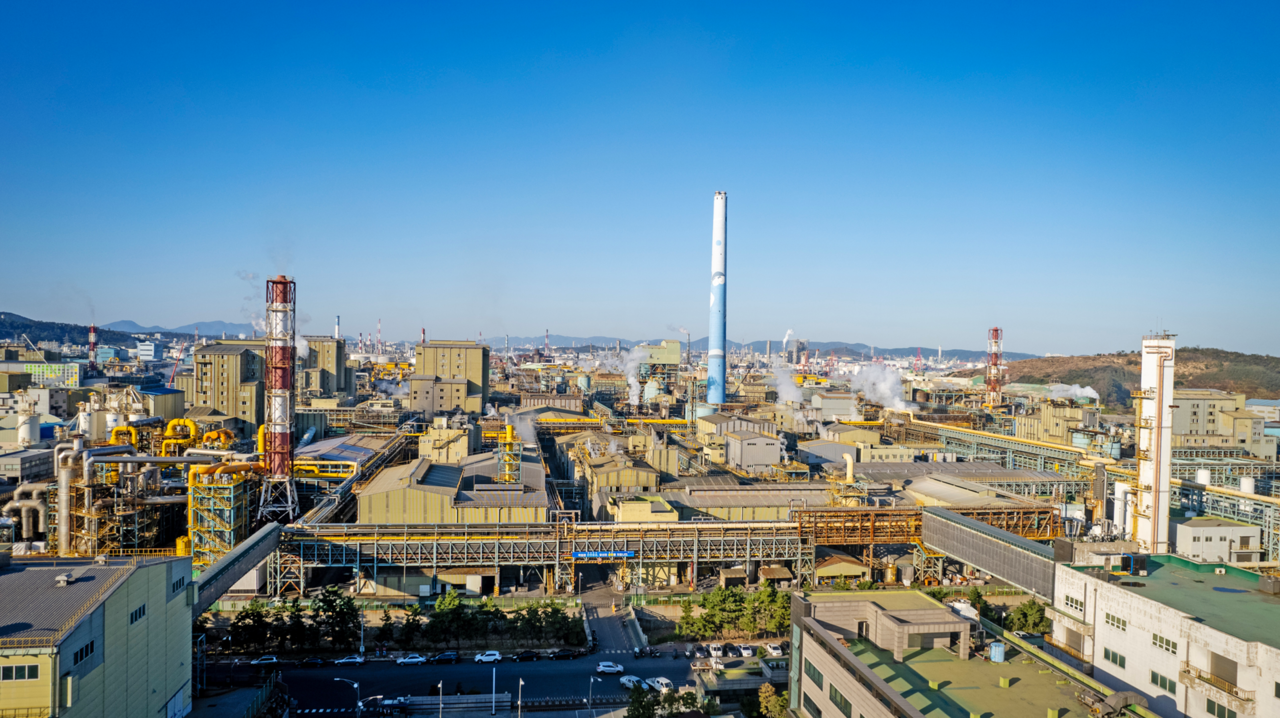
Korea Zinc, the world’s leading metal refiner, is gaining significant traction from Washington’s recent announcement on securing China-free critical mineral supply chains spanning mining, processing, refining and manufacturing within the US.
On Friday, US President Donald Trump introduced a $3 billion critical minerals investment package at a roundtable on the American mining industry at the US Department of State in Washington.
This shift highlights growing US efforts to boost advanced industry competitiveness — spanning defense, semiconductors, artificial intelligence and batteries — by expanding processing and refining capacity as well as securing domestic raw materials.
Against this backdrop, Korea Zinc continues to deepen its foothold in the US critical minerals industry. During the event, US Commerce Secretary Howard Lutnick singled out the company’s $7.4 billion Tennessee smelter project, “Project Crucible,” as a key model of how the government’s tariffs and federal policy can successfully attract world-class industrial firms to build key infrastructure within the US.
Lutnick noted critical minerals are not just an economic issue, but a national security issue, adding that if the US wants to lead in advanced manufacturing, AI, semiconductors, energy and defense, it cannot depend on foreign adversaries.
“Our objective is very simple. We’re going to mine here. We’re going to process here. We’re going to refine here. We’re going to manufacture here,” he added.
Korea Zinc said one of its planned Tennessee smelter’s biggest advantages is its ability to produce 12 nonferrous metals as well as semiconductor-grade sulfuric acid through a single integrated processing system.
Eleven of those metals are among the 60 critical minerals designated by the US government. They include zinc, lead, copper and silver, as well as antimony, indium, bismuth, tellurium, palladium, gallium and germanium. Gallium, germanium, indium and antimony have particular strategic importance as they are used in semiconductors, defense, telecommunications and energy applications.
For the US, the ability to recover multiple critical minerals from a single integrated facility could improve the efficiency of supply chain development. For Korea, the project could expand bilateral ties beyond semiconductors, batteries and automobiles into critical minerals and the processing and refining stages of the supply chain.
Korea Zinc has spent decades at its Onsan smelter in Ulsan producing zinc, lead and copper while developing technologies to process complex, low-grade feedstocks and recover rare and valuable metals from smelting byproducts. That expertise could contribute to Washington’s initiative to build a more integrated, China-free critical minerals supply chain.
The company is set to accelerate execution of Project Crucible through Crucible Zinc, its US joint venture backed by major equity investments from the US Departments of Defense and Commerce. Leveraging existing infrastructure, local workers and established feedstock networks could reduce the time and risks associated with developing a new facility from scratch.
Korea Zinc also plans to process approximately 620,000 tons of smelting byproducts accumulated across five pond sites at the location. Industry observers say combining these existing assets with Korea Zinc’s refining expertise could help accelerate commercial production.
Washington’s financial stake underscores Project Crucible’s critical role in national security. Demonstrating this strategic alignment, the facility became the first South Korean-led initiative designated under FAST-41 — a federal framework designed to streamline environmental and administrative permitting for key infrastructure.
The designation highlights Korea Zinc’s refining capabilities as an essential pillar of US economic security, creating a hybrid model that combines US resources, infrastructure, and policy backing with Korean technology and operational expertise.