
 KB News Desk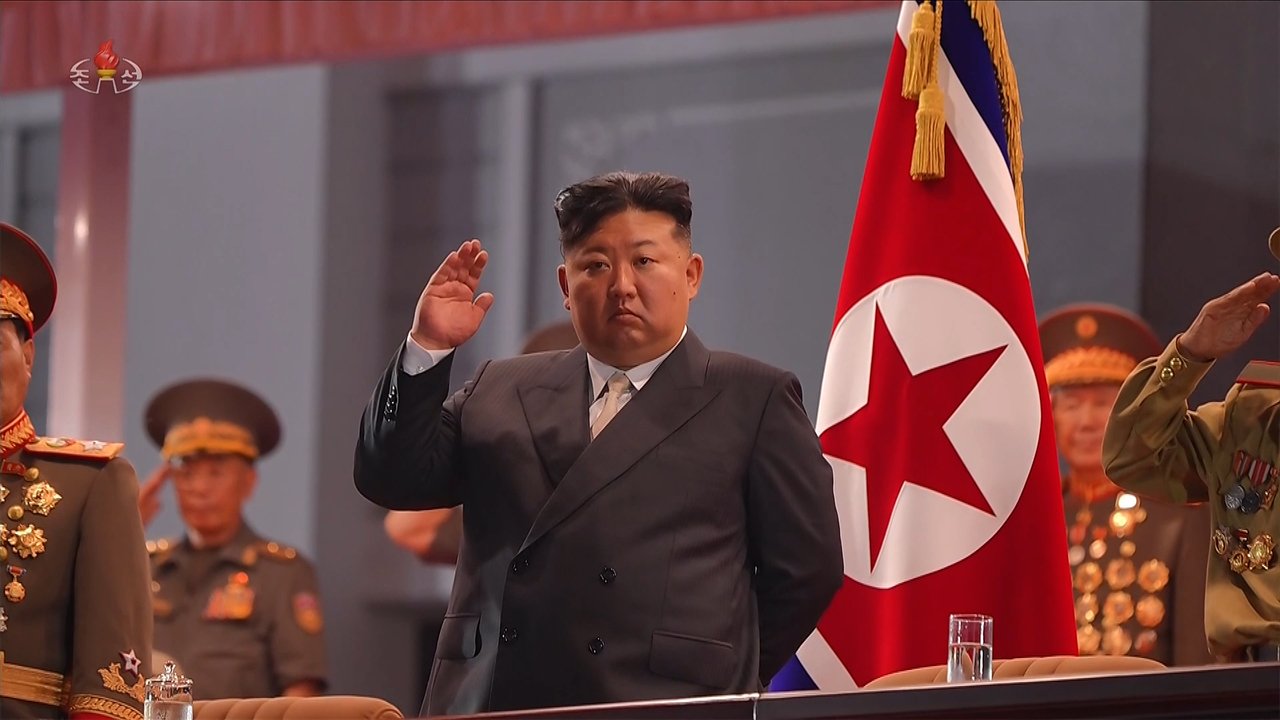
North Korea’s muted commemoration this week of a key anniversary tied to former leader Kim Jong-il offers another glimpse into a broader transformation under his son: an effort to build a state defined increasingly by Kim Jong-un himself, not the legacies of the two leaders who came before him.
The Rodong Sinmun, the official newspaper of North Korea’s ruling Workers’ Party, relegated its coverage of the Aug. 25 anniversary associated with Kim Jong-il’s “Songun,” or military-first, leadership to page two on Wednesday, an unusual departure from the prominent treatment the occasion received as recently as last year.
More strikingly, the article mentioned the word “Songun” only once. In previous years, Rodong Sinmun repeatedly invoked Kim Jong-il’s “Songun leadership” and “Songun journey” in commemorating the anniversary.
Instead of opening its front page with Kim Jong-il’s military legacy, the newspaper led with Premier Pak Thae-song’s economic inspection activities and efforts to fulfill the five-year national development plan adopted at the ninth Workers’ Party Congress in February.
The change appears to be the latest in a pattern that has accelerated this year: Kim Jong-un is not abandoning the legitimacy inherited from his grandfather Kim Il-sung and father Kim Jong-il, but is increasingly recasting it around a political system, national identity and personality cult that belong distinctly to his own era.
South Korea’s National Intelligence Service has gone a step further in its assessment. The spy agency told lawmakers earlier this year that Pyongyang appears to be simultaneously diluting the political imprint of Kim’s predecessors, elevating Kim’s status and reorganizing its institutions in an apparent attempt to present North Korea as a more “normal state.”
From Kim Jong-il’s military-first era to Kim Jong-un’s state
Aug. 25 marks what North Korea describes as the day Kim Jong-il began his leadership of the country’s revolutionary armed forces in 1960 with a visit to the Ryu Kyong Su 105th Tank Division, which Pyongyang says was the first North Korean unit to enter Seoul during the 1950-53 Korean War.
The date subsequently became closely associated with Songun, the military-first doctrine that came to define Kim Jong-il’s rule, particularly during the economic crisis and famine of the 1990s.
North Korea formally designated Aug. 25 as a national holiday and day of rest in 2013.
The anniversary received far more prominent treatment in previous years. Last year, the newspaper devoted extensive coverage to Aug. 25, portraying it as the anniversary of Kim Jong-il’s start of leadership over the revolutionary armed forces and recalling that the date had brought about “a historic turn” in “developing our revolutionary armed forces and implementing the cause of the Juche revolution.”
This year was different.
The Rodong Sinmun article focused on Chol Pass in Kangwon Province, a mountainous route that occupies an important place in North Korea’s mythology surrounding Kim Jong-il’s repeated visits to military units.
The article still lavished praise on the late leader and credited his arduous journeys with helping North Korea emerge as “a nuclear weapons state, a military power.”
Yet its narrative repeatedly led back to the current leader.
It recalled Kim Jong-un crossing Chol Pass in 2012, quoted his remarks on his father’s devotion and concluded by calling on North Koreans to “hasten the bright future of communism” by faithfully upholding Kim Jong-un’s leadership.
The change is notable because it reflects a much broader retreat from the governing model associated with Kim Jong-il.
“The reduction in the significance of Songun Day and similar moves can be understood as part of the process of clearing away the legacy of the military-first politics of the Kim Jong-il era,” said Lim Eul-chul, a professor at Kyungnam University’s Institute for Far Eastern Studies.
“As time passes, the meaning and symbolism of Songun Day are likely to fade further.”
Keeping the dynasty, rewriting its hierarchy
The treatment of Kim Jong-il’s military legacy is only one part of a series of changes visible across North Korean politics and propaganda.
Kim Jong-un has reduced his appearances at commemorations dedicated to his predecessors, and state media have increasingly avoided the once-ubiquitous honorific names attached to their birthdays.
The term “Day of the Sun,” traditionally used for founder Kim Il-sung’s April 15 birthday, has largely disappeared from official coverage. Similarly, the use of “Day of the Shining Star” for Kim Jong-il’s Feb. 16 birthday has declined.
Kim skipped a customary visit to the Kumsusan Palace of the Sun on his grandfather Kim Il Sung’s birthday for the fourth consecutive year this year. He also did not visit the mausoleum for his father Kim Jong Il’s birthday in February, after making his first such visit in four years in 2025.
On Kim Jong-il’s birthday in February, the Rodong Sinmun instead prominently showcased Kim Jong-un attending the completion ceremony for Saebyeol Street with his daughter Kim Ju-ae.
That shift has now reached North Korea’s most fundamental legal document.
A revised Constitution adopted by the Supreme People’s Assembly at its March 22-23 session removed much of the lengthy account of Kim Il-sung and Kim Jong-il’s achievements from its preamble.
In their place, the Constitution put greater emphasis on governing principles associated with the current leader, including the so-called “people-first principle,” the supreme leader’s monolithic leadership system and the protection of national interests.
Aiming to be seen as ‘normal state’
For Seoul’s intelligence authorities, the changes suggest something broader than a simple effort by a third-generation ruler to build a stronger personality cult.
The NIS told the National Assembly Intelligence Committee in May that North Korea appeared to be diluting the colors of the Kim Il-sung and Kim Jong-il eras while simultaneously strengthening Kim Jong-un’s status and reorganizing the state’s institutions.
The agency assessed that the changes point to an intention to move toward the image of a “normal state” — one operating through more recognizable state institutions and national interests rather than relying as heavily on the revolutionary mythology and ideological terminology inherited from the Cold War.
Among the changes cited by the NIS was North Korea’s removal of “socialist” from the official title of its Constitution for the first time in 54 years, a move the agency interpreted as an attempt to emphasize the Constitution’s character as a more universal set of state rules.
The revised Constitution also dropped the description of North Korea as a “socialist state” from Article 1 and stripped away a range of ideologically charged expressions.
A recent report by Kim Il-ki, a senior research fellow at the Institute for National Security Strategy, similarly argued that North Korea is weakening socialist rhetoric while elevating a more state-centered form of nationalism.
The revised Constitution, Kim wrote, could be characterized as a “Kim Jong-un Constitution,” institutionalizing both his monolithic rule and North Korea’s new conception of the Korean Peninsula as consisting of two separate states.
That transition carries an apparent paradox.
Kim is presiding over a country with an expanding nuclear arsenal and an intensely personalized political system, even as the regime appears increasingly interested in presenting itself through the language and institutions of conventional statehood.
But those two objectives need not be contradictory from Pyongyang’s perspective.
North Korea’s concept of becoming a more “normal” state does not necessarily imply political liberalization or movement toward international norms. Rather, the changes suggest an effort to replace some of the inherited revolutionary symbolism of the Kim dynasty with a state identity centered on sovereignty, national power, nuclear status and Kim Jong-un’s own leadership.
Kim is therefore not erasing his grandfather and father altogether. Their legitimacy remains indispensable to the hereditary system, and this week’s Rodong Sinmun article continued to praise Kim Jong-il extensively.
What appears to be changing is the hierarchy of that legacy.
“Rather than continuing to cover the gap between socialist principles and reality with ideological rhetoric, North Korea appears to be acknowledging those realities and incorporating them into a state-centered governing framework,” Kim of INSS wrote in his report.
“The revised Constitution has weakened the revolutionary narrative of the past and instead directly inscribed the governing principles of the Kim Jong-un era into the Constitution.”