

 KB News Desk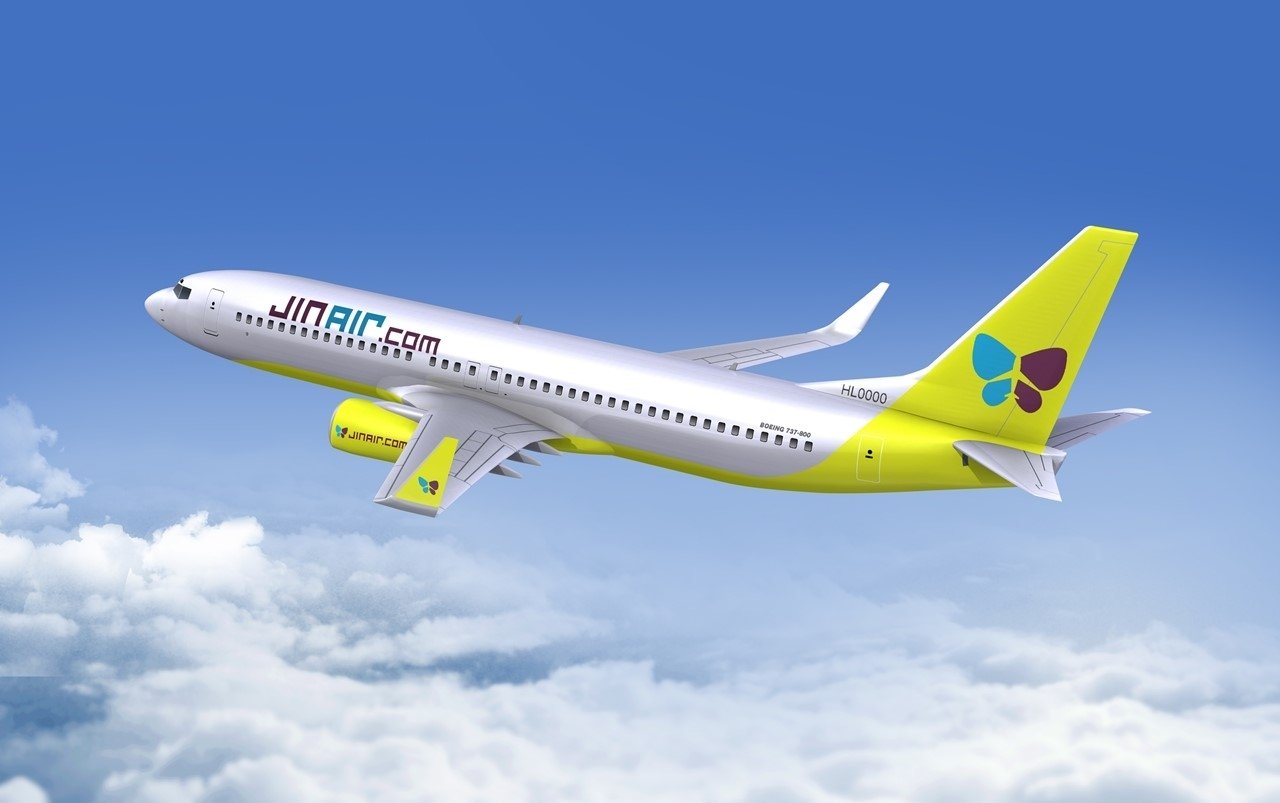
Jin Air, Air Busan and Air Seoul, the three budget carriers under Hanjin Group, are set to operate as a single airline under the Jin Air name starting in March.
The boards of all three companies approved the merger plan and signed the agreement Friday. Each carrier is planning for shareholder ratification in December, then regulatory approval, before the combined airline launches March 17, 2027.
The move will follow the planned Dec. 17 merger of Korean Air and Asiana Airlines, the respective parents of Jin Air and of Air Busan and Air Seoul, respectively.
Jin Air explained that the three-carrier merger is designed to combine the three carriers’ routes, fleets and resources, achieving economies of scale while bolstering network breadth and service quality.
“This merger is an important turning point that consolidates each airline’s expertise to build a new growth foundation for Korea’s low-cost carrier industry,” Jin Air said in a statement. “We will prioritize safety to complete a successful integration and grow into a leading low-cost carrier in Asia.”
Under the agreement, Jin Air will assume Air Busan’s and Air Seoul’s assets, liabilities, rights, obligations, employees and legal status, with the merger ratio set at 1 share of Jin Air for every 0.29 shares of Air Busan and 0.75 shares of Air Seoul.
A key task ahead of launch will be securing an Air Operator Certificate, the safety approval required to fly as one carrier. Jin Air plans to fold Air Busan’s and Air Seoul’s fleets and operations into its existing certificate in stages, aiming to pass a safety inspection by the Ministry of Land, Infrastructure and Transport before the merger date.
The three airlines have been laying groundwork across safety, operations and culture, launching joint pilot and crew training, standardizing manuals, and running joint staff training and social events to build a unified corporate culture.
Once the merger closes, the combined carrier will become the nation’s largest low-cost carrier by fleet size with 58 aircraft.